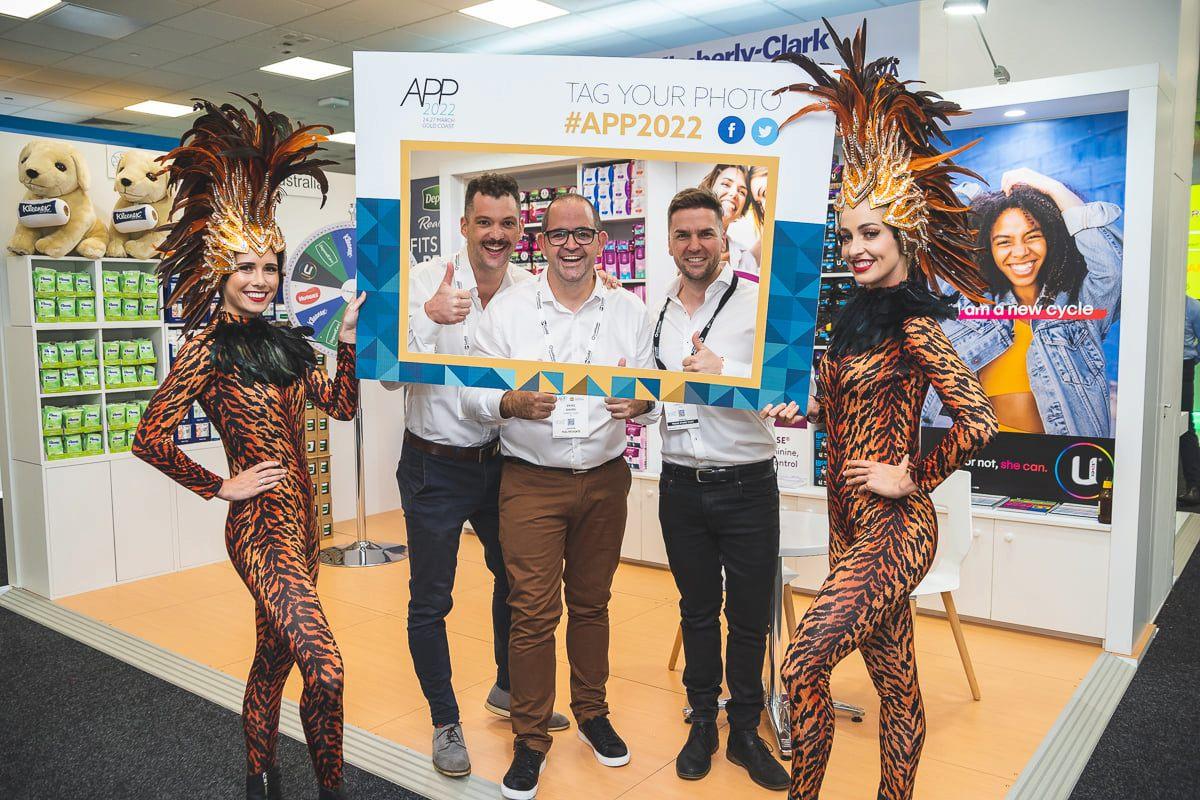
Exhibiting at a trade show is a chance to meet potential clients, demonstrate your products and build relationships face to face. With visitors moving between stands, the challenge is giving them a reason to stop and discover what your business offers.
The right trade show entertainment ideas can make that first interaction feel more inviting. A close-up magician can introduce a moment of shared surprise, a presenter can bring a demonstration to life, and roving entertainment can give your stand a distinctive visual presence.
Attracting attention is only the beginning. Below, we explore eight live entertainment options and how to plan their space, timing and staff introductions, so visitors remember your business as well as the performance.
Choose Entertainment Around Your Stand’s Objective
Before comparing acts, decide what you’d like an interested visitor to do next. Watching a product demonstration, meeting a specialist and returning for a presentation call for different approaches.
| Your Main Objective | Entertainment to Consider |
|---|---|
| Start conversations with passing visitors | Close-up magician |
| Attract attention without amplification | Mime or a suitable visual performer |
| Explain a product or service | Professional presenter or MC |
| Encourage visitors to return | Scheduled short performances |
| Create a visual welcome or photo opportunity | Roving entertainment |
| Support a sponsor presentation | Custom performance or feature act |
Choose one main job for the entertainment. Start with the outcome you want from the interaction. If the goal is to introduce the right visitors to your product team, that should shape the act, timing and handover from the outset.
This guide focuses on live performers within exhibition stands and sponsor spaces. Our guide to interactive entertainment ideas explores broader interactive formats, including technology-led experiences.
Eight Trade Show Entertainment Ideas for Exhibition Stands
The best fit depends on how you want visitors to engage with your business. These ideas range from small-group interactions within a stand to scheduled performances for larger exhibition spaces, with a different role for each.
1. Close-Up Magicians to Start Conversations at Your Stand
Close-up magic works well at trade shows because it gives visitors a natural reason to stop without requiring a large performance area. Our close-up magicians use interactive routines and sleight of hand, making them well suited to short, small-group interactions at an exhibition stand.
The aim is to create an easy opening for conversation. A magician might perform a brief routine, then introduce an interested visitor to someone from your team. Selected acts may also be able to incorporate an approved reference to your brand or product, provided it still feels like part of the entertainment rather than a sales pitch.
This format can suit small and medium exhibition stands where there’s enough room for the performer and a few spectators to gather comfortably. An unamplified routine can also be useful in a busy hall where you don’t want to compete with surrounding stands for volume.
Plan the performance in short rounds with appropriate breaks, and make sure someone from your team is available when each interaction finishes. You’ll also need to confirm the working area and any movement restrictions with the organiser. If the magician will be moving beyond your stand, our guide to roving magicians explains that format in more detail.
2. Professional Presenters for Trade Show Demonstrations
A good trade show demonstration needs to be easy to follow, even for someone who has only just walked up to your stand. A professional MC or presenter can introduce the product, interview your specialist and guide audience questions, helping each session feel clear and well paced.
This works best on medium or large exhibition stands where you can create a defined presentation area without disrupting other conversations. On a smaller stand, the same presenter may be better used for a more conversational demonstration rather than trying to gather a larger audience.
Run demonstrations at scheduled times and treat each one as a complete session, so visitors can join without needing any earlier context. Rehearse the flow with your product specialist, and confirm microphone, sound and any product-specific requirements with the organiser.
The presenter can keep the session moving while your specialist handles the technical detail. At the end, give interested visitors a clear next step, whether that’s asking questions, seeing the product more closely or speaking with someone from your team.
3. Mime and Visual Comedy for Quieter Stand Interactions
In a busy exhibition hall, louder isn’t always better. Mime and visual comedy can attract attention without adding another amplified presentation to the room, making them worth considering when conversations are still the priority at your stand.
For a small or medium exhibition stand, keep the interaction short and contained rather than trying to stage a full performance. A mime artist might engage people as they approach, create a playful moment around the stand or interact with visitors while your team remains available to start conversations.
The humour should suit your audience and never rely on putting someone on the spot. Visitors should be free to watch, take part or simply keep moving, with your stand team stepping in naturally when someone shows an interest in the business.
Plan short appearances with suitable breaks and enough room for both the performer and anyone who stops to watch. Confirm the performance area, props, movement and any accompanying sound with the organiser, as even an unamplified act still needs to work within the exhibition’s rules..
4. Roving Entertainment to Draw Attention to Your Stand
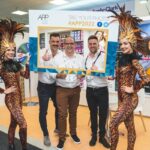
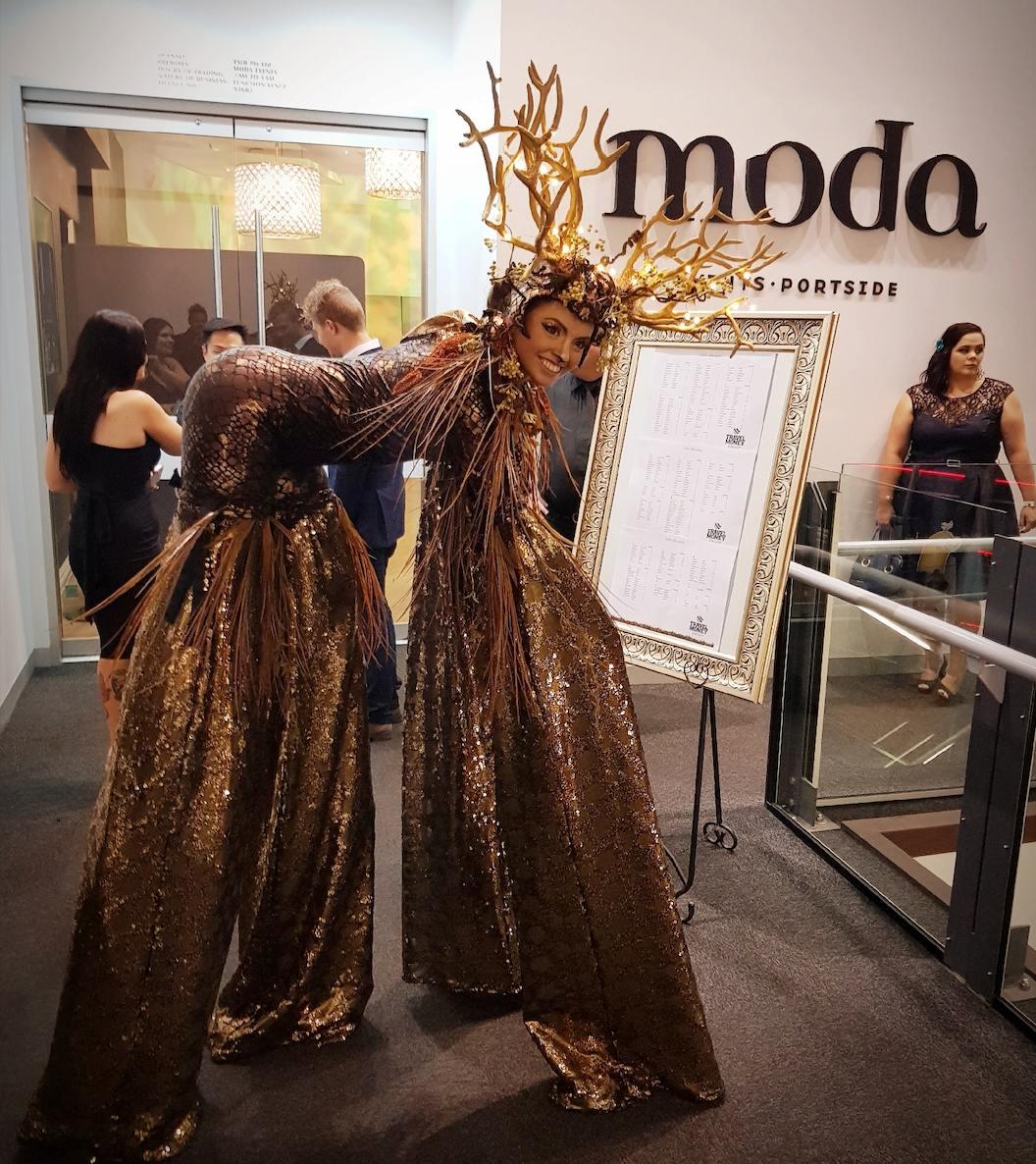
Roving performers can give your exhibition stand a strong visual presence without needing a formal stage or scheduled presentation. Our roving entertainment includes stilt walkers, LED performers and mirrored characters such as Golden Mirrored Butterflies, with different options suited to different brands and exhibition settings.
For a medium or large stand, the performer might welcome visitors near the entrance, move through an approved open area or create a photo opportunity beside your displays. Choose the act around the tone you want to set, whether that’s playful, elegant, colourful or more futuristic.
Think about the performer’s full footprint rather than just where they’ll stand. Large costumes need room to move, photographers need space to step back, and stilt walkers require suitable overhead clearance and floor conditions. For LED performers, it’s also worth checking how the effect will read under the exhibition hall’s lighting.
Agree appearance times, breaks and movement boundaries with the performer and organiser in advance. If someone stops for a photo or interaction, your stand team can then step in naturally with an introduction or invitation to explore the product.
For sponsor hospitality areas, concepts such as champagne skirts may also be worth considering. These need a little more planning around serving space, venue requirements and catering arrangements, so confirm the format with our team before booking.
5. Professional Dancers for Scheduled Trade Show Presentations
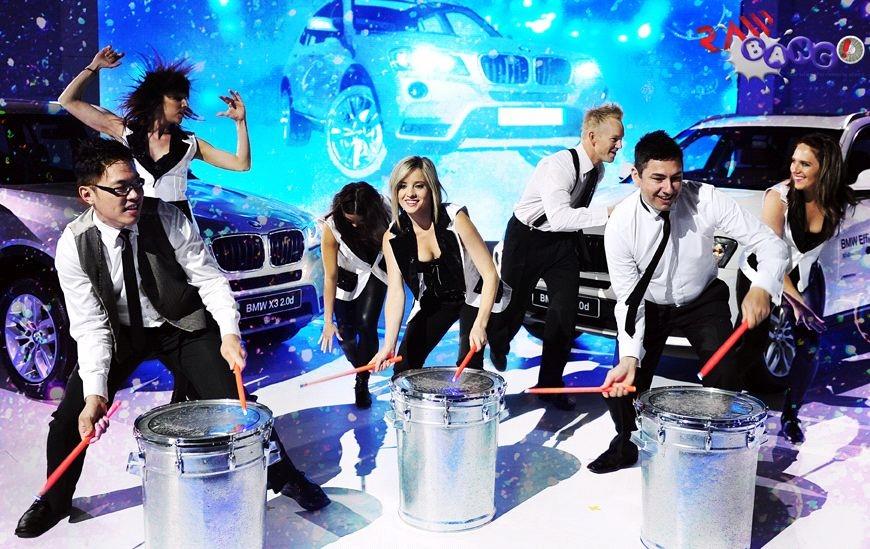
If you’re planning a timed demonstration, announcement or product reveal, a short dance performance can give visitors a clear reason to gather at a particular moment. Our professional event dancers can be briefed around different themes, with the cast and choreography shaped to suit the event.
This is best suited to a larger exhibition stand or sponsor pavilion with enough room for the performance and a defined viewing area. Build the routine around the space you actually have, keeping dancers clear of displays, equipment and visitor routes.
The handover into the business content is important. Once the performance finishes, a presenter can move straight into the demonstration or introduce the product specialist while the audience is already engaged.
Confirm choreography, footwear, flooring, music, sound and rehearsal access in advance. For repeated performances across the trade show, allow enough time between appearances for reset and recovery, and confirm the performance area and audience arrangement with the organiser.
6. Live Music for Exhibition Hospitality and Sponsor Lounges
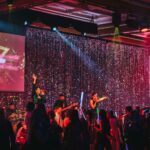
Live music can work particularly well in exhibition hospitality areas where the priority is welcoming clients, distributors or invited guests rather than running back-to-back product demonstrations. A solo musician or duo from our event entertainment options can help create a more relaxed setting without taking over the space.
This format is best suited to a medium or large stand with a dedicated area for the performer and enough separation for conversations to continue comfortably. The music should sit in the background of the experience, while your hosts focus on introductions, meetings and client conversations.
Confirm the instruments, amplification, power requirements and full equipment footprint before the event. Even a compact acoustic act can carry further than expected in an exhibition hall, so the sound needs to be planned with neighbouring stands in mind.
Schedule sets around client appointments, demonstrations and busier periods, with quieter windows built into the day. Confirm the sound arrangement with the organiser and venue, along with any music-licensing requirements that apply.
7. Custom Branded Performances for Your Exhibition Message
A custom performance can be built around the product, service or campaign you’re exhibiting, giving the entertainment a clearer connection to the reason you’re at the trade show. We develop performances around client briefs and key messages, rather than simply adding branding to an existing act.
For an exhibition, it usually works best to keep the idea focused. Choose one message you want visitors to understand quickly, then build the performance around that. It might introduce a product benefit, reinforce a campaign theme or lead directly into a demonstration from your team.
This approach is generally better suited to a medium or large stand, depending on the number of performers, equipment and audience space required. Once the format is clear, the script, product references, costumes, props and sound can all be shaped around the stand and the wider exhibition environment.
Allow enough lead time for creative development, approvals and rehearsal, particularly if the performance will run several times across the day. For a one-off reveal or dedicated launch event, our guide to planning a product launch event covers that format in more detail.
8. Feature Acts for Expo Stages and Major Sponsor Pavilions
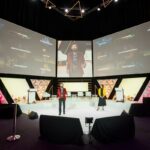
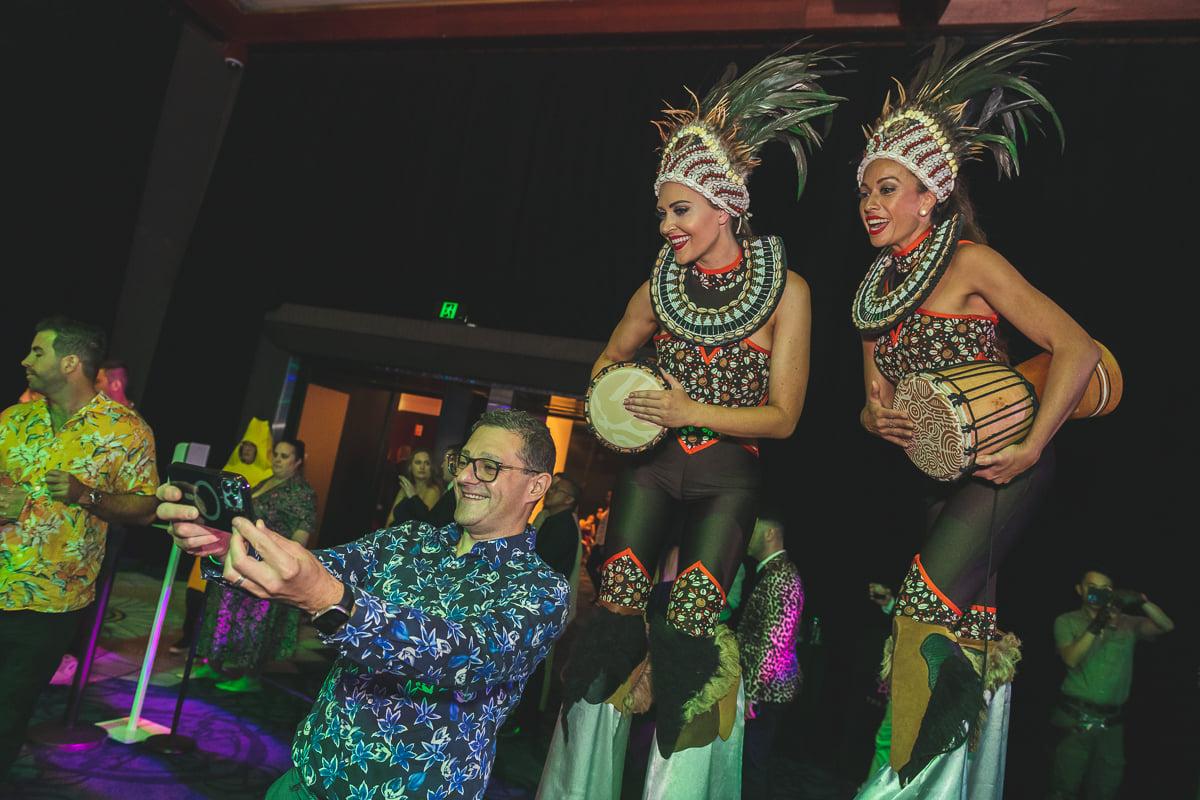
If your trade show presence includes a dedicated stage or a large sponsor pavilion, a feature act can become part of the scheduled programme. Our range includes Disco Diva, a mirror-ball performance, as well as dance and percussion acts suited to larger event spaces.
This type of entertainment needs more planning than an act working within a standard exhibition stand. Allow for the full performance area, audience, crew and equipment, and confirm any requirements around floor space, ceiling height, sound, lighting and access.
Work with the organiser to schedule performance times, rehearsals and changeovers around the wider expo programme. It also helps to decide what happens immediately afterwards, whether that’s a sponsor announcement, product demonstration or an invitation for visitors to continue the conversation with your team.
If the programme involves multiple performers, presenters or technical cues, stage management support can help keep everything running smoothly. The aim is for the entertainment and business content to feel like part of the same presentation, rather than two separate moments.
Match the Entertainment to Your Usable Stand Space
The advertised size of your stand only tells part of the story. Once displays, furniture, equipment and staff are in place, you also need enough room for the performer and any visitors who stop to watch or take part.
| Stand Type | What to Prioritise |
|---|---|
| Small shell-scheme stand | A compact interaction that keeps the performer and visitors within the stand |
| Medium custom stand | A defined performance or demonstration area with room for conversations to continue nearby |
| Large exhibition stand | Clear separation between the performance area, displays, visitor movement and stand staff |
| Sponsor pavilion | Dedicated space for entertainment, hospitality and more in-depth client conversations |
| Dedicated expo stage | Audience capacity, technical production, performer access and coordination with the wider programme |
Before confirming an act, ask about its full space requirements, including the room spectators are likely to need. It’s not enough for the performer to fit; visitors still need to move comfortably around the stand.
It’s also worth agreeing when the entertainment should pause if the viewing area becomes too busy or starts affecting access. A slightly smaller audience is better than creating congestion around the stand or spilling into the aisle.
Plan the Handover From Entertainment to Conversation
Entertainment can get someone to stop, but your team still needs to know what happens next. Decide who will pick up the conversation and what you can offer a visitor who wants to learn more.
The handover should feel simple. A magician might finish an interaction by introducing someone from your team, or a presenter might invite interested visitors to stay for a closer demonstration. From there, your staff can ask a relevant question, explain the product in more detail or arrange a follow-up conversation.
For example, if you’re exhibiting staff-rostering software, the performer might make a light reference to the challenge of keeping a busy team organised. Rather than turning that into a sales pitch, they can simply point interested visitors towards the product specialist standing nearby.
Make sure the person receiving those visitors is actually available. If your specialists are already tied up, pause new interactions, offer a return time or direct visitors to another useful next step rather than creating a crowd with nowhere to go.
QR codes can also work well for demonstrations, resources or meeting bookings, provided it’s clear what someone is signing up for. If you’re collecting personal information, the OAIC’s guidance on consent to handling personal information is a useful reference.
Plan the Entertainment Around the Exhibition Day
Put the entertainment into the same run sheet as your demonstrations and client appointments. Check the wider exhibition programme, including conference sessions, catering periods and neighbouring presentations, before settling on performance times.
Allow for performer breaks, equipment resets and conversations that continue after a session. Publish confirmed performance times on your stand so visitors know when to return, especially when the entertainment introduces a demonstration or announcement.
Give the performer and stand team one shared brief covering your audience, main objective, approved messages and product information. Include pronunciations, topics to avoid and who should answer technical questions. Discuss the tone of the interaction, cultural considerations and how to keep participation voluntary.
Nominate one event-day contact to coordinate changes with the performer and organiser. After the first appearances, check whether the timing and visitor flow are working, then adjust within the approved arrangements.
Our guide to event timing strategies has more advice on planning performance times around the wider programme. When you’re ready to compare options and lock everything in, our guide to booking corporate event entertainment covers the process from enquiry through to confirmation.
Check the Exhibition Rules Before Confirming the Act
Before booking entertainment, check the organiser’s exhibitor information, event guidelines or exhibitor manual for anything that could affect the performance. Requirements vary between exhibitions, so it’s worth confirming the details before the act and stand layout are locked in.
Depending on the entertainment, check:
- Space and movement: Stand boundaries, aisle access, audience positions and whether performers can move beyond your stand.
- Sound and equipment: Amplification, power, lighting, cables and any restrictions on performance times.
- Performer access: Event passes, bump-in arrangements, rehearsal access and somewhere appropriate for breaks or costume changes.
- Safety and approvals: Insurance, risk documentation and any additional approvals needed for larger equipment, elevated performers or special effects.
- Photography and hospitality: Any rules affecting filming, photography or food and beverage service connected with the entertainment.
For example, performers on stilts will need suitable clearance and an approved area to work, while a larger feature act may require more detailed production and safety planning. A close-up magician working quietly inside the stand will usually have very different requirements.
Ask for the performer’s technical requirements early and compare them with the information supplied by the organiser. Our guide to entertainment riders explains the details worth confirming before the event.
How to Plan Trade Show Entertainment for Your Stand
A little planning goes a long way when you’re bringing entertainment into an exhibition stand. Before confirming the act, make sure the format, timing and production details all line up with the space and the way your team plans to use it.
Ask how the act will work in your stand. Showreels are useful for getting a feel for the performer, but exhibitions are a very different setting from a stage or gala event. Ask how the performance can be adapted to your available space, audience size and surrounding environment.
Confirm what’s included in the quote. Depending on the act, this may include sound, lighting, equipment or crew, while larger performances can require additional production. It’s worth making those inclusions clear from the start.
Allow space for the audience as well as the performer. Even compact entertainment can attract a small group of people, so factor that into the stand layout and visitor flow.
Make sure your team is ready for the interaction. If the entertainment is designed to start conversations, have someone available to welcome interested visitors and continue the discussion afterwards.
Finalise branded elements early. If the performance includes product references, scripts, costumes or branded visuals, approve these before the event so the performer has time to rehearse them properly.
Find the Right Entertainment for Your Exhibition Stand
The best trade show entertainment ideas are the ones that suit your stand, your audience and the kind of conversations you want to create. That might mean a close-up interaction that draws a few people in, roving entertainment that gives the stand more visual presence, or a larger feature act for a sponsor pavilion or expo stage.
At Onstage Entertainment, we can help you narrow down the options and recommend performers that fit the space, format and tone of your exhibition. You can also explore our broader range of event entertainment if you’re still deciding which direction to take.
Send us your exhibition brief with the show name, dates, venue, stand size and location, along with who you want to attract and what you’d like the entertainment to help achieve. Include your working budget, preferred performance times and any known sound or space restrictions where possible.
You don’t need to have every detail locked in before getting in touch. A stand layout, exhibitor information and a clear idea of your audience are usually enough for us to start exploring suitable options.
Trade Show Entertainment FAQs
What Entertainment Works Best at a Trade Show?
Close-up magic can suit small-group conversations, professional presenters can host product demonstrations, and roving entertainment can provide a visual welcome or photo opportunity. Music, dancers and feature acts are worth exploring for larger stands or sponsor spaces with suitable performance arrangements.
What Entertainment Works in a Small Expo Booth?
Consider compact close-up magic or a short mime interaction where the performer and visitors can remain comfortably inside the stand. Check the act’s complete space requirements, including spectators, and discuss whether an unamplified format would suit the setting.
Can a Roving Performer Move Beyond the Exhibition Stand?
Only where the activity is permitted. Agree the intended route with the organiser and venue, including any promotional interactions, and obtain written approval where required. A roving booking does not automatically authorise movement throughout the exhibition hall.
How Often Should Trade Show Entertainment Run?
Agree a schedule around your demonstrations, visitor availability, staff capacity and the performer’s working arrangements. Repeated short sessions may suit the exhibition, with time for breaks and resets. There’s no single interval that works for every act or stand.
Can Trade Show Entertainment Be Branded?
Selected acts can incorporate approved messages, costume changes, choreography or product references. Discuss the scope early, including creative development, production costs, rehearsal and approval deadlines. The possibilities depend on the individual act and your exhibition brief.
Does a Quiet Act Still Need Organiser Approval?
It may. Movement, props, audience space and safety documentation can all require consideration, even without amplified sound. Describe the full activity to the organiser and check the exhibitor manual before assuming an unamplified performance is exempt.