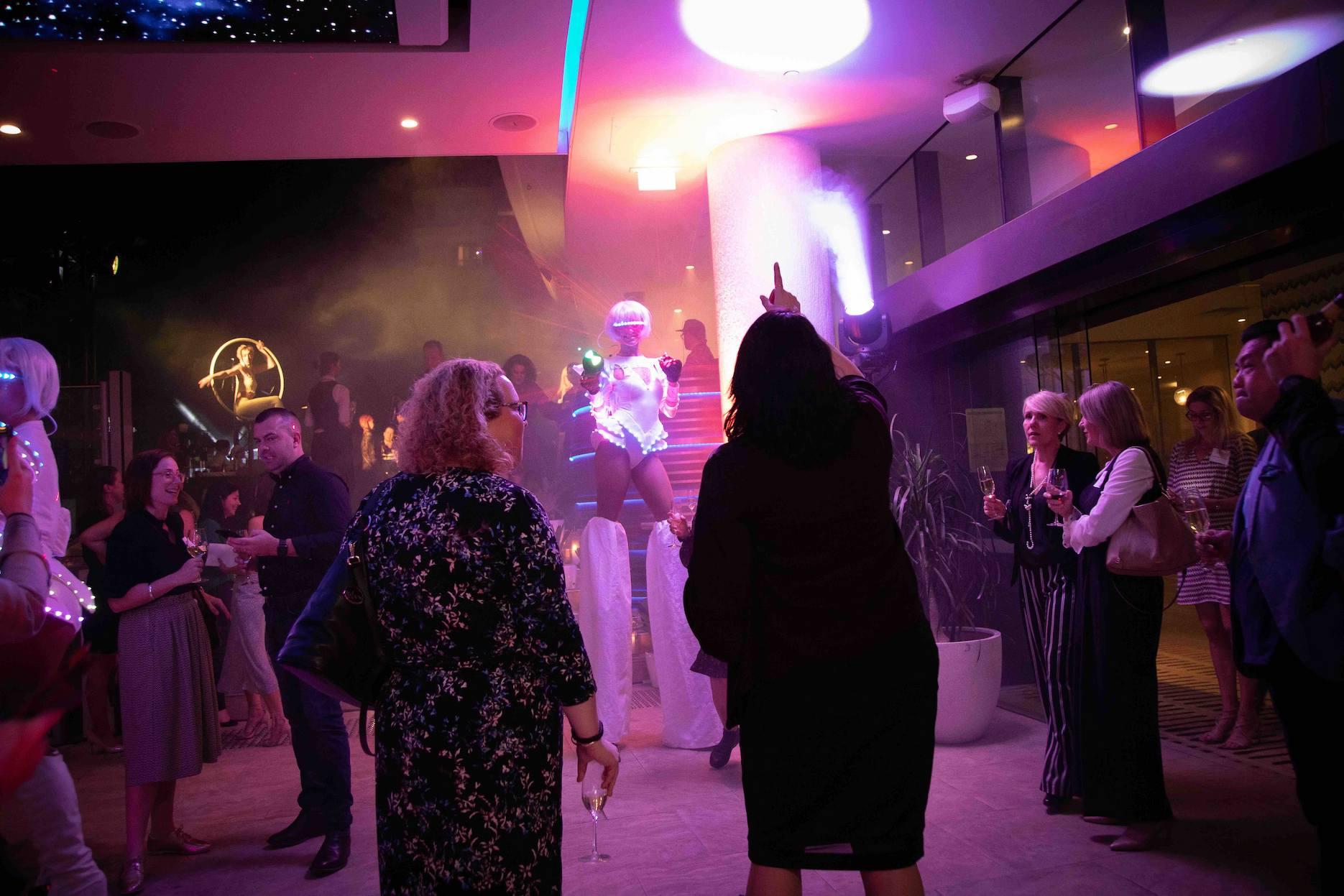
Choosing themed roving entertainment means deciding how performers should interact with guests within an agreed event theme. Start with the experience you want guests to have:
- Keep networking: visual atmosphere with minimal interruption.
- Pause for a photograph: an optional invitation to pose.
- Share a brief exchange: a conversation starter or playful prompt.
- Join a longer encounter: a story, routine or activity that needs time and attention.
Choose the Guest Interaction Your Event Needs
At a corporate reception, guests might be arriving, meeting colleagues or catching up with clients. Choose the main purpose of the entertainment before deciding how much attention it should ask of them.
Visual Atmosphere That Leaves Room for Networking
Choose visual atmosphere when costume and movement should carry the theme while guests continue their conversations. A restrained character might acknowledge people without repeatedly asking them to stop.
This asks little of guests, but leaves less room for a detailed character exchange or company message. If participation is the main objective, consider a more direct invitation.
Photo Opportunities Guests Can Choose to Join
Choose photo opportunities when you want guests to pause and become part of the picture. The encounter needs a clear invitation and somewhere people can comfortably stand or sit.
Position photo opportunities away from busy arrival routes so guests can stop comfortably while others keep moving. Agree how photographs will be captured and handled, including any later promotional use.
Conversation Starters for a Brief Shared Exchange
Choose a brief exchange when you want to give guests something to respond to together before returning to their own conversations. A character’s greeting or playful prompt could serve that purpose.
Guests need to hear, understand and welcome the exchange. Spoken interaction will depend on the room’s noise level and the communication needs of your audience.
Longer Encounters for Guests Who Want to Stay
Choose a longer encounter when guests have time to follow a routine, story or shared activity. It can give willing participants more to explore within the theme.
The trade-off is sustained attention and a place to gather. If guests will soon be called to dinner or speeches, a shorter encounter may suit that moment better.
Once the interaction is clear, our guide to how many roving entertainers you need covers numbers and coverage.
One Event Theme, Four Different Guest Experiences
A Hollywood theme can bring glamour to a networking reception, create red-carpet photo opportunities or inspire a playful activity. Choose the interaction around your event’s purpose, rather than letting the costume make the decision.
These hypothetical examples show four ways to interpret the same theme. We’d help you explore suitable performers and confirm any costume or character adaptations.
| Your Priority | Possible Hollywood Concept | How Guests Take Part | What to Consider |
|---|---|---|---|
| Keep networking flowing | A gold-statue mime offering smiles and small gestures as guests mingle | Notice the character, acknowledge them or continue talking | Keep interaction brief so guests can enjoy the atmosphere without losing the thread of their conversations |
| Create photo opportunities | A red-carpet character inviting guests to pose | Stop for a photograph or keep moving | Choose a position where people can pause without blocking arrivals or catering staff |
| Help guests start talking | A film-host character asking a small group about their favourite films | Share an answer, listen or join the conversation | Guests need to hear and follow the exchange; a quieter spot or visual interaction may suit a noisy setting better |
| Offer an optional activity | A character inviting guests to guess films from mimed clues | Watch the clues, offer guesses or follow along | Allow room for guests to gather and enough time to finish before dinner or speeches |
The distinction is what the performer invites guests to do. Two acts can look equally suited to your theme while asking for very different levels of attention and participation.
Match Costume and Movement to the Guest Experience
Consider how the costume will work when the performer moves, stops and interacts with guests, not just how it looks in a photograph.
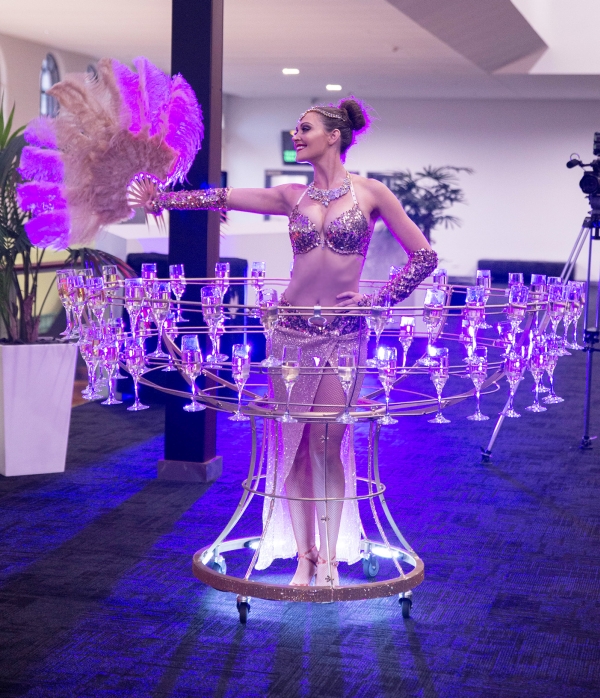
- Costume: wide feathers, a long train or a tall headpiece can create a striking silhouette. Consider how much space they leave for guests to stand alongside the performer or pass comfortably.
- Movement: decide whether the performer should keep circulating with brief acknowledgements or pause for photographs and exchanges. The costume and props need to support that movement.
Start with the effect you want, rather than a fixed costume. A different scale or simpler styling may preserve the theme while better suiting the interaction.
Choose a Character Style That Suits Your Guests and Brand
Decide how theatrical you want the encounter to feel. You might prefer themed styling with natural conversation, or a character with distinctive speech, gestures and humour.
For a mixed audience, keep references easy to follow. Guests should not need to recognise a particular film or know a character’s backstory to enjoy the exchange.
Describe the behaviour you want, not just the mood. “Playful banter, but no jokes about individual guests” gives us a clearer direction than “make it cheeky”. You can also flag boundaries around personal questions, surprise approaches or physical contact.
Brand fit goes beyond company colours. Let us know whether you’d prefer general humour or approved company references. Any specific message or scripted material needs to suit the chosen act, so we’ll discuss those requests alongside the character and styling.
Hollywood Nights: One Theme, Different Guest Encounters
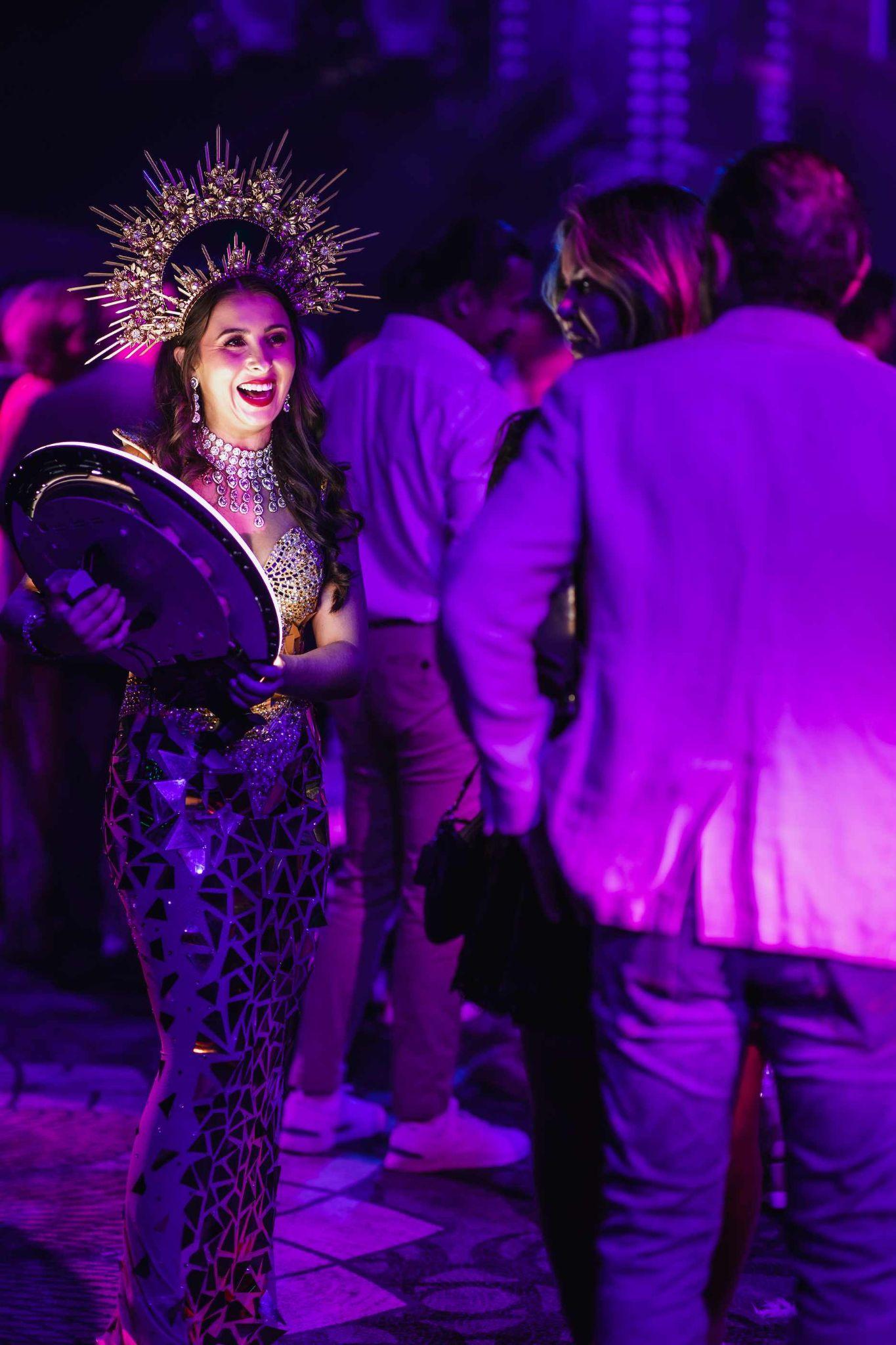
At our Hollywood Nights event, comic paparazzi greeted guests on the red carpet. Gold-statue mime characters posed for photographs, while roving performers offered an LED selfie experience.
The shared theme connected a playful welcome with different photo opportunities, showing how one creative direction can support several kinds of guest interaction.
Match the Interaction to Your Audience
Some guests will jump into a playful exchange; others will prefer to watch or keep chatting. Choose an approach that makes room for both, without expecting everyone to participate in the same way.
Choose How Performers Invite Guests to Join In
A performer-led invitation gives guests a clear opening. A greeting or shared question can start a brief exchange without asking for a lengthy commitment. Guests should be able to respond, watch or politely decline, particularly when they’re already in conversation.
Letting guests approach the performer gives them more control over when they take part. This can suit a reception where conversations are the priority. The opportunity needs to be obvious, though: guests shouldn’t have to guess whether they can ask for a photograph or join an activity.
You can also combine the two approaches. A character might acknowledge guests while circulating, then pause for a more involved exchange with those who show interest. The aim is to offer an opening, not interrupt every group.
Consider Communication, Comfort and Accessibility
Look beyond whether an act appears to suit the theme. Consider what guests would need to do to enjoy it:
- Follow the performance: does it rely on spoken dialogue, small visual details or familiarity with particular cultural references?
- Take part comfortably: can guests enjoy it while seated, without speaking or without holding a prop?
- Choose their level of involvement: can they observe from a little further away or leave without disrupting the performance?
These details help us distinguish between an appealing concept and a suitable choice. For example, a spoken guessing game may need visual clues, while a close-up routine may need positioning that gives seated guests a clear view.
Consider sound, lighting and personal space too. A silent character can still use bright effects or approach people closely, so quiet entertainment is not necessarily subtle entertainment.
Share any relevant language, communication or access requirements with us. We can use them to narrow the options and confirm practical adaptations with the proposed performer.
Match Your Roving Entertainment to the Venue
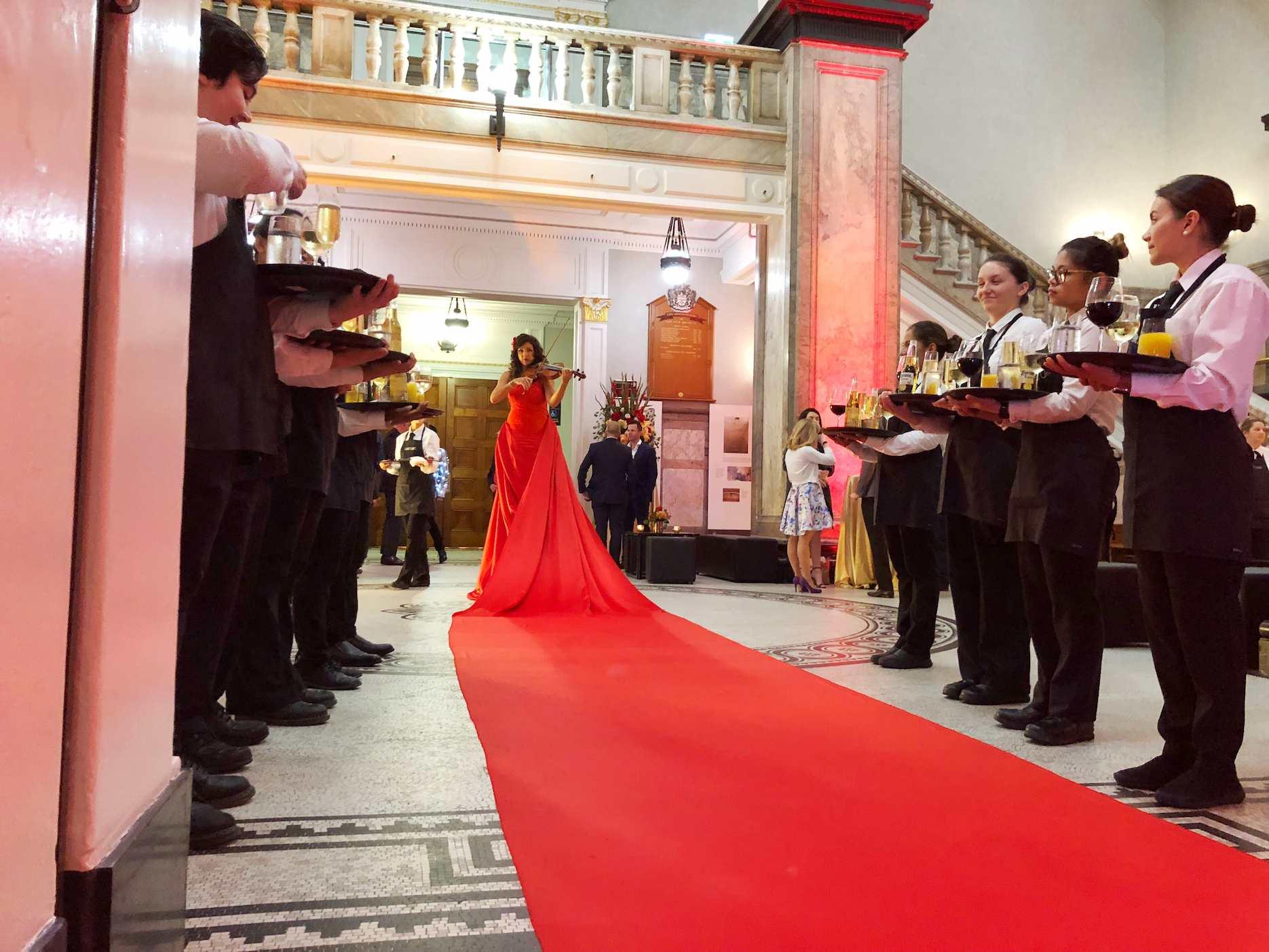
A photo opportunity needs somewhere to pause, while a conversation-led character needs a spot where guests can hear. Consider both the performer’s route and the space each encounter will occupy, including guests who stop to watch.
| Venue Factor | What to Check | How It Affects Your Choice |
|---|---|---|
| Guest flow and gathering space | Furniture, arrival queues, catering routes and places where guests can stop | Move photographs and longer encounters away from busy routes. Brief greetings may suit areas where guests need to keep moving. |
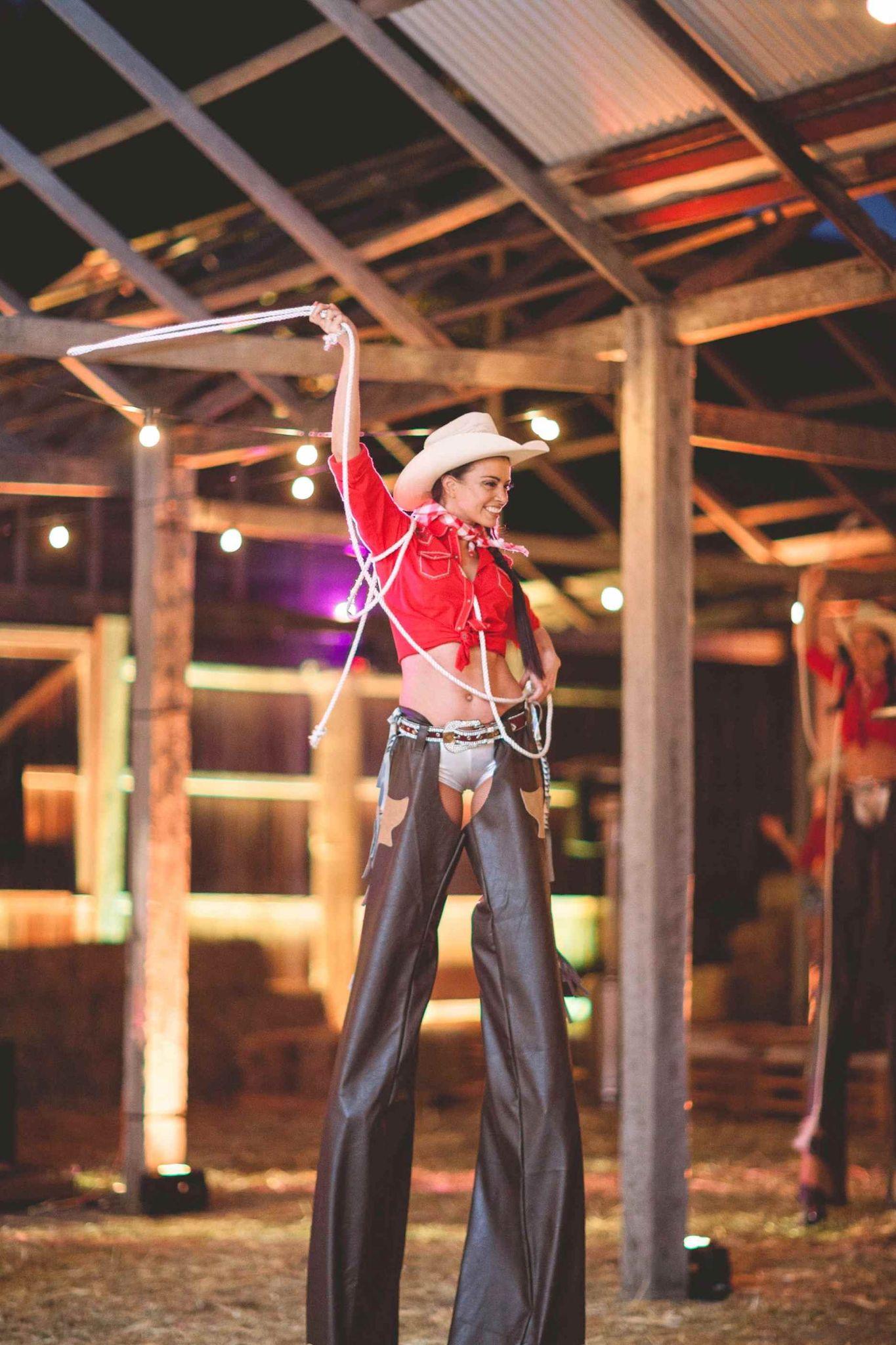
| Flooring and changes in level | Steps, slopes, thresholds, loose rugs and potentially wet surfaces | Confirm suitability for any stilt or wheeled act. A different route or performance format may be needed. |
| Ceiling height and overhead obstructions | Doorways, beams, hanging decorations and the lowest clearance along the route | A smaller costume or different character may preserve the theme where a tall act will not fit. |
| Event lighting | Visibility of faces, props and walking routes under the lighting planned for the event | Detailed visual routines may need a brighter position. Consider whether illuminated costume effects would complement or dominate the setting. |
| Performer access | Entrances, stairs, lifts and the route into the intended performance area | Check that the costume and equipment can reach the space. Restricted access may favour a more compact format or another location. |
| Background sound | Music, announcements and whether guests can hear a spoken exchange | Choose a quieter position for dialogue-led encounters, or consider visual interaction where music dominates. |
| Outdoor conditions | Exposure to heat, wind and rain, plus the available covered alternative | Confirm whether the act suits the expected conditions and whether the alternative space can accommodate the same interaction. |
A venue constraint doesn’t have to mean abandoning your theme. Changing the position, costume scale or style of interaction may retain the effect you want.
Share your venue with us, along with any floor plans or photographs you already have. We can help narrow the options and work through the relevant requirements with the performer and venue.
Plan Your Themed Roving Entertainment with Onstage
The right themed roving entertainment should complement what your guests are there to do. That might mean adding a striking visual presence while clients network, creating opportunities for photographs or giving colleagues something playful to enjoy together.
At Onstage Entertainment, we can help you turn that preference into a suitable entertainment choice. We’ll consider your theme, audience and venue together, including how performers approach guests and whether the occasion calls for subtle interaction or a more theatrical character.
Explore our roving entertainment options for themed characters and visual performances, or browse our magicians and comedic acts for closer interaction and shared moments of surprise.
Share your theme, venue and audience with us, along with the experience you’d like to create. You don’t need to have a particular act chosen or every detail confirmed. Whether you have a clear creative direction or are deciding between a few approaches, we can help you narrow the options and plan an encounter that suits your guests.
FAQs About Choosing Themed Roving Entertainment
Can One Roving Performer Offer Both Photo Opportunities and Conversation?
Some performers may be able to combine different types of interaction. For example, a themed character might exchange brief greetings while circulating, then pause for photographs in a suitable area.
Choose which experience matters most, rather than assuming every act can do everything. At Onstage, we can help you explore which combinations are practical for the performers and venue you’re considering.
How Can Roving Entertainment Reflect an Abstract Corporate Theme?
An abstract theme, such as innovation or connection, doesn’t necessarily need a literal character. Costume, movement, personality and the way performers engage guests can communicate the idea.
For example, a theme centred on connection might suit a warm, approachable character offering brief shared interactions. An innovation theme could favour a striking visual presence with optional photographs.
The aim is to translate the theme into something guests can experience, rather than relying on a costume to explain it.
Can the Level of Guest Interaction Change During the Event?
Potentially, depending on the performer and the format. You might prefer a subtle visual presence during arrivals, followed by more opportunities for photographs once guests have settled.
Discuss these different moments with Onstage so we can assess whether the proposed act can accommodate them. Some performances have a defined structure, while others may allow more flexibility in how guests engage.