Successful corporate events on the Gold Coast match the venue, programme, entertainment and production plan to a clear business objective. This guide will help you choose the right location, compare suitable venues, select entertainment and avoid the logistical problems that can disrupt conferences, awards nights, product launches and staff functions.
| Decision | Practical Rule |
|---|---|
| Event objective | Define what guests should know, feel or do afterwards. |
| Venue | Check usable capacity after adding staging, AV, catering areas and a dance floor. |
| Entertainment | Give each performer a specific role within the programme. |
| Event delivery | Confirm technical requirements, access, transport and cue responsibilities early. |
The Gold Coast can accommodate everything from national conferences and exhibitions to premium client dinners and company celebrations. The challenge is making those individual choices work as one event.
Start With the Purpose and Event Format
Before comparing venues or performers, decide what the event actually needs to achieve.
A conference may need to educate delegates and keep several sessions running to time. An awards night needs to recognise achievement without allowing formalities to dominate the evening. A networking event should make conversation easier, while a product launch needs to focus attention firmly on the product.
Before shortlisting options, clarify:
- What should guests know, feel or do after the event?
- Which parts of the programme need their full attention?
- When should the atmosphere become more relaxed or energetic?
- How much movement between spaces will the programme require?
- What level of staging, sound, lighting or presentation support will be needed?
These decisions quickly narrow the venue and entertainment options.
For example, a lively band might be perfect after an awards presentation but counterproductive during a networking session. A theatre can give a product launch excellent focus and sightlines, but it may require a separate space for drinks and conversation afterwards.
Start with the purpose, then build the room and programme around it.
Planning Corporate Events on the Gold Coast: Choose the Right Precinct
Where the event is held can affect accommodation, transport, delegate movement and the type of programme you can realistically run.
The Gold Coast has several distinct corporate-event precincts, each suited to different formats.
Broadbeach for Conferences and Large Programmes
Broadbeach is the most practical all-round option for large business events.
The precinct brings together the Gold Coast Convention and Exhibition Centre, The Star Gold Coast, hotels, restaurants and convenient access to the G:link light rail.
That concentration is useful for conferences involving interstate delegates because accommodation, daytime sessions and evening functions can remain within a relatively compact area.
Broadbeach is particularly suited to national conferences, exhibitions, large gala dinners, awards nights and multi-venue programmes.
Surfers Paradise for Social and Mid-Sized Events
Surfers Paradise works well when accommodation and a strong social component are part of the brief.
It suits smaller conferences, staff functions, cocktail events, rooftop gatherings and corporate dinners. Guests also have plenty of dining and entertainment options outside the formal programme, which can be useful for multi-day events.
The main consideration is movement. Check coach access, hotel entrances, traffic conditions and the distance between venues against the actual run sheet.
Main Beach for Premium Client and Executive Events
Main Beach is well suited to leadership meetings, private client functions and formal dinners where service, privacy and atmosphere matter more than access to a large convention precinct.
It can be particularly effective for board functions, executive gatherings, leadership retreats and premium client hospitality.
The venue itself should still suit the organisation. An elaborate hotel interior may fit a luxury brand but feel excessive for a business seeking a restrained corporate environment.
Bundall and HOTA for Stage-Led Programmes
Bundall becomes more relevant when the presentation itself is the focal point.
HOTA can suit keynote events, product presentations, award ceremonies and feature performances that benefit from theatrical lighting, backstage facilities and fixed seating.
Theatre layouts create strong sightlines and audience focus, but organisers need a separate plan for arrivals, networking, catering and the transition after the presentation.
Benowa for Residential Conferences and Retreats
Benowa suits programmes designed to remain largely on site.
A resort environment can support residential conferences, executive retreats, golf programmes and leadership gatherings that combine formal sessions with recreation or team activities.
The trade-off is transport. Guests may not be able to walk between accommodation, restaurants and external functions, so transfers should be considered as part of the programme.
Airport Access and Delegate Transport
Gold Coast Airport offers taxi, rideshare, transfer and public-transport options. Route 777 connects the airport with Broadbeach South, where passengers can join the G:link light rail towards Surfers Paradise and Southport.
Dedicated transfers may be more practical when:
- Large numbers of delegates arrive on similar flights
- Guests are travelling with luggage
- The first function begins soon after arrival
- The venue is outside the main transport corridor
- The programme finishes late
- Guests require additional accessibility support
Consider flight times, hotel check-in and the first scheduled event together. A welcome function can quickly become stressful if a substantial portion of the guest list is still travelling from the airport.
Corporate Event Venues on the Gold Coast
Once you have chosen the precinct, assess individual venues using the event’s actual configuration rather than the largest capacity shown in a brochure.
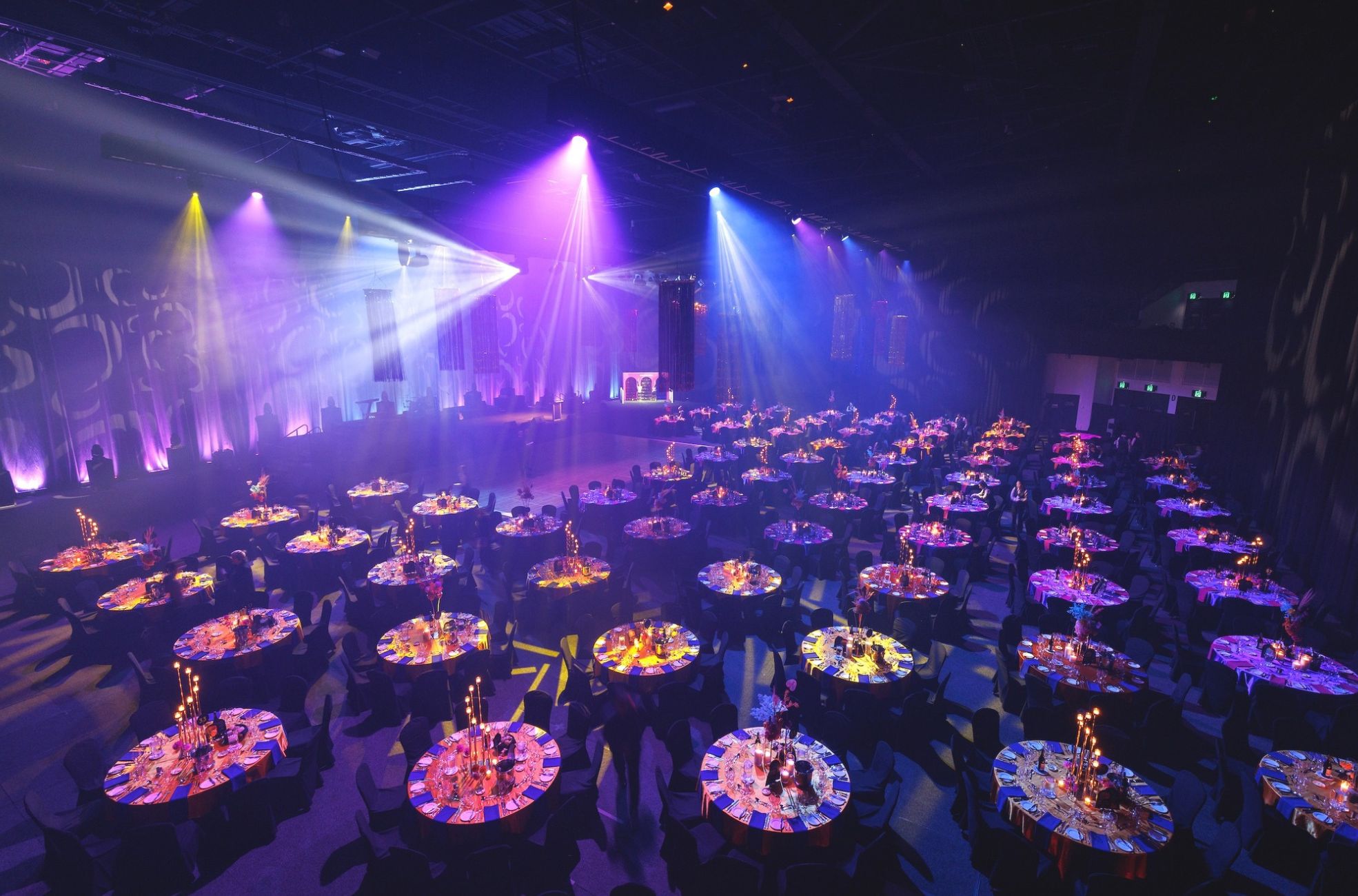
A stage, dance floor, AV control position, sponsor displays, catering stations and entertainment equipment can all reduce usable capacity.
Ask for a floor plan showing the proposed setup before making a final comparison.
Gold Coast Convention and Exhibition Centre
Best for: Major conferences, exhibitions, trade events and programmes requiring several simultaneous spaces.
The Gold Coast Convention and Exhibition Centre has 22 flexible event spaces and can accommodate up to 6,000 guests in its largest configurations. Its scale allows organisers to combine main sessions, breakout rooms, catering, speaker preparation and sponsor areas within the same venue.
Its Broadbeach location also makes it practical to combine daytime conference activity with accommodation or an evening function nearby.
Planning consideration: Confirm production responsibilities, loading access, room-change timings and how delegates will move between conference, exhibition and catering spaces.
The Star Gold Coast
Best for: Large awards nights, gala dinners, conferences and residential corporate programmes.
The Star combines substantial event facilities, accommodation, restaurants and bars within the Broadbeach precinct.
That can simplify programmes involving a formal conference component followed by a gala dinner, awards presentation or social function.
Planning consideration: Ask for a floor plan that includes the stage, screens, dance floor, AV position and entertainment equipment. Also confirm supplier access and guest movement between pre-dinner drinks and the main function room.
The Island Gold Coast
Best for: Mid-sized conferences, corporate dinners, EOFY functions and staff celebrations.
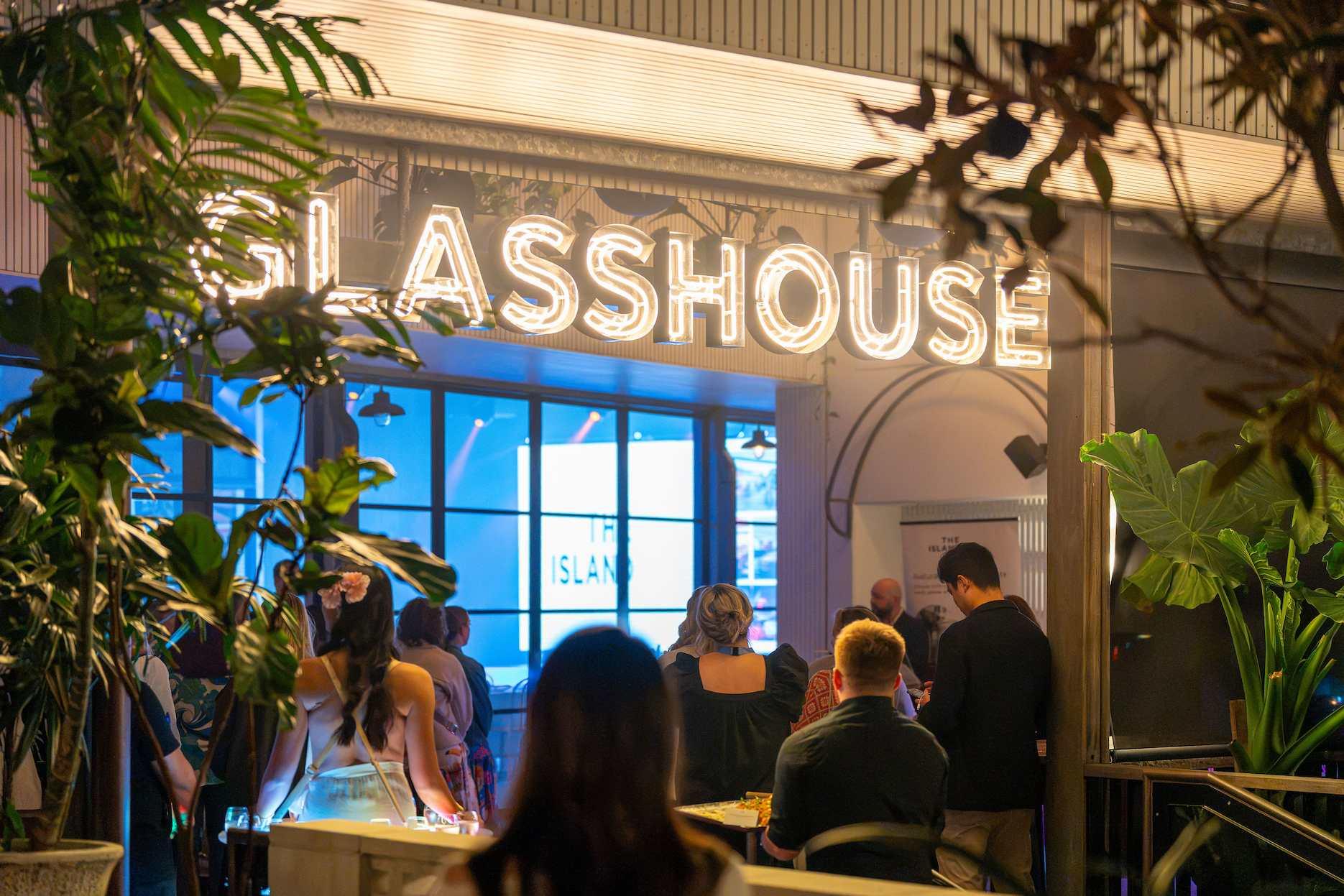
The Island combines accommodation, meeting rooms and social spaces within its Surfers Paradise property. The Glasshouse can accommodate up to approximately 700 guests cocktail-style, 560 theatre-style or 320 in a standard banquet configuration.
It is particularly useful when the programme needs to move naturally from business into a more relaxed social event.
Planning consideration: Confirm the final room configuration, sound restrictions, wet-weather arrangements and access for performers or larger production equipment.
Imperial Hotel Gold Coast
Best for: Premium client functions, board meetings, executive gatherings and formal dinners.
Imperial Hotel Gold Coast combines 200 accommodation rooms with several meeting and event spaces. Its larger configurations can accommodate approximately 350 guests theatre-style or cocktail-style and around 220 for a banquet, subject to the final layout.
The distinctive interiors can create a strong setting for a premium event, but they also need to work with company branding, screens and lighting.
Planning consideration: Review room dimensions, staging options, supplier access and the way existing décor will interact with the event design.
HOTA, Home of the Arts
Best for: Keynote events, product launches, award ceremonies and stage-led corporate programmes.
HOTA offers a different environment from a traditional hotel ballroom. Theatre 1 seats 1,121 guests and includes a substantial stage, loading dock, dressing rooms, green room and professional production facilities.
That infrastructure is valuable when audience focus and presentation quality are central to the event.
Planning consideration: Plan the spaces used before and after the main presentation, particularly for catering, sponsor displays, networking and transport back to delegate accommodation.
RACV Royal Pines Resort
Best for: Residential conferences, executive retreats, golf programmes and multi-day events designed to remain largely on site.
RACV Royal Pines combines event spaces, accommodation, dining, golf and team-building facilities within one resort.
Keeping the programme on site can simplify multi-day events and reduce the number of external suppliers and transfers that need to be coordinated.
Planning consideration: Consider airport transport, evening transfers, movement around the resort and access routes for performers and production suppliers.
Corporate Entertainment on the Gold Coast: What Works and When
Once you know the event format and the type of room you are working with, the next question is what the entertainment needs to do.
The best event entertainment has a clear purpose within the programme. It might set the tone on arrival, make networking easier, focus attention on the stage or change the energy after a day of presentations.
Selecting an act first and finding somewhere to fit it afterwards usually leads to compromises.
Professional MCs
A professional master of ceremonies, or MC, does far more than introduce speakers.
A strong MC manages the tone, moves the audience between programme elements and provides flexibility when timings change.
Suppose dinner service runs 15 minutes late. An experienced MC may shorten an introduction or adjust a transition so the programme can recover without guests feeling rushed.
That becomes much harder when several executives share hosting duties and no one has responsibility for the overall flow.
Professional MCs and guest speakers are particularly useful when the programme includes several speakers, awards, entertainment, sponsor acknowledgements or strict finishing times.
Give the MC correct pronunciations, speaker biographies, timings, company context and contingency notes rather than simply handing over a list of names.
Live Bands, DJs and Acoustic Musicians
Music needs to suit the part of the event in which it appears.
An acoustic musician or small ensemble can create atmosphere during arrivals without making conversation difficult. This works well for client functions, conference receptions and pre-dinner drinks.
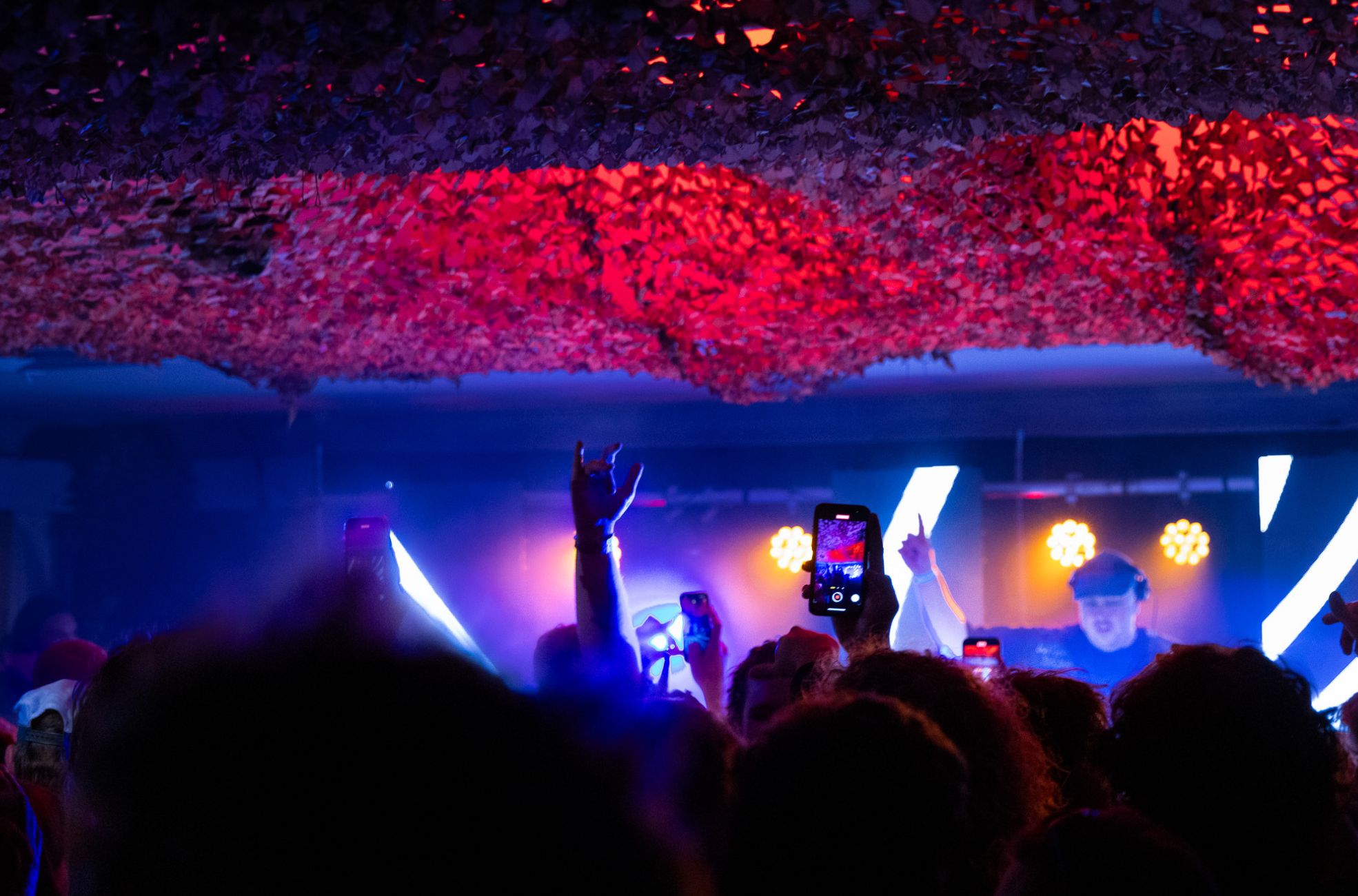
A live band generally becomes more effective once formalities are finished and guests are ready to celebrate. Bands suit awards nights, gala dinners and staff functions where dancing is part of the plan.
A DJ offers a broad musical range and a smaller performance footprint. They can also adapt quickly if the formal programme finishes earlier or later than expected.
Volume matters. A band may be excellent at 9.30 pm but frustrating at 6.00 pm when guests are trying to network.
Before booking, confirm the performance area, venue sound restrictions, equipment responsibilities, set lengths and equipment-check times.
Roving Performers, Magicians and Mentalists
Roving entertainment works particularly well during arrivals, cocktail periods, networking sessions and room resets.
Magicians, mentalists and other interactive performers can give guests an easy conversation starter without requiring everyone to stop and watch a stage.
Timing is critical.
A magician working between crowded tables while staff clear dinner plates will struggle to create a strong interaction. A roving performer circulating during a speech will divide the audience’s attention.
Plan where performers can move, when they should finish and how much interaction suits the audience. Some groups enjoy active participation, while others respond better to entertainment that creates interest without putting guests on the spot.
Guest Speakers
Choose a guest speaker for relevance rather than recognition alone.
The strongest speaker is one whose experience connects with the audience, event objective and wider programme.
Ask:
- What should the audience take away from the presentation?
- Does the topic suit their industry and seniority?
- How long can guests realistically remain attentive?
- Would questions or an interview format work better?
- Does the presentation repeat material covered elsewhere?
- What technical support will be required?
Conference dinners need particular care. Delegates who have spent the day listening to presentations may respond better to a shorter speaker, interview-style conversation or entertainment segment than another lengthy keynote.
Feature Acts and Custom Performances
Feature acts are most effective when the programme needs one clearly defined moment of impact. That might be an awards-night opening, conference finale, product reveal or transition from dinner into celebration.
At a product launch, the product still needs to remain central. If guests remember the act but struggle to recall what was launched, the creative idea has worked as entertainment but not as communication.
Custom performances can incorporate company content, scripts, music, choreography, visual material and reveal cues. These concepts require more time for development, approvals and rehearsal.
Specialist acts may also need additional staging, approved rigging, exclusion zones or longer venue access.
Check the Technical Requirements Before Booking
Ask for the performer’s technical rider before confirming the booking. This document explains the equipment, staging, sound, lighting and access the act requires.
A performance fee may not include every technical element needed at the venue.
The organiser, venue or production supplier may still need to provide sound equipment, microphones, lighting, staging, power, rigging, technicians or rehearsal access.
Review those requirements early enough to change the act or venue if necessary.
Match the Entertainment to the Event Format
The same entertainment can perform very different roles depending on the event.
| Event Format | Role of the Entertainment | Suitable Options |
|---|---|---|
| Conference | Maintain pace, focus attention and change the energy between business sessions | Professional MC, guest speaker, short energiser or separate dinner entertainment |
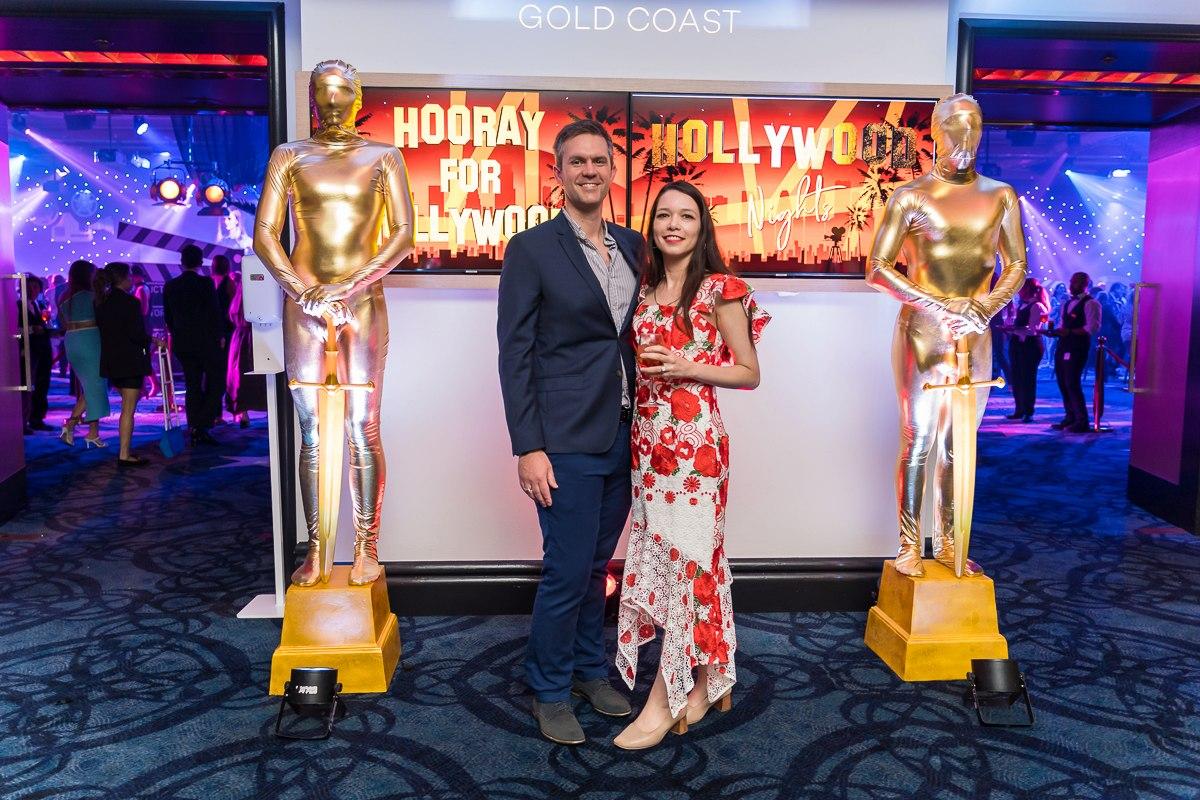
| Awards night or gala dinner | Support formalities, improve transitions and lead into the celebration | MC, short music cues, feature act, live band or DJ |
| Product launch | Build anticipation while keeping the product and brand message central | MC, custom reveal sequence, branded performance or interactive demonstration |
| Networking or client function | Create atmosphere and shared talking points without disrupting conversation | Acoustic music, roving performers, magicians or light interactive entertainment |
| Staff, EOFY or Christmas function | Help guests shift out of work mode and create an inclusive social atmosphere | DJ, live band, interactive act, comedy or roving entertainment |
Treat this as a starting point rather than a fixed formula. The final choice should reflect the audience, room layout, programme timing and event objective.
Bring the Venue, Entertainment and Programme Together
Once the venue and entertainment are selected, the remaining job is making them operate as one programme.
Onstage’s corporate event management guide covers the wider planning process in more detail. For a Gold Coast event, the following areas deserve particular attention.
Test the Venue Against the Full Programme
Assess the venue chronologically, from arrival to departure.
Ask:
- Where will guests register?
- Where will they place luggage or personal items?
- How will they find the first session?
- Where will speakers and performers wait?
- How will catering staff move through the room?
- Can award recipients reach the stage easily?
- What happens when formalities finish?
- How will guests find transport home?
A room can look perfectly workable on a floor plan until several hundred people need to pass through the same doorway during a ten-minute break.
Walking through the programme step by step exposes these problems early.
Build Entertainment Into the Run Sheet
The run sheet should connect entertainment with catering, speeches, room changes and technical cues.
Arrival music can begin before the room is full. Roving entertainment may finish just before guests are called to their seats. A feature act may require service staff to leave the room and the lighting to change.
A band may need a short equipment check after speeches but before dancing begins.
Avoid placing a performance:
- While guests are still entering
- During noisy plate clearing
- Opposite an active bar
- While part of the room is being reset
- Before sound or lighting checks are complete
Allow time for preparation and transitions rather than recording only the public start and finish of each segment.
Confirm Production Responsibilities Early
Technical requirements need clear ownership.
Confirm who is responsible for:
- Stage and performance areas
- Sound and microphones
- Lighting
- Screens and video content
- Power
- Rigging
- Speaker and performer waiting areas
- Loading access
- Supplier parking
- Rehearsals or equipment checks
- Noise restrictions
- Operating each piece of equipment
Pay attention to physical access as well. An act may fit comfortably on stage but still be impossible to move through a narrow corridor, doorway or passenger lift.
Plan Accommodation and Transport Together
Interstate delegates need a coordinated arrival and departure plan, not simply a list of nearby hotels.
Clarify:
- Check-in and check-out times
- Luggage storage
- Accessible rooms
- Distance between accommodation and the venue
- Group transfers
- Late-night transport
- What happens when flights arrive before rooms are ready
For multi-venue programmes, test travel times at the same time of day as the event rather than relying only on the distance shown on a map.
Prepare a Real Wet-Weather Plan
Outdoor terraces, rooftops, lawns and pool decks need an operational indoor alternative.
Confirm:
- Which indoor space is reserved
- Whether it can hold the full guest list
- How quickly the event can move
- What happens to furniture and catering
- Whether the entertainment can perform indoors
- How guests will be notified
- Who makes the final weather decision
“We’ll move inside if it rains” is not a complete contingency plan. The alternative space needs to work with the actual guest count, catering setup and entertainment requirements.
Assign Responsibility for the Live Programme
The venue coordinator, organiser, MC, AV team and entertainment supplier have different responsibilities.
The venue coordinator generally manages the property, catering and venue staff. The AV team operates technical equipment. The MC communicates with the audience. Performers concentrate on their acts.
For events involving several speakers, award recipients, performances and production cues, professional stage management can provide one point of control behind the scenes.
The stage manager can check that speakers are ready, coordinate entrances and call cues while the MC concentrates on the audience and the organiser looks after guests and stakeholders.
Planning Corporate Entertainment With Onstage
A useful entertainment recommendation starts with more than a request for “a band” or “some roving entertainment”.
Provide:
- Event date
- Venue or preferred Gold Coast precinct
- Event format
- Guest count
- Audience profile
- Business objective
- Draft timings
- Desired tone
- Approximate entertainment budget
- Existing AV and production arrangements
Onstage Entertainment can then recommend performers suited to the audience, room and programme.
That may involve one performer, such as an MC, speaker, DJ or musician. It may also combine arrival entertainment, an awards-night feature, production cues and live music after formalities.
Onstage can assist with entertainment selection, live bands, DJs, roving performers, magicians, interactive acts, feature entertainment, professional MCs, guest speakers, performer briefing, technical coordination, stage management and wider event-planning support.
The goal is not to fill every available gap with entertainment. It is to identify the moments where entertainment will improve the programme and make sure those moments work within the venue and run sheet.
Plan Your Gold Coast Corporate Event
Well-planned corporate events on the Gold Coast start with a clear objective and then connect the venue, entertainment and delivery plan around it.
Choose a room that works for the actual programme, not just the guest count. Give entertainment a defined role, resolve technical requirements early and make sure someone has responsibility for the live running order.
Onstage Entertainment can help source corporate event entertainment, brief professional MCs and guest speakers, coordinate production and provide event planning and coordination across the wider programme.
Contact Onstage Entertainment with your event date, guest count, venue status and programme objectives to discuss your Gold Coast corporate event.
Gold Coast Corporate Event FAQs
How Far in Advance Should You Book Corporate Entertainment on the Gold Coast?
For major Gold Coast corporate events, aim to book entertainment six to twelve months in advance, particularly for awards nights, gala dinners and November or December functions. Straightforward local bookings may still be available within three to six months, while custom performances, interstate talent and technically complex acts usually require more lead time.
How Much Does Corporate Entertainment Cost on the Gold Coast?
There is no standard price for corporate entertainment on the Gold Coast. Costs depend on the type and number of performers, performance duration, event date, travel, equipment, production requirements, customisation and rehearsals. Request a quote that clearly separates the performance fee, travel expenses, technical inclusions and any equipment the venue or organiser must provide.
Should You Book the Venue or Corporate Entertainment First?
In most cases, confirm the venue before finalising corporate entertainment because the room determines available space, sound restrictions, access and production facilities. Bring entertainment and production specialists into the process earlier for technically complex concepts such as custom product reveals, aerial performances or large feature acts, as these requirements may affect which venues are suitable.
What Information Do You Need for a Corporate Entertainment Quote?
To receive an accurate corporate entertainment quote, provide the event date, venue, guest count, event format, audience profile, draft timings and preferred entertainment style. Include the available AV setup, required performance duration, budget range and any branding or customisation requirements. A detailed brief helps the supplier recommend suitable performers and identify additional production costs early.
Can a Company Executive MC a Corporate Event?
Yes, an internal executive can MC a short or informal corporate function, particularly when they know the audience well. For awards nights, conferences and programmes involving several speakers or entertainment segments, a professional MC is usually better placed to manage timing, transitions and audience instructions while company executives focus on their presentations and guests.
Are AV and Staging Included in Corporate Entertainment Fees?
Not always. A performer’s fee may cover the act and personal equipment but exclude the sound system, lighting, stage, microphones, technicians or specialist rigging. Request the performer’s technical rider before confirming the booking and establish which equipment will be supplied by the performer, venue and production provider.
Can Corporate Entertainment Be Customised for a Company or Product Launch?
Yes. Corporate entertainment can be customised with music, scripts, branded visuals, choreography, company references, product-reveal cues and audience interaction. Bespoke performances require a clear creative brief, sufficient development time and an agreed approval process. Confirm the technical requirements with the venue before finalising the concept.