
Want to attract more people to your pub, club or hotel and give regulars a reason to keep coming back? A well-planned live entertainment calendar can help you choose the right performers for the right nights, from relaxed Sunday sessions to lively Friday evenings.
But successful venue entertainment isn’t just about filling dates with bands and DJs. It’s about understanding your audience, choosing entertainment that suits each session and building a programme your guests look forward to.
To plan yours:
1. Match each session to your audience and trading pattern.
2. Choose suitable performers around a clear purpose and working budget.
3. Confirm delivery, including bookings, venue requirements and promotional responsibilities.
4. Review results, including attendance, costs, relevant sales and feedback, before expanding.
A guitarist beside the bistro and a band filling the dance floor have different jobs. Your calendar should explain why each booking belongs there.
At Onstage Entertainment, our venue programming service supports recurring entertainment bookings. We’d start with what already works, which sessions need attention and what your venue can comfortably accommodate.
Match Your Entertainment Programme to Your Venue and Audience
Look at bookings, attendance and sales by session rather than weekly totals. Ask duty managers where guests settle, when they leave and which spaces need attention.
Plan Separately for Bars, Dining Areas and Performance Rooms
For a pub, distinguish the after-work bar crowd from bistro diners and weekend music audiences.
For a licensed club, consider how lounge entertainment sits alongside dining, member activities and dedicated shows. Regular patrons and ticket holders may need different spaces and arrival arrangements.
For an accommodation hotel, separate the lobby, restaurant and destination bar. Guests checking in or talking over dinner needn’t have the same experience as visitors arriving for a performance.
Mark meal-service periods, available floor space and sightlines on the plan.
For example, an acoustic soloist might be ideal for a relaxed afternoon in the courtyard, while a live band or DJ could better suit a lively main bar later in the evening.
Each space needs its own entertainment brief, taking into account the audience, atmosphere, room layout and trading pattern.
Give Each Regular Entertainment Session a Clear Purpose
Write a one-sentence purpose before choosing an act. For example: “Sunday music should give lunch guests a relaxed afternoon together, with conversation still comfortable.”
A Friday-night brief might prioritise dancing after dinner. An occasional ticketed show could give people a specific reason to book ahead and travel to the venue.
Choose a relevant measure for each assignment. Dance-floor activity may matter on Friday; dining feedback may tell you more on Sunday.
Don’t automatically start with the quietest night. Consider whether there’s an audience to build on and a believable reason to visit. Start with a programme you can fund and staff consistently, then assess whether another session is justified.
Choose Bands, DJs and Acoustic Acts for Each Session
Choose the format around the session’s purpose before shortlisting performers. A room photo, audience description and details of your sound setup give us more to work with than “a band on Fridays”.
We can use that brief to discuss suitable formats and performers, whether the session calls for conversation over dinner, a dance floor or a featured show.
Soloists and Duos for Dining and Conversation
Consider a soloist or duo where live music should sit comfortably alongside meals and conversation. Specify the repertoire, interaction style and expected energy.
“Acoustic” isn’t a volume guarantee. Confirm the instruments and amplification rather than assuming a smaller line-up solves the room’s sound constraints.
Live Bands for Dancing and Featured Performances
Our live bands and musicians offer options for sessions where the performance or dance floor is a central attraction. Allow for the complete setup, including instruments and equipment.
Check where diners will sit, how staff will move and whether soundcheck can happen without disrupting service. Choose the line-up the room can support.
DJs for Dance-Focused and Themed Sessions
Consider our professional DJs for a dance-focused session or an evening with a defined musical style. Describe the audience and desired atmosphere rather than asking for “something for everyone”.
Agree how requests, explicit lyrics and changes in energy should be handled throughout the session.
Roving Entertainers for Themed Nights and Special Events
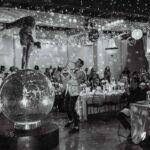
For themed nights, venue anniversaries or special promotions, roving entertainers can add something unexpected to your entertainment calendar without requiring a traditional stage show.
Imagine illuminated stilt walkers welcoming guests or LED-costumed performers serving canapés as they mingle through the crowd. These interactive acts create memorable moments while guests continue socialising, dining and enjoying the evening.
Our roving entertainment options can complement your regular live music or DJ programme. Match the performers to your venue’s layout, considering ceiling heights, clear walkways, guest movement and food service before deciding where and when they’ll appear.

Build a Monthly Live Entertainment Calendar
Use one working calendar for entertainment, private functions, maintenance and other commitments affecting the same spaces. For each booking, record the performer, room, times, booking status, agreed fee and person coordinating it.
Keep provisional holds out of the public calendar. Record their expiry dates internally and publish confirmed details in a separate guest-facing version.
Give regulars a reason to return without making every weekend feel identical. Friday might always be a live-band night, but that doesn’t mean booking the same band every week. Keeping the entertainment format consistent helps guests know what to expect, while rotating performers brings variety.
Hold onto popular acts that receive positive feedback, then introduce other performers who suit the same audience and atmosphere. Consider how often your regulars visit, which performers guests request and whether an act has enough repertoire to keep repeat appearances interesting.
The goal isn’t variety for the sake of it. It’s to build a reliable entertainment programme that guests enjoy returning to, without letting the experience become repetitive.
The hypothetical four-week example below shows how this might work in a venue with a main bar, dining area and separate show room.
| Week/Session | Intended Audience or Purpose | Entertainment Format | Operational Note | Review Measure |
|---|---|---|---|---|
| Week 1, Friday evening | After-dinner socialising and dancing | Live band | Soundcheck before dinner service | Attendance, relevant sales and session costs |
| Week 1, Sunday afternoon | Relaxed lunch and conversation | Acoustic duo | Keep dining routes clear | Dining sales, session costs and guest feedback |
| Week 2, Friday evening | Continue the Friday live-music offer | Different live band | Retain the advertised start time | Attendance, relevant sales and session costs |
| Week 2, Sunday afternoon | Maintain the relaxed Sunday session | Soloist | Check sound at occupied tables | Dining sales, session costs and guest feedback |
| Week 3, Friday evening | Encourage return visits | Returning band | Apply feedback from its previous visit | Attendance, relevant sales and session costs |
| Week 3, Saturday show | Attract guests for a specific performance | Ticketed tribute show | Separate admission and production plan | Ticket income against show costs |
| Week 3, Sunday afternoon | Continue dining entertainment | Acoustic duo | Allow for the previous night's pack-down | Dining sales, session costs and guest feedback |
| Week 4, Friday evening | Refresh the Friday live-music offer | Another suitable band | Keep the same audience brief | Attendance, relevant sales and session costs |
| Week 4, Sunday afternoon | Maintain the relaxed Sunday session | Returning soloist | Confirm indoor or outdoor setup | Dining sales, session costs and guest feedback |
The occasional ticketed show has its own budget and review measures, rather than being treated like an ordinary trading session. Keep the core review measures consistent across comparable sessions, adding staff observations and guest feedback where useful.
Check public holidays, local events and major sporting fixtures before confirming dates. Don’t assume a televised match and live music belong in the same room. Consider separating them, adjusting the schedule or prioritising one.
Use an editable booking calendar and session-review sheet to keep track of confirmed dates, performer details, costs and decisions for the following month.
Set Booking, Publishing and Review Deadlines
Look beyond the next month for private functions, seasonal trading changes and feature dates that need earlier decisions. Work backwards from when you want to advertise each programme.
Set a booking-approval deadline, publication date and review point before extending recurring commitments. Allow for performer availability and the time your team needs to prepare accurate listings.
Separate established sessions from new trials. You might secure a popular Friday programme further ahead while testing a new Sunday format before committing to repeat dates.
Booking lead times and trial periods will vary by venue, performer and season. The four-week example is a planning framework, not a universal booking schedule.
Budget for Every Booking in the Month
Count the actual dates, not an assumed four weeks. A month with five Fridays or Sundays needs that extra booking allowed for.
Include relevant production, travel, licensing, additional staffing and coordination costs alongside performer fees. Keep occasional-show spending separate so it doesn’t quietly consume the regular programme’s budget.
Review the total monthly entertainment spend, not just the price of individual acts. This makes it easier to compare the cost of recurring sessions, identify expensive dates and decide where your budget will have the most value. Clarify whether quotes include GST.
Coordinate Recurring Bookings, Venue Requirements and Promotion
A regular entertainment programme runs more smoothly when performers, venue staff and anyone promoting the events have the same information. Keep a consistent booking brief for each performance, with clear responsibilities and a process for handling changes.
Confirm Performance Details and Artist Contacts
For each booking, confirm arrival times, soundchecks, set lengths, breaks and the main contact for both the performer and venue. Note any requirements that differ from previous appearances.
Agree how cancellations and changes will be communicated, who approves replacement performers and who makes the final decision if arrangements need to change.
Don’t overlook the music between performances. Confirm what plays before the first set and during breaks, including who controls playback and supplies the music. This helps maintain a consistent atmosphere when performers rotate.
Make sure the duty manager has access to the latest booking details and artist contacts, rather than relying on information buried in someone’s inbox.
Check Sound, Equipment and Wet-Weather Arrangements
Confirm who supplies and operates the sound system, microphones, lighting and any staging. Plan equipment deliveries, soundchecks and pack-down around meal service and guest access.
Check your venue’s operating conditions before confirming entertainment. In Queensland, liquor-licence conditions may restrict entertainment noise. Review Business Queensland’s noise guidelines for licensed venues alongside your venue’s specific conditions and relevant council approvals.
For outdoor entertainment, plan for rain and unsuitable weather. Establish who decides whether a performance can proceed, what protection the equipment needs and whether a suitable indoor alternative is available.
Confirm Music Licensing and Accessibility
Check that your venue’s music permissions cover the entertainment you’re planning. Live performances, DJs and recorded music may have different licensing requirements.
OneMusic provides guidance for hotels and pubs and licensed clubs. Don’t assume an existing background-music licence covers every type of performance.
Consider accessibility when positioning performers and equipment. Keep entrances, accessible routes and access to facilities clear, and ensure guests have suitable seating and viewing options.
Review Live Entertainment Attendance, Costs and Guest Feedback
A packed venue might look like a successful night, but a busy room doesn’t automatically mean your entertainment is delivering the results you want.
Review each session against its original purpose. A Sunday acoustic duo might be booked to create a relaxed atmosphere where guests can enjoy lunch, conversation and a few drinks. Success could mean positive dining feedback, guests staying longer and a comfortable atmosphere, even if nobody gets up to dance.
A Friday-night band, on the other hand, might be booked to attract a larger evening crowd, get people dancing and encourage guests to stay later. Attendance, audience engagement and late-night food and beverage sales may be more useful measures for that session.
Judging both performances by crowd size alone could make a successful Sunday session appear disappointing, simply because it serves a different purpose. Both still need to justify their costs, but the measures of success should reflect what you booked the entertainment to achieve.
Keep a simple record of attendance, bookings and enquiries, relevant food and beverage sales, entertainment costs and guest feedback. Staff observations are equally valuable, particularly when identifying problems that don’t appear in sales figures.
Compare Similar Entertainment Sessions
Compare like-for-like sessions before drawing conclusions. Look at how Friday band nights perform against other Fridays, or how Sunday acoustic sessions compare with similar afternoons.
Account for factors such as weather, public holidays, local events and promotions. An unusually busy night might have more to do with a major sporting fixture than the entertainment itself.
Look at the complete cost of each session, including performer fees, production and any additional staffing. Higher sales don’t necessarily mean higher profits, particularly if entertainment costs have increased.
Ask staff what they noticed throughout the evening. Were guests enjoying the music? Was it too loud for diners? Did the performance encourage people to stay, or were most leaving before it started?
These observations can be just as useful as the numbers when deciding what to book next.
Use Guest Feedback to Improve Future Bookings
The goal isn’t simply to identify your busiest nights. It’s to understand which entertainment formats work for your audience and where small changes could improve the experience.
For example, imagine you’ve booked a band to encourage dinner guests to stay for drinks, but most leave before the first set. Rather than replacing the band, try an earlier start time and see whether more guests stay.
Where possible, change one element at a time. Adjusting the performer, start time and promotion simultaneously makes it harder to understand what’s influencing the results.
Use each review to decide whether to keep a successful session, adjust its timing, introduce a different performer or trial another entertainment format.
Record the next action, who’s responsible and when you’ll review it. Address any safety, accessibility or serious sound issues immediately rather than waiting for the next scheduled review.
How Onstage Helps With Recurring Venue Entertainment
You may already have a Friday favourite and only need fresh options for Sunday. Or you may be coordinating several rooms and struggling to keep performer bookings organised.
We’d start with the sessions that need attention rather than assume the whole programme needs replacing.
Our core venue-programming service covers entertainment bookings, artist management and invoicing. For the dates we manage, your team can coordinate the programme with us instead of handling each performer’s booking administration separately.
Our venue-programming service covers entertainment bookings, artist management and invoicing. We can also provide additional consultation on marketing and budget strategies to help you plan your entertainment programme.

Plan Your Venue’s Entertainment With Onstage
A useful live entertainment calendar gives each session a purpose and your team a workable delivery plan. Our venue programming service is the starting point for discussing ongoing support.
Whether you’re considering live bands and musicians, professional DJs or a mix across the week, tell us what you’d like each session to achieve.
Send us your venue brief with your location, performance spaces, current programme and the sessions you’d like to develop. Include what you know about your audience, sound setup and working budget. You don’t need a finished calendar or a shortlist of acts to start the conversation.
FAQs About Planning Venue Entertainment
Should Regular Pub Entertainment Be Free Entry or Ticketed?
Consider free entry when entertainment supports normal dining and bar trade. Assess ticketing for a distinct show with a defined audience and manageable admission arrangements. Work through costs and realistic attendance expectations before setting a ticket price, rather than assuming admission charges will cover the show.
Can We Run Entertainment in Two Rooms at Once?
Check whether sound from either performance reaches the other room, and whether both have suitable staffing, access and equipment. Separate room names don’t guarantee separate experiences. Assess the proposed setups together before confirming simultaneous performances.
Can We Keep Existing Performer Bookings When Using Onstage?
Bring your confirmed dates and current agreements into the discussion. Identify who made each booking, any payments already made and who remains responsible for communication. Agree how those commitments fit the programme before changing arrangements with performers.
How Can We Tell Whether Guests Came for the Entertainment?
Ask a simple, optional question during booking or guest feedback: “Was the entertainment a reason for your visit?” Record the answers alongside attendance and sales. Treat them as self-reported feedback, not proof that every respondent represents an additional visit or extra spending.