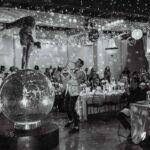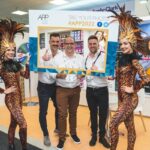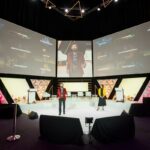
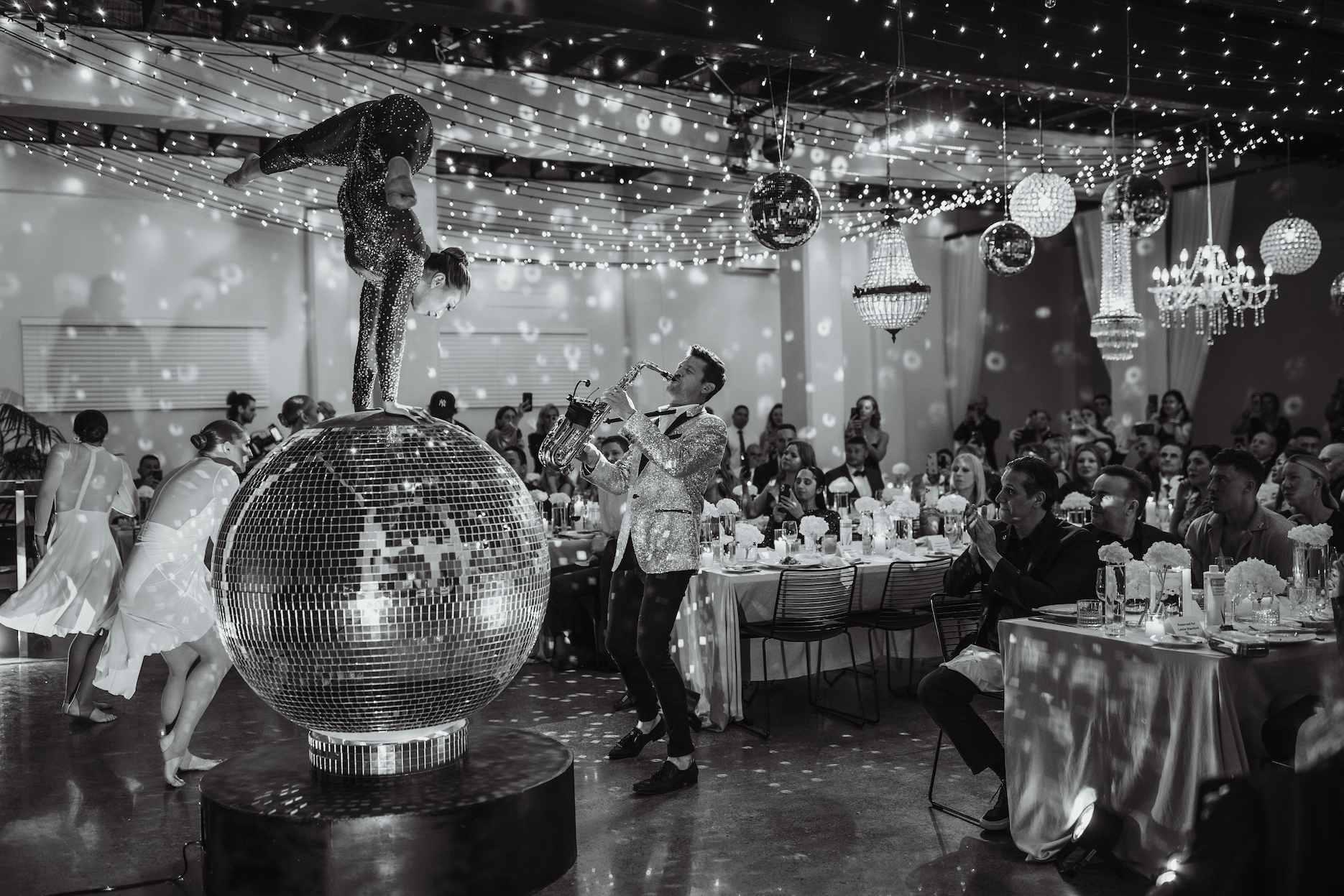
A floor show is a scheduled feature performance that guests pause to watch together, such as a dance production, musical showcase or circus act. It has a clear beginning and finish and may use a stage or another suitable performance area, depending on the act and venue.
Choose this format when you want one shared performance moment, whether that opens the programme, provides an after-dinner highlight or leads into celebration. The name describes the entertainment format, not a requirement to perform on the floor.
What Is a Floor Show Compared with Other Entertainment?
Choose the format around what guests should be doing.
| Format | How Guests Experience It | What the Organiser Must Allow For |
|---|---|---|
| Scheduled feature performance | Guests watch one shared show. | Clear sightlines, an introduction, suitable production and a dedicated performance window. |
| Roving entertainment | Performers create encounters among individuals or smaller groups. | Circulation space, appropriate interaction and coordination with service. |
| Background music | Guests listen while arriving, talking or dining. | Suitable volume, equipment space and an appropriate repertoire. |
These formats serve different purposes. Background music can sit alongside conversation, while roving performers offer brief interactions among guests. We’d give a feature performance its own dedicated moment, when guests are ready to watch together.
Types of Floor Shows to Consider
Start with the experience you want guests to share. For an opening built around rhythm and movement, consider percussion or ensemble dance. For a musical highlight, explore a vocal or instrumental feature. For a performance centred on physical skill, compare circus, balance or aerial options against your venue.
At Onstage Entertainment, our Brisbane-based team can help you explore those directions. Our feature acts include percussion-led Bang! and Fascination, a dance production combining UV costumes, coordinated lighting and digital screen content.
Choreographed Dance
Guests watch movement, formations, costumes and music brought together in a rehearsed piece. Our professional event dancers offer theatrical and themed options, including performances that combine dance with vocals or specialty skills.
Confirm the usable performance area and surface, allowing for lecterns, speakers, steps and furniture. Ask the performers to assess the space against the choreography.
Percussion
Picture musicians building a rhythm together, with coordinated movements giving guests something to watch as well as hear. Consider percussion for an opening where the audience is ready for a strong musical entrance.
Check sound levels with the venue and establish where the instruments will sit. Will they remain in position afterwards, or need clearing before the next speaker? Include that changeover when comparing the act with other options.
Vocal or Musical Feature Performances
A vocal ensemble, instrumental feature or theatrical song sequence gives guests a musical performance to follow. Consider this when the repertoire connects with your audience or the occasion.
Ask which elements are live and whether backing tracks are used. Confirm microphones, playback and what performers need to hear on stage. Don’t assume equipment arranged for speeches will cover the performance.
Circus, Balance and Acrobatic Acts
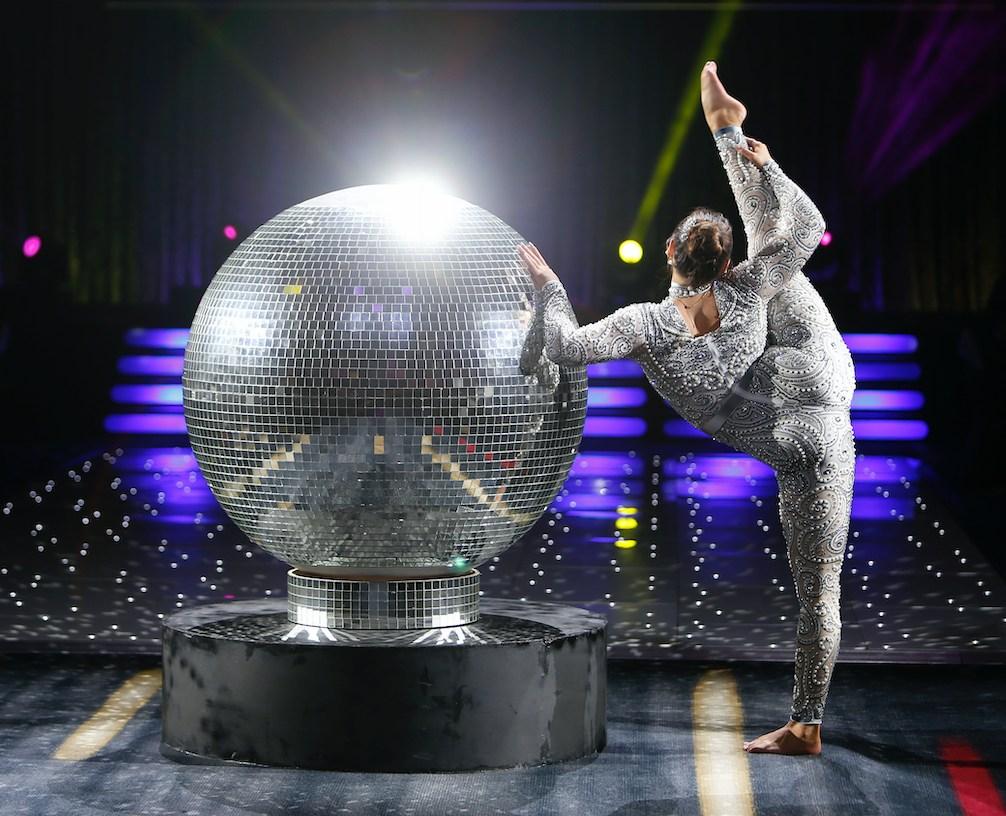
These performances can centre on juggling, hand balancing, acrobatics or partner work. Consider a skill-based feature when you’d like guests to follow physical movement rather than dialogue or familiar songs.
Ask about the apparatus, floor suitability, viewing direction and separation from the audience. Ground-based does not mean requirement-free. Confirm how props reach the performance area and include the setup in the event’s risk assessment.
Visual and Illuminated Performances
Illuminated costumes, light props and coordinated screen content can make visual design central to the show. Consider this direction when the room’s lighting can be controlled to support the performance.
Ask which lighting, effects and screen elements are essential. Check how the show will look under your venue’s actual conditions, not just in footage filmed in darkness. Have any specialist effects reviewed by the venue and production professionals.
Aerial Performances
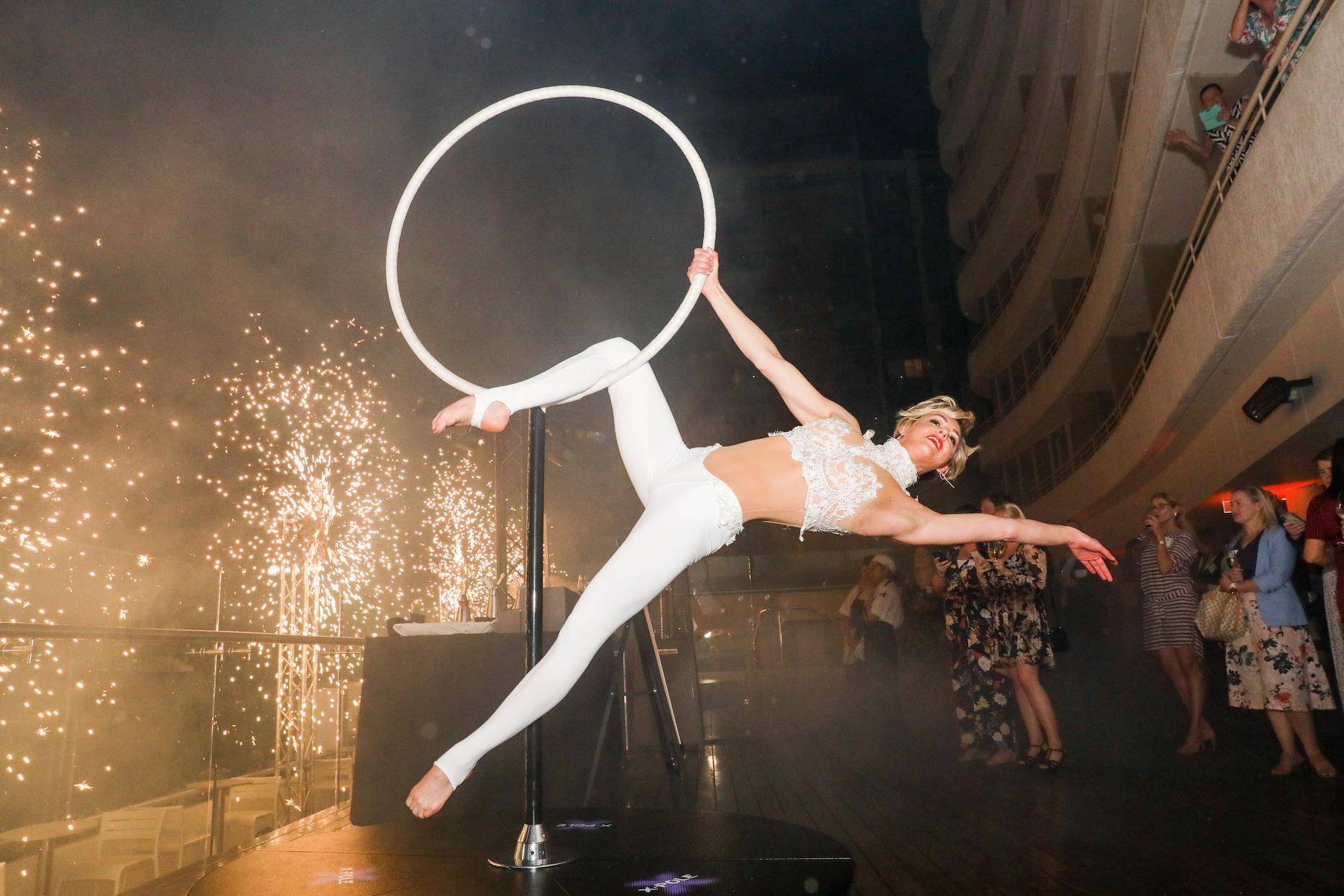
Our aerial acts include performances involving silks, hoops and other apparatus. Consider an aerial feature where guests can comfortably watch the full movement and the venue can accommodate the setup.
Have the performer, venue and relevant production professionals confirm clearances, support requirements, access and any rigging arrangements before booking. Freestanding apparatus does not automatically make a venue suitable. Request the requirements of the specific act rather than relying on a general ceiling-height estimate.
Where a Feature Performance Fits in the Programme
Choose a moment when guests are settled and available to watch. You might open a conference once delegates are seated, place a feature after dinner, or use it to lead into dancing.
Avoid making the performance compete with another task. Agree any service pause with catering, especially where staff would cross the viewing area. Don’t schedule the opening while guests are finding seats or collecting drinks.
Hypothetical Example: A Feature Between Dinner and Dancing
Imagine a seated corporate dinner where the organiser wants a theatrical moment between the awards and dancing. Guests are there to celebrate, but the brief rules out audience participation.
A self-contained dance performance could suit that brief, provided the surface, sightlines and production requirements work. Guests can watch from their tables without being asked to volunteer or move into another space.
In this hypothetical programme, catering finishes clearing before the MC introduces the show. After the final applause, the performers exit. The MC then invites guests to dance once the area is ready for the band.
The choice starts with the intended experience and audience preferences, then moves to the practical requirements. Timings would be agreed around the selected performance.
How to Choose a Show for Your Audience and Venue
You don’t need to arrive with a particular act already chosen. Tell us about your audience, venue, programme and the kind of moment you want to create, and we can help narrow the options to performances that make sense for the event.
From there, we’ll look at the tone, participation, sightlines, available space and production requirements before recommending a direction.
Match the Material and Tone to Your Guests
Start with how you want the performance to feel. You might prefer recognisable songs and themes, something more theatrical, or a performance guests are unlikely to have encountered before.
We’d also consider the lyrics, humour, costume style and cultural references. An elegant contemporary piece and a playful theatrical routine can create very different moments, even when both involve dancers.
For a corporate floor show, tell us about the organisation, occasion and guest mix. Knowing whether guests are staff, clients, partners or families helps us recommend an appropriate performance style and tone.
Decide How Much Participation You Want
Some feature performances are purely observational. Others may invite guests to sing, dance or become part of the show.
Tell us whether you want that interaction, and how comfortable your audience is likely to be with it. Guests should still be able to enjoy the performance without volunteering, so we’d look for a format that suits both willing participants and those who would rather watch.
Share any accessibility or sensory considerations as well. These can influence the performance style, positioning and level of audience interaction we recommend.
Match the Show Version to Your Event
The same type of performance may be available in different configurations. One event might suit a compact self-contained feature, while another has the space and budget for a larger ensemble.
We can help you compare the proposed cast, running time and performance format against the room and programme. A bigger cast is not automatically a better fit. Choreography, viewing distance, available space and production all matter.
Where performance footage is available, look beyond the most dramatic highlights. We can help clarify which costumes, apparatus, performers and production elements apply to the version being proposed for your event.
Check Sightlines From the Guest Positions
A strong performance loses much of its impact if half the room cannot see it properly. We’d consider the audience layout alongside the performance area rather than looking at stage dimensions in isolation.
At a seated dinner, that means checking guests facing away from the action, table decorations and columns. At a standing function, it means considering whether guests behind the first few rows will still have a useful view.
We’d also establish whether the performance is designed to be watched from one direction or several. A front-facing routine may work beautifully on a stage but be less suitable in the centre of a room surrounded by guests.
Review Production and Preparation Space
Each act comes with its own requirements. The technical rider may cover sound, lighting, playback, staging, equipment and access, but you don’t need to interpret every detail before speaking with us.
Share the room layout and whatever you already know about the venue’s sound, lighting and screens. We can help identify the questions that need answering while you compare suitable performances, then work out what should be confirmed with the venue or production supplier.
It’s also worth allowing for equipment delivery, setup, technical checks and performer preparation. Some acts may need changing space, warm-up room or prop storage, as well as a clear route to the performance area.
Performance time is not the same as total venue time. An act may need access well before guests see the finished show.
The proposed setup should also form part of the event’s safety planning. Safe Work Australia’s risk-management guidance covers identifying hazards, assessing risks, applying controls and reviewing them.
What to Confirm Before Booking
Once we’ve narrowed the options, the next step is making sure the proposed performance matches what you have in mind. That includes the show itself, any customisation and how it fits into the surrounding programme.
Decide How Much Customisation You Need
Not every event needs a performance created from scratch. Sometimes an established show with the right costume, music or introduction already fits the brief.
For suitable feature acts, we can discuss options such as costume choices and bespoke choreography. Start by telling us what you want the performance to connect with, whether that’s an event theme, brand colours, a company message or simply the overall atmosphere.
Customisation can involve very different levels of work:
- Presentation Changes: An agreed costume choice or scripted introduction.
- Creative Changes: Different music, revised choreography or new visual content.
- Bespoke Production: A performance developed specifically around your event brief.
We can help establish what is possible for the selected act, any additional cost and when creative decisions need approval. A music change may also affect choreography and technical cues, so we’ll help clarify the preparation time needed before you commit to an alteration.
Plan the Introduction and Handover
We’d agree how the MC introduces the act, who gives the start cue and what follows the final applause. That includes any time needed for performers or equipment to clear the space.
For multiple entrances, coordinated lighting or screen content, or more involved changeovers, our stage management service can support rehearsals, backstage coordination and communication with the technical crew.
The level of support should match the performance. We can help identify what your chosen show needs and clarify the responsibilities of Onstage, the venue and the production supplier before booking.
Find a Feature Performance for Your Event
Whether you’re starting with “what is a floor show?” or comparing performers, we can help you choose entertainment that suits your audience and programme.
Explore our feature acts and professional event dancers, then send us your event brief. Include the event type, audience and guest numbers, date, venue and proposed performance position. Add the available space, existing production information and budget, along with the experience you’d like guests to have.
Floor Show FAQs
How Much Does a Floor Show Cost?
Request a quote for the specific show and venue. Ask for performance, production, travel and custom work to be identified separately. Check whether the price covers performers only or the equipment and crew needed to deliver the version you’ve chosen.
Can a Floor Show Work Outdoors?
Discuss the location before choosing the act. Have the performers and production team assess weather exposure, surfaces, lighting and power. Agree the response to unsuitable conditions, including any alternative location, rather than assuming the show can simply move under a marquee.
Can a Floor Show Be Shortened If the Event Runs Late?
Ask whether an approved shorter version is available before event day, and agree who can authorise the change. Don’t assume a choreographed or synchronised show can be shortened by stopping the music early.
Can a Roving Entertainer Also Present a Floor Show?
Ask whether the performer offers a dedicated feature version. Specify the audience size and viewing arrangement. A close-up routine shouldn’t be booked for the whole room on the assumption that moving it onto a stage will make it suitable.
Can the Performance Be Kept a Surprise?
Keep the reveal secret from guests, not from the people delivering it. The venue, MC and production team need the relevant details. Include catering where entrances, performance space or service pauses affect their work.