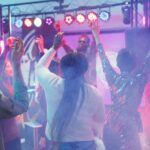

The line between stage and screen has blurred. Today’s audiences no longer expect entertainment to exist solely in physical space. They want immersion — a seamless experience where live performance meets digital innovation, and where boundaries between in-person and virtual spectators dissolve. Hybrid stage experiences are no longer a novelty; they are becoming the gold standard for festivals, concerts, conferences and corporate showcases.
The challenge is not whether you can mix live and digital acts, but how to do it without losing emotional connection. The best hybrid productions combine the energy of a physical audience with the reach and interactivity of digital engagement. When done well, both worlds enhance each other — rather than compete for attention.
Why Hybrid Experiences Matter
Hybrid event entertainment began as a logistical solution during global restrictions but has evolved into a permanent format. Audiences now expect digital access as part of the live experience — not just as a substitute. The reasons are clear:
- Reach: A digital stream extends audience capacity far beyond venue limits.
- Revenue: Tiered ticketing models allow organisers to monetise both in-person and virtual participation.
- Resilience: When travel, weather, or health disruptions occur, the event continues seamlessly online.
- Replay Value: Recorded digital segments create ongoing promotional material.
But beyond practicality, hybrid event staging redefines how people connect. The screen no longer divides — it multiplies. Digital guests share reactions in real time; live audiences feed off their presence. Musicians collaborate across continents, holographic visuals merge with physical choreography, and AI-assisted lighting responds to both physical and virtual applause.
A hybrid stage is not half-live and half-digital. It’s a single ecosystem that breathes through both worlds.
Building the Foundation: Stage Design and Visual Integration
Creating a hybrid experience starts with spatial thinking. Traditional stage layouts focus on the audience’s physical perspective, but hybrid design must consider multiple viewpoints at once together with the managing entertainers — those in the room and those watching from a camera’s eye.
The rule is simple: design for depth, not width. Live attendees see panoramic scope; digital viewers see detail. The production must satisfy both. This involves:
- Layered staging: Arrange performers across multiple planes to create visual depth that cameras can effectively translate.
- Lighting balance: Stage lighting must look dramatic in person yet natural on camera. Warm tones reduce glare and flattening.
- Screen symmetry: Onsite screens should complement, not distract. Use them to connect physical and digital spaces — displaying chat reactions, remote performers, or augmented elements that blend with the live backdrop.
A hybrid stage becomes a shared window. The more naturally both audiences can see one another’s energy, the stronger the sense of unity.

Blending Live Acts with Digital Performance
Hybrid shows often feature a mix of performers and digital contributors appearing remotely or via projection. The secret to success lies in synchronisation and interaction.
A live vocalist singing alongside a remote orchestra, or a comedian interacting with holographic visuals, relies on precise timing. Even minor latency can break immersion. Professionals address this using low-latency streaming systems, real-time audio routing, and pre-cue synchronisation.
Beyond the technical, there’s emotional timing. Performers must treat digital partners as if they share the same stage. Eye contact, reaction pauses, and dynamic pacing keep energy coherent across mediums.
A well-constructed hybrid act feels like a conversation between spaces, not a patchwork of screens. The performer leads both worlds at once — reading the physical crowd while responding to digital presence. The performer monitors reactions not only in front of them but also through live feedback, comments, and visible engagement metrics.
Technology that Makes It Work
Hybrid production relies on a constellation of technologies working together invisibly. Each tool must serve connection, not distraction.
1. Streaming and Latency Control
High-quality, low-latency streaming platforms allow bidirectional participation. Systems like NDI or Dante Audio transport ensure that sound reaches both audiences in sync.
2. Visual Projection and AR Overlays
Holographic or AR (Augmented Reality) visuals create a unified aesthetic where digital performers appear within the same physical scene. Lighting engineers match virtual colour temperature with real-world fixtures for seamless blending.
3. Interactive Audience Systems
Digital applause meters, emoji reactions, and polling can be displayed live on venue screens. This allows physical attendees to “see” the online crowd’s emotion.
4. Binaural and Immersive Sound
For online audiences, spatial audio gives the sensation of being within the venue. For those onsite, directional speakers can simulate sound travelling across digital zones, connecting to visuals in real space.
5. Camera Choreography
Cameras aren’t just recorders; they’re performers too. Camera movements must match the stage rhythm. Panning, zooming, and crane shots add motion to digital viewing without distracting live audiences and affecting the guest experience.
Technology’s role is to disappear. When hybrid entertainment works, people forget the cables, latency, and lenses — they feel presence.
The Human Factor: Reading Two Audiences at Once
Entertainers have always read the room, but hybrid staging demands reading two rooms simultaneously. The physical crowd offers visible cues — body language, laughter, applause. The digital crowd communicates through chat bursts, emoji floods, and comment pacing.
Skilled hosts learn to switch focus fluidly. They alternate eye contact between the physical audience and the main camera lens. They reference both groups explicitly (“everyone here in the venue and everyone watching from home”), creating mutual acknowledgement.
Learning how to read a crowd in this context is both sensory and digital literacy. You interpret silence differently. A quiet in-person audience might be contemplative, but a silent livestream might signal technical lag. Feedback loops require constant awareness.
Professional MCs often have a stage assistant monitoring online metrics and feeding them live updates through discreet in-ear cues. This allows the performer to respond naturally, as if sensing both groups at once.
Creating a Unified Emotional Arc
The success of a hybrid event depends on shared emotion. The pacing must align so that online viewers feel they are part of the same heartbeat as those onsite.
This means designing the emotional arc — opening, build-up, climax, resolution — to translate across formats. Digital audiences tend to have shorter attention spans; live audiences are more patient. Bridging the two involves strategically alternating between energy peaks and calm phases.
- Open strong: Begin with a dynamic cue that instantly unites both groups — a countdown, opening montage, or live shoutout to digital attendees.
- Interlace segments: Alternate between acts that connect directly with physical energy (like dance or comedy) and those that lean into visual or tech-driven appeal (like virtual collaborations).
- Synchronise climaxes: When applause, fireworks, or visuals reach their peak, ensure timing is consistent for both streams. Delayed reactions break the illusion of unity.
- Close with gratitude: Address both audiences explicitly. Hybrid events succeed when each group feels equally valued.
Emotion is the ultimate sync point. When both sides laugh, cheer and pause together, the boundary between live and digital vanishes.
Rehearsing the Hybrid Way
Rehearsal becomes more complex when performers, technicians and remote artists share digital space. Instead of one stage run-through, there are multiple:
- Technical rehearsals for latency, lighting, sound balance, and projection mapping.
- Performer synchronisation rehearsals where live and digital artists practise timing under simulated conditions.
- Camera blocking rehearsals to test visual continuity between physical and streamed shots.
- Crowd simulation runs to monitor how engagement feels for both sides.
Some production teams even invite small remote test audiences to provide real-time feedback during rehearsals. This ensures that virtual participation doesn’t feel secondary.
Hybrid rehearsals also train performers in spatial awareness. They learn where cameras are placed, which angles convey intimacy online, and when to move to create visual variety. As one director puts it, “You’re performing for the person seated in the balcony and the person on the phone screen — at the same time.”

Common Mistakes to Avoid
- Treating the livestream as an afterthought. If digital production quality lags behind the live event, online viewers disengage instantly.
- Over-relying on screens. A sea of LED visuals can overwhelm live guests and ruin the guest journey. Hybrid means harmony, not sensory overload.
- Ignoring latency. Even a half-second delay between sound and vision creates dissonance that ruins musical alignment.
- Neglecting transitions. When shifting between digital and live acts, smoothly fading audio and lighting maintains the low.
- Forgetting hybrid etiquette. Speaking only to one audience alienates the other. Always alternate acknowledgement.
Avoiding these pitfalls requires empathy. Hybrid events are successful when everyone, whether seated in the front row or thousands of miles away, feels seen.
The Creative Possibilities
Hybrid staging has sparked a new generation of art forms.
- Virtual duets: Artists perform together from different countries, their feeds synchronised through high-speed networks.
- Interactive projections: Motion-capture technology enables digital avatars to dance live with real performers.
- Audience-influenced music: Online participants vote in real time to alter lighting, tempo or even lyrics, merging interactivity with art.
- Immersive storytelling: Narrative events use augmented visuals to overlay digital worlds onto physical sets, allowing audiences to experience layered realities.
These innovations push the boundary of what entertainment means. Each hybrid event becomes a living experiment, blending human creativity with digital evolution.
Sound Design in a Hybrid Context
Audio coherence ands soundscaping are some of the hardest technical challenges in hybrid entertainment. Sound engineers must mix two completely different acoustic environments simultaneously: the venue’s physical sound and the digital stream’s mix.
The live mix needs warmth, body and physical punch. The digital mix requires clarity and balance, as home speakers cannot reproduce the depth of a concert. Engineers use separate signal paths — one mix for the audience, one for the broadcast feed.
Spatial audio techniques give online listeners a sense of place, while subwoofers and directional arrays maintain energy onsite. Microphone selection also changes. Ambience mics capture live reactions for streaming, while close mics ensure precision for the venue.
When both are synchronised properly, digital listeners can “feel” the crowd energy, and live attendees experience a heightened atmosphere from the added sonic layering.
Lighting and Visual Design
Lighting has become the visual translator of hybrid emotion. Cameras interpret light differently from the way the human eye does. What looks vibrant on stage may appear washed out online, and vice versa. Designers must therefore light for both — often using layered colour temperature and multiple focus zones.
Projection mapping is particularly powerful in hybrid environments. When digital visuals align perfectly with physical surfaces — walls, stages, instruments — the experience feels cinematic yet tangible. Lighting becomes part of storytelling rather than mere decoration.
Some productions now integrate motion-tracked lighting that responds to digital participants’ reactions. When an online crowd cheers, the colour palette shifts to warmer tones, visually echoing their emotion on stage.

Keeping the Audience Engaged Throughout
Engagement strategy determines whether a hybrid event feels cohesive or fragmented. Audiences need to feel active, not passive.
For the live crowd, physical cues such as host interaction, lighting changes and call-and-response moments keep attention alive. For digital viewers, participation tools — polls, on-screen shoutouts, comment displays — generate the same feeling of presence.
A hybrid experience thrives when both groups can see each other’s participation. Imagine a concert where online viewers appear on side screens singing along, while the physical crowd waves back. These bridges transform two separate audiences into one unified community.
Measuring Success
Post-event analytics now extend beyond ticket sales. Organisers track watch time, chat engagement, camera views, sound quality feedback and replay metrics. Data becomes creative fuel for the next event.
Equally important is the qualitative response. Interviews and surveys from both audiences reveal emotional resonance: Did they feel included? Did the digital segments elevate or distract?
Success is measured not by perfection but by connection. If both audiences feel emotionally aligned, you’ve succeeded.
The Future of Hybrid Entertainment
As technology continues to evolve, hybrid events are becoming more fluid and personalised. 5G connectivity enables near-zero-latency collaboration. AI-driven cameras follow performers automatically. Virtual reality headsets create “front-row” digital immersion.
But the essence will always remain human. People attend events — physically or virtually — to feel emotion, community and meaning. Technology is only a tool to extend those values.
Future stages may include holographic duets, adaptive lighting that responds to audience heart rates, or AI-generated visual symphonies. Yet success will still rely on intuition — the timeless skill of sensing what an audience needs, moment to moment.
The New Language of Performance
Mixing live and digital acts isn’t about merging two worlds; it’s about creating one living, breathing network of connection. The hybrid stage is a dialogue between presence and projection, sound and silence, screen and soul.
When performers master timing, empathy and balance, hybrid entertainment feels effortless — as though the internet and the stage were built for each other all along. Behind every great production is a team that knows not just how to manage equipment but how to guide emotion.
To design a hybrid event that truly works, creativity must move in harmony with technology. For professional guidance on planning, production and performance strategy, reach out to Onstage for more information about planning a hybrid stage event.