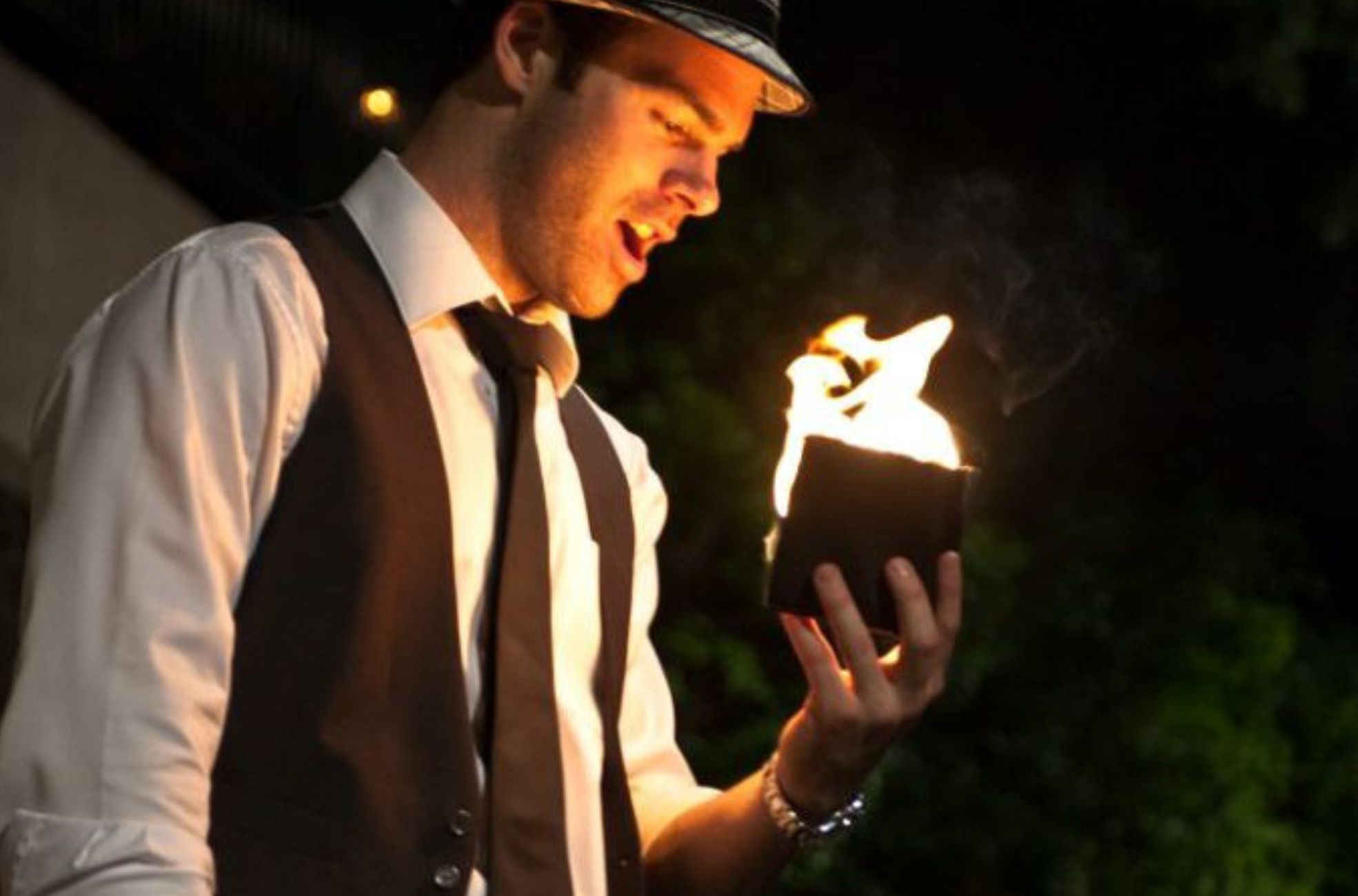
A roving magician does something very different to a stage act. Instead of waiting for guests to sit down and watch a formal show, they move through the event, performing close-up magic in the middle of the buzz.
One minute they’re stopping a group near the bar with a borrowed ring. The next, they’re at a cocktail table making a card appear in someone’s hand. Done well, it feels relaxed, personal and genuinely surprising.
That’s why roving magician hire works so well for events where people are mingling, arriving, networking, waiting for photos, moving between spaces or enjoying drinks before the main part of the night begins.
But the best results don’t come from simply booking “a magician”. The right act needs to suit your guests, venue layout, event timing, noise level, dress code and the kind of atmosphere you want to create.
Here’s what to expect from a roving magician, what they actually do on the day, what details to brief, and how to choose the right performer for your event.
What Is a Roving Magician?
A roving magician is a close-up performer who moves through an event, entertaining small groups of guests with sleight of hand, mind reading, visual magic and interactive tricks.
Rather than performing one set show from a stage, they mingle through the room and create small moments of surprise throughout the event.
You might hear this style of entertainment described in a few different ways. A strolling magician or roaming magician usually means the same thing as a roving magician, someone who moves through the event and performs for different groups as they go.
A close-up magician focuses on magic performed right in front of guests, often using cards, coins, rings, phones or borrowed objects. A table magician usually performs short sets at each table during a seated event, which can work particularly well for dinners, weddings and awards nights.
The word roving describes how the magician moves through the event. The phrase close-up magic describes the style of magic, performed inches from the guests rather than on a distant stage.
What Does a Roving Magician Actually Do?
This is the part people really want to know before they book.
A roving magician is not just walking around doing random tricks. A good roving magician is constantly reading the room, choosing the right groups, working around food service, judging the noise level, adapting their humour and keeping the energy moving without interrupting the event.
It’s part magic, part hosting, part crowd work.
They Arrive, Check In and Read the Room
Before the first trick happens, a professional roving magician will usually check in with the organiser, event manager, venue contact or whoever is running the show on the night.
They’ll want to understand things like:
- When guests are arriving
- When formalities start
- Where food and drinks are being served
- Which areas guests are likely to gather in
- Whether there are any VIPs, executives or special guests
- Whether there are speeches, awards, presentations or surprises to avoid interrupting
- Whether the performance should feel subtle, lively, elegant, cheeky or family-friendly
This early check-in matters. A magician who knows the run sheet can work with the event, not against it.
They might start near the entrance, drift towards the bar, move through cocktail tables, visit seated groups later in the night or focus on areas where guests are waiting between formalities.
That’s the difference between “someone doing tricks” and entertainment that fits the flow of the room.
They Approach Guests Naturally
A strong roving magician knows how to enter a group without making things awkward.
They don’t barrel into a conversation mid-sentence. They don’t interrupt someone taking a bite of food. They don’t force shy guests into the spotlight.
Instead, they look for the natural opening.
That might be:
- A group standing near the bar
- Guests waiting for dinner service
- A table between courses
- A queue that needs some energy
- A group looking a little quiet
- Guests who are already laughing and open to interaction
- A VIP table that needs a polished, controlled approach
The best roving magic feels like it just happened, even though the performer is making dozens of small decisions in the background.
They Perform Short, Sharp Moments of Close-Up Magic
A roving magician usually performs short interactions for small groups. These aren’t long stage routines. They’re compact, high-impact moments designed for a moving event.
Guests might see:
- A signed card appear somewhere impossible
- A coin vanish from one person’s hand and appear in another’s
- A borrowed ring become part of the trick
- A phone, note or everyday object used in an unexpected way
- A thought-of word, number or image revealed
- A prediction that was sitting in plain sight the whole time
- A quick routine that builds to a big group reaction
The goal is not just to fool people. It’s to get them laughing, reacting, leaning in and talking to each other afterwards.
At a good event, you’ll often hear it before you see it. A burst of laughter near the bar. Someone saying, “No way.” A small crowd forming around a cocktail table. That ripple effect is one of the main reasons people book roving magician hire in the first place.
They Keep the Event Moving
One of the best things about roving magic is that it doesn’t stop the whole event.
A stage show asks everyone to pause, sit down and watch. That can be perfect in the right moment, but it’s not always what the event needs.
A roving magician works inside the natural rhythm of the room.
Guests can keep chatting. Drinks can keep flowing. Food service can continue. The photographer can keep moving. The MC can prepare for the next announcement. The event feels alive without needing everyone’s attention at once.
This is especially useful when your event has little pockets of downtime, including:
- Arrival drinks
- Networking breaks
- Wedding photo time
- Pre-dinner mingling
- Venue transitions
- Gaps between speeches and dancing
For more ideas around those in-between moments, check out our guide on pre-event entertainment.
They Adapt Their Material to the Guests
A good roving magician does not treat every group the same.
A table of senior executives at a black-tie dinner needs a different tone from a group of friends at a 40th birthday. A corporate networking event may need clean, polished interaction. A wedding cocktail hour might suit something warmer and more playful. A family event may need routines that adults and younger guests can enjoy together.
This is where experience shows.
The magician is constantly adjusting:
- Humour
- Pace
- Volume
- Level of audience participation
- Choice of tricks
- How much they involve one person
- Whether the moment should be funny, elegant, surprising or low-key
That adaptability is one of the most important things to look for when choosing a roving magician.
You can also browse our Magicians & Comedic Acts if you’re comparing different styles of magic and interactive entertainment.
When Should a Roving Magician Perform?
Timing makes a huge difference.
A roving magician is most effective when guests are free to interact. They need people to be available, comfortable and able to pay attention for a few minutes.
Here are the strongest windows.
Guest Arrivals:
A magician gives people something to experience straight away and helps the room feel active from the moment they walk in.
Pre-Dinner Drinks:
This works well while guests are standing, chatting and waiting to be seated.
Cocktail Hour:
This is one of the most natural fits for roving magic, because guests are already moving between small groups.
Wedding Photo Time:
A magician can keep guests entertained while the couple or bridal party is away having photos taken.
Networking Breaks:
Magic gives guests an easy conversation starter, which can be especially useful when people do not know each other well.
Between Courses:
This can work well if service timing allows and guests are not actively eating.
Expo or Activation Peak Times:
A roving magician can create interaction, draw attention to a space and give people a reason to stop.
The trick is to avoid moments when guests need to focus somewhere else.
A roving magician should generally pause or stay clear during:
- Speeches
- Awards
- Formal presentations
- First dances
- Major announcements
- Live auctions
- Important MC moments
- Meal service when plates are landing
- Emotional or highly personal moments
This is where a clear run sheet helps. If the magician knows when the formalities are happening, they can work around them smoothly.
For more planning advice, our guide to event timing strategies explains how timing can shape the flow of a corporate event, gala dinner, awards night or launch.

How Does a Roving Magician Work the Room?
This is where the real craft sits.
A good roving magician is not just thinking, “Who has not seen a trick yet?” They’re thinking about the entire guest flow.
They’ll consider where people are standing, how loud the room is, where the bar is, where waitstaff are moving, which groups are open to interaction and which groups should be left alone for now.
They Work in Zones
For a small event in one room, this is simple. The magician can move in a natural loop through the space.
For a larger event, the room may need to be divided into zones. For example:
- Arrival area
- Bar area
- Outdoor terrace
- Dining tables
- VIP section
- Photo wall
- Lounge area
- Sponsor or activation space
This helps avoid one side of the room getting all the entertainment while another side misses out.
If you’re planning a bigger event, our guide to how many roving entertainers you need gives a practical starting point for matching roving entertainment to guest numbers, event layout and audience flow.
They Avoid Awkward Moments
Professional roving performers are very good at spotting when a group is open to interaction, and when it’s better to leave them alone.
That might mean waiting while guests are deep in conversation, letting people finish ordering drinks, avoiding a photo moment, or stepping back when someone clearly isn’t comfortable being involved.
The best performers are socially aware. They can bring energy into a quiet pocket of the room without making guests feel interrupted, cornered or put on the spot.
They Create Small Crowd Moments
At cocktail-style events, one good magic moment can quickly pull in a few extra people.
Someone reacts. A friend turns around. Another guest steps closer. Suddenly, a small pocket of the room has energy.
That is exactly what roving entertainment is good at.
It creates little sparks across the event, rather than one big performance moment. Those small reactions add up, especially in rooms where not everyone knows each other.
How Many Guests Can One Roving Magician Entertain?
There is no one-size-fits-all number, because guest coverage depends on the room, the run sheet and the kind of interaction you want.
A compact 80-person cocktail event in one room is very different from an 80-person event spread across a ballroom, terrace and outdoor bar.
As a starting point, our roving entertainment guide uses this general framework for roving performers:
| Guest numbers | Suggested starting point |
|---|---|
| 30 to 60 guests | 1 roving entertainer |
| 60 to 120 guests | 1 to 2 roving entertainers |
| 120 to 200 guests | 2 to 3 roving entertainers |
| 200 to 300 guests | 3 to 4 roving entertainers |
| 300+ guests | Plan by zone, not just headcount |
For a roving magician, this should be treated as a planning guide, not a fixed rule.
The right number depends on:
- How long the magician is performing
- Whether guests are standing or seated
- Whether the event is spread across multiple areas
- Whether the magician needs to reach every guest
- Whether the goal is subtle atmosphere or high interaction
- Whether there are formalities that reduce performance time
- Whether you want one magician or a broader roving entertainment mix
For larger rooms, multiple spaces or busy cocktail-style events, it is often better to plan by zone and guest flow rather than guest count alone.
Does a Roving Magician Need a Stage, Sound or Special Setup?
Usually, no.
One of the biggest advantages of roving magician hire is that it is low-fuss from a production point of view. A roving magician is designed to move through the event and perform close-up for small groups, so they generally do not need a stage, full lighting rig or sound system.
That makes roving magic a strong fit for:
- Cocktail parties
- Private dining rooms
- Hotel foyers
- Restaurants
- Rooftops
- Marquees
- Corporate networking spaces
- Pre-function areas
- Wedding lawns
- Event venues without a formal stage
This is also why roving magic works well when you’re booking entertainment without a stage.
That said, “minimal setup” does not mean “no planning”.
Here are the details people often forget.
Venue Details That Make a Big Difference
A roving magician usually needs very little setup, but the venue still affects how well the performance works. Lighting, noise, guest flow, food service and weather can all shape where the magician should perform and when they’ll have the strongest impact.
Lighting
Close-up magic needs guests to see what is happening. The magician does not need a spotlight, but there should be enough light for guests to see cards, coins, hands, borrowed objects and reactions.
This is especially important for evening events, outdoor terraces, garden weddings and candlelit private dinners. For Brisbane events with indoor-outdoor flow, such as rooftops, riverside function spaces or garden cocktail areas, check how the lighting changes as the sun goes down.
Noise Level
Roving magic can work in busy rooms, but extreme noise makes interaction harder. If guests cannot hear the magician, subtle mind-reading pieces or story-based routines may not land properly.
If your event includes a DJ, band or loud activation area, think about where the magician should work before the music peaks. In louder spaces, visual magic and faster interactions often work best.
Guest Flow
A roving magician needs guests to be accessible. Open cocktail spaces, bar areas, lounge zones and pre-function rooms usually work well because the magician can move naturally from group to group.
If guests are spread across a ballroom, foyer, balcony, terrace or outdoor bar, the plan needs to match the layout. In larger venues, it may be better to focus on key zones rather than trying to cover every corner equally.
Food Service
Food timing matters. Magic works beautifully during canapés and drinks, but it becomes awkward if guests are holding messy food, balancing plates or being served a main course.
For seated dinners, the magician may be better placed:
- Before guests sit down
- Between courses
- After plates are cleared
- During a relaxed dessert or coffee window
- Away from tables that are actively being served
A good performer will adjust on the night, but a clear run sheet makes this much easier.
Outdoor Conditions
A roving magician can often perform outdoors, but the environment matters. Wind can affect cards and small props, rain can stop outdoor movement, and harsh sunlight can make some visual moments harder to see.
For outdoor Brisbane events, have a practical wet-weather plan. That might mean a covered terrace, marquee, indoor backup area or shifting the magician to arrival drinks inside.
What to Brief Before Booking a Roving Magician
The better the brief, the better the fit.
You do not need to know every detail before you enquire, but the more context you can provide, the easier it is to recommend the right performer.
| Detail to brief | Why it's important |
|---|---|
| Event date | Confirms availability |
| Venue or suburb | Helps assess travel, layout and timing |
| Event type | A corporate function, wedding and private birthday all need a different tone |
| Guest numbers | Helps estimate coverage |
| Audience profile | Adults, families, executives, clients and mixed-age groups all respond differently |
| Run sheet | Shows the best performance windows |
| Indoor or outdoor setting | Helps plan around weather, lighting and noise |
| Venue layout | Shows whether the magician can move easily through the space |
| Dress code or theme | Helps the performer visually suit the event |
| Formalities | Helps avoid clashes with speeches, awards, presentations or key moments |
| Desired energy level | Subtle and elegant feels very different to bold and comedic |
| Special guests or VIPs | Helps the magician approach important guests appropriately |
| Brand or message | Useful for corporate events, launches and activations |
A good booking process should feel like a conversation, not just a transaction. You’re trying to match the act to the room, not tick a box.
Our guide on what to ask your event entertainers before booking covers more of the practical questions worth asking before locking in any performer.

How to Choose the Right Roving Magician
Choosing the right roving magician is about more than finding someone who can do impressive tricks. The best performer should suit your guests, your event style, your venue layout and the way the night is planned to flow.
Match the Magician to the Event Tone
Start with the feel of the event. Is it polished and corporate? Warm and romantic? Loud and playful? Elegant and formal? Family-friendly?
A magician who is perfect for a cheeky private party may not be the right fit for a client-facing business event. Likewise, a subtle, sophisticated performer may be brilliant at a gala dinner but too restrained for a lively birthday crowd.
The magic matters, but the personality matters just as much.
Think About the Audience
Before booking a roving magician, consider who will actually be in the room. Corporate guests, clients, families, wedding guests, VIPs and mixed-age groups all respond differently.
A strong performer can adjust their style, but every magician has a natural lane. Some are polished and understated, some are funny and high-energy, and others are especially good with families or corporate rooms.
The right choice should feel comfortable for your guests, not just impressive on paper.
Look for Social Awareness, Not Just Tricks
At a live event, the magician is interacting directly with your guests. They need to know how to approach people, when to step back, how to handle sceptics and how to include quieter guests without making anyone feel exposed.
Look for signs that the performer can:
- Read body language
- Keep humour appropriate
- Adapt to different groups
- Involve guests without pressure
- Work around service staff and formalities
- Leave people feeling entertained, not picked on
This is one of the biggest differences between a good trick and a good roving entertainment experience.
Watch for Performance Style
If video is available, watch how the magician interacts, not just what the trick is.
Ask yourself:
- Do they seem natural with guests?
- Is the humour right for your audience?
- Do people look relaxed?
- Does the performer feel polished?
- Would you be comfortable with them approaching clients, family or VIP guests?
You’re not just booking close-up magic. You’re booking the way the performer makes people feel.
Consider the Room, Run Sheet and Guest Flow
A roving magician can feel completely different depending on the event setup. A 50-person private dinner allows for more intimate moments, while a 300-person cocktail event needs faster movement and careful zoning.
Before booking, think about:
- Where guests will be when the magician starts
- Whether guests will be standing or seated
- Whether the venue has multiple rooms or outdoor areas
- When food service begins
- When speeches, awards or formalities are happening
- When music or noise levels are likely to increase
This is where the right advice makes a difference. The goal is to place the magician where they can create the best guest experience without interrupting the rest of the event.
Ask the Right Questions
Before locking anything in, ask practical questions such as:
- Have they performed at this type of event before?
- What style of magic do they perform?
- Do they suit adults, families or corporate guests?
- Can they perform during arrivals or pre-dinner drinks?
- Do they need any setup?
- Can they work around speeches and formalities?
- What should the event organiser brief before the day?
These questions help you choose a roving magician who fits the room, the audience and the timing, not just someone who looks good in a promo clip.
Ready to Hire a Roving Magician?
A roving magician is one of the most flexible ways to bring guests into the entertainment without stopping the whole event. The right performer can break the ice, fill quiet moments and spark conversation, while still letting the night flow naturally.
The trick is choosing the right fit. Think about your audience, venue layout, run sheet, noise level, guest numbers and the kind of atmosphere you want to create.
If you’re weighing up roving magician hire for a Brisbane event, wedding, corporate function, gala dinner or private party, our team can help you narrow the options. You can explore our broader roving entertainment options, or browse our Magicians & Comedic Acts to see how magic, comedy and interactive performance can fit into your event.
When you’re ready, get in touch with us at Onstage Entertainment, and we’ll help you find an act that suits the room, the timing and the experience you want your guests to remember.
Frequently Asked Questions About Roving Magicians
What Is a Roving Magician?
A roving magician is a performer who moves through an event and entertains small groups with close-up magic, sleight of hand, mind reading and interactive tricks.
Is a Roving Magician the Same as a Close-Up Magician?
They overlap, but they are not exactly the same. Close-up magic describes the style of performance, while roving describes how the magician moves through the room.
What Does a Roving Magician Do at an Event?
A roving magician mingles with guests, approaches small groups, performs short interactive magic routines, creates reactions and keeps the room feeling lively without needing a stage show.
Does a Roving Magician Need a Stage?
Usually, no. A roving magician is designed to perform close-up for small groups, so they generally do not need a stage, sound system or lighting rig.
When Is the Best Time to Have a Roving Magician?
The best times are usually guest arrivals, pre-dinner drinks, cocktail hour, networking breaks, wedding photo time, between courses or other natural gaps in the run sheet.
Can a Roving Magician Perform While Guests Are Eating?
Sometimes, but it depends on the format. Roving magic usually works better before meals, between courses or after plates are cleared, rather than while guests are actively eating.
How Many Guests Can One Roving Magician Entertain?
It depends on the guest count, venue layout, performance window and desired level of interaction. For larger events, it may be worth using multiple roving entertainers or planning the room by zones.
Can a Roving Magician Perform Outdoors?
Often, yes. Outdoor performances depend on weather, wind, lighting, noise and how easily the magician can move between guests. A covered or indoor backup area is a smart idea for outdoor events.
What Should I Brief Before Booking a Roving Magician?
Brief the event date, venue, guest numbers, audience profile, run sheet, dress code, event style, indoor or outdoor setting, formalities and any special guests or brand requirements.
How Do I Choose the Right Roving Magician?
Choose based on audience fit, performance style, professionalism, experience, social awareness, venue suitability and how well the act fits your event timing.
What Events Are Best for a Roving Magician?
A roving magician works best at events where guests are mingling, waiting or moving between spaces. They’re especially useful for corporate events, networking nights, weddings, cocktail hours, gala dinners, awards nights, private parties and brand activations.