
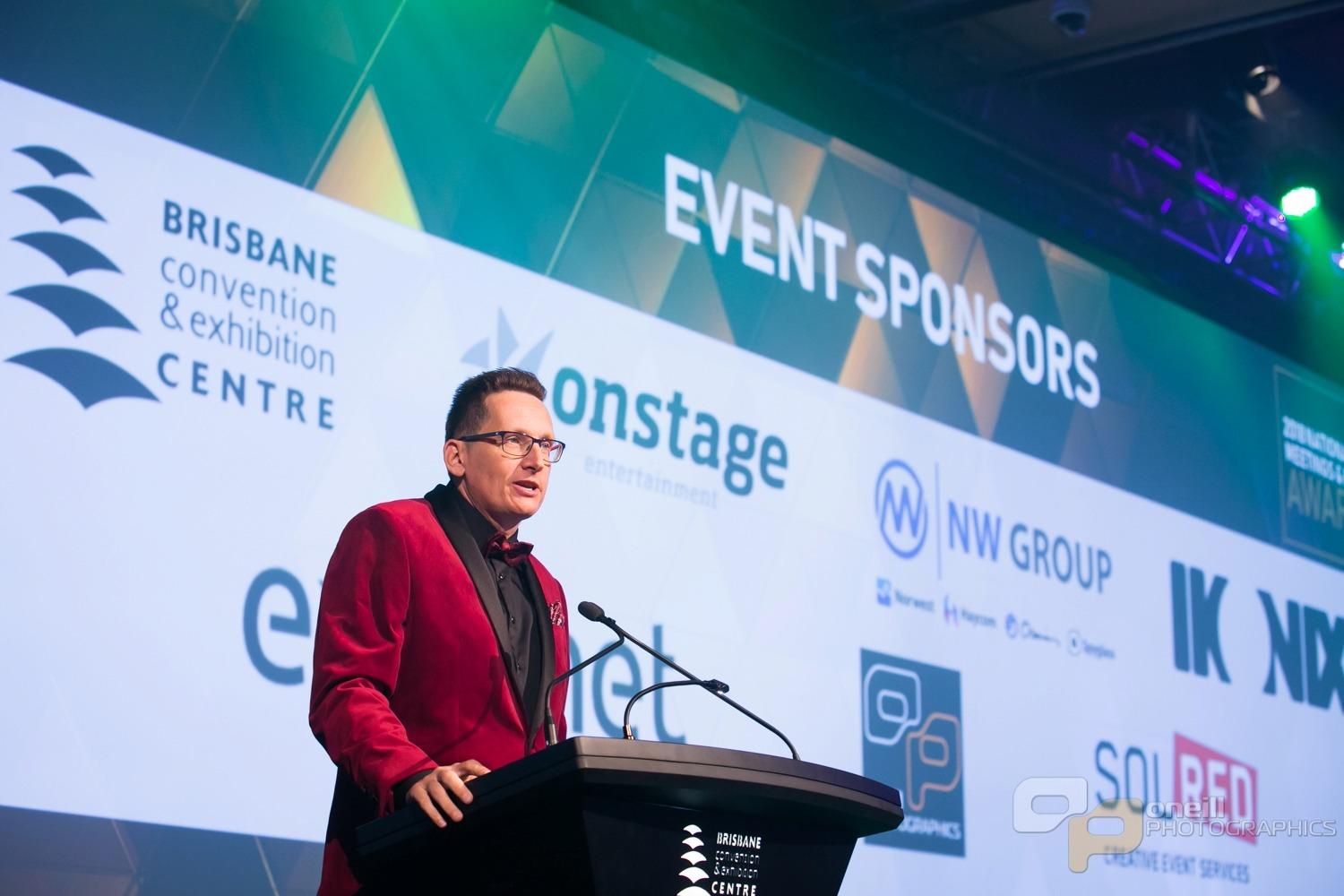
A sales kick-off event brings a company’s sales team together to prepare for a new sales period, communicate priorities and recognise achievements. Often shortened to SKO, it combines business updates, learning and team discussion.
To plan a sales kick-off:
- Define the objectives, audience and budget.
- Build an agenda with speakers, discussion, breaks and recognition.
- Coordinate entertainment, production, travel and follow-up.
This guide covers those decisions, from choosing the right presenters to bringing interstate colleagues together and preparing the evening function.
Set the Objectives and Audience for Your Sales Kick-Off Event
Set one to three clear objectives, then make sure each session helps the team work towards them. “Get everyone excited about the year ahead” doesn’t tell you what belongs in the agenda.
Consider a business introducing a new product. Its salespeople may need to learn how to explain it to customers, ask product specialists questions and work through likely customer objections. A demonstration, Q&A session and regional workshops would give the team time to cover those points, rather than sitting through several lengthy executive presentations.
Choose a theme that reflects your sales priorities, then use it to shape the programme. If the focus is stronger customer relationships, you could include customer interviews, workshops on account management and recognition for colleagues who’ve delivered outstanding service.
Your sales leaders should set the strategy and training priorities, while the event team plans how the sessions will run. For the wider preparation tasks, use our event planning checklist alongside this sales-specific guide.
Decide Who Needs to Be in the Room
A sales kick-off usually centres on the sales team, but some sessions may need input from marketing, product, customer success or senior leadership.
Use shared sessions for company-wide priorities, then break into smaller groups when the discussion only applies to certain roles or regions. If customers or channel partners are joining part of the event, define exactly which sessions they’ll attend and keep internal material separate.
Choose the Format, Timing and Location
Match the format to the content and audience. A national gathering with product demonstrations and regional workshops needs different arrangements from a local team meeting.
Match the Duration to the Work
A one-day sales kick-off may suit a focused programme, particularly when most attendees are local. A multi-day event provides more room for workshops and an evening function, but adds accommodation, catering and staffing commitments.
Before adding another day, decide whether the extra sessions need to happen at the event or could be held separately. An on-site meeting may suit a small team, while an off-site venue can offer breakout rooms and fewer everyday interruptions.
For a national business, compare a central gathering with regional kick-offs. Decide which discussions need the whole team together and which would be better handled locally.
Work Around Your Sales Cycle
Choose a date when leadership can communicate approved priorities and the team has time to act on them. Your calendar year, financial year or product-launch schedule can provide a starting point.
Check the proposed date against peak selling periods and reporting deadlines. Make sure the sales plans or product information will be ready to share.
Plan for Interstate and Remote Attendees
For a Brisbane gathering, work backwards from the first essential presentation, rather than assuming interstate colleagues can catch an early flight. Allow for transfers and hotel arrangements, and check that colleagues won’t need to leave before the closing session.
For hybrid attendance, decide how remote participants will ask questions, join workshops and receive materials. Assign someone to manage their participation, and specify time zones in invitations.
Check Access Throughout the Programme
Ask about access and support requirements during registration, including requirements for speakers and award recipients. Use that information when planning the main room, breakout spaces and evening function.
Use the Australian Human Rights Commission’s accessible-event guidance to check transport, venue and stage access, captioning, presentation materials and participation.
Budget for Attendance, Delivery and the Evening Function
Build the budget from the proposed programme rather than applying standard percentages to speakers or entertainment. For a sales kick-off, check three groups of costs:
- Team attendance: Flights, accommodation, transfers, catering and additional nights needed around the programme.
- Daytime delivery: Main and breakout rooms, audio-visual equipment, staging, technicians, content preparation, speakers, the MC and accessibility arrangements.
- Recognition and the evening function: Awards, entertainment, hospitality, photography or video, additional staffing and room changes.
Allow for contingency separately, based on unresolved details and the risks in your plan. Look closely at apparent savings, too. Using one room for workshops and dinner may seem economical, but the furniture, production equipment and catering setup still need to change.
Ask when that work can happen, what it will cost and where attendees will go while the room is being prepared.
Build a Sales Kick-Off Agenda Around Participation
Start with the questions the sales team needs answered, not a list of departments requesting presentation time. “What changes in our customer conversations?” gives a product presenter a clearer brief than “Product update”.
Move From Information to Application
Follow an announcement with a discussion about what it means for different accounts or regions. After a demonstration, leave time for questions about situations salespeople will encounter.
Where training is required, ask your internal specialists or appointed trainers to design the exercises. Decide what each workshop should produce, whether that’s a regional action plan or a list of product questions for the specialists to answer. Make room to work with the information, not just receive it.
For help with the overall programme, see our guide to planning an event agenda.
Protect Breaks and Plan for Customer Enquiries
Agree beforehand how urgent customer enquiries will be covered and when attendees can check in with their teams. That is more practical than asking for full attention while leaving customer commitments unresolved.
Allow time for meals, room movements and informal conversations. Don’t quietly turn every break into another compulsory activity.
Sample Sales Kick-Off Agenda
This illustrative one-day agenda assumes attendees can arrive before the formal opening. Adapt it to your objectives, team size, access requirements and travel arrangements, allowing time for questions and room movements within each block.
| Time | Sample Programme |
|---|---|
| 8:30–9:00 am | Arrival, registration and coffee |
| 9:00–10:30 am | Welcome, sales priorities and customer discussion |
| 10:30–11:00 am | Morning tea |
| 11:00 am–12:45 pm | Product demonstration, questions and regional workshops |
| 12:45–1:45 pm | Lunch |
| 1:45–3:00 pm | Keynote or facilitated session, followed by team discussion |
| 3:00–3:30 pm | Afternoon tea |
| 3:30–4:30 pm | Recognition, agreed actions and closing remarks |
An optional dinner or evening function could follow from 6:00 pm, leaving time for colleagues to check into accommodation, change or take a break. Keep supplier arrivals, technical cues and backstage movements in a separate event run sheet, not in the attendee agenda.
Choose the Right MC and Speakers for Your Sales Kick-Off
Decide what each person needs to contribute before choosing your speakers. Internal presenters explain the company’s plans, external speakers bring relevant experience, and the MC guides the programme.
Keep Company Updates With Your Internal Experts
Use sales leaders to explain the strategy and answer questions about company decisions. Product specialists can demonstrate what’s changing, while a customer interview can explore what matters when choosing a supplier.
For workshops, appoint someone to facilitate the discussion and help the group reach useful conclusions. Not every session needs another presentation.
Choose a Keynote Speaker Around a Business Priority
A keynote speaker can give the team a different perspective on a challenge they’re facing. Choose the topic around your sales priorities, whether that’s customer experience, communication, leadership or adapting to change.
For example, a team focused on retaining customers could hear from a speaker with relevant customer-experience expertise. Follow the presentation with a discussion about what the ideas mean for your accounts.
Start with the topic and audience, not the biggest name. Our guide to choosing and booking a guest speaker covers shortlisting, fees and booking arrangements.
Match a Motivational Speaker to the Team’s Challenges
Consider a motivational speaker when you want the team to hear a relevant perspective on handling setbacks, working under pressure or staying committed to a goal.
Look beyond an impressive personal story. Ask how the presentation connects with the situations your salespeople face and what you’d like them to discuss afterwards.
A motivational presentation may also serve as your keynote. You don’t need to book both, and neither should replace clear direction from your own leadership team.
Use an MC to Guide the Whole Programme
A professional MC can introduce presenters, manage timing, guide audience questions and host recognition segments. That gives your sales leaders more room to concentrate on their presentations and conversations with the team.
For a sales kick-off with several speakers, workshops and awards, brief the MC on the whole day, not just the opening welcome. Include company terminology, sensitive announcements, speaker introductions and the process for handling programme changes.
A prepared colleague may suit a smaller meeting. For a more involved programme, consider whether an internal host can manage those responsibilities alongside their other commitments.
Use Recognition to Connect the Previous Sales Period With the Next
Recognition can give a sales kick-off a natural link between what the team has already achieved and what the business is asking of them next. It might acknowledge top sales results, major account wins, strong customer outcomes, teamwork or contributions that supported the wider sales effort.
Tie the recognition back to the priorities of the event. If the coming sales period places greater emphasis on customer retention, for example, recognising someone who strengthened an important client relationship may reinforce that message more effectively than focusing only on revenue figures.
Agree the criteria and recipients before preparing the presentation. Explain what each person or team contributed, rather than showing a name and a number without context. If several awards are being presented, allow enough time for introductions, walk-ups, photographs and transitions without letting the segment take over the wider programme.
Recognition can sit within the daytime agenda or form part of the evening function. If awards are becoming a major feature of the event, our guide to planning a corporate awards night covers the additional planning involved.
Use Sales Kick-Off Entertainment at the Right Moments
Match the event entertainment to each part of the programme. Some entertainment can run alongside conversation, while a feature performance needs everyone’s attention.
Arrival and the Opening
Background music or an acoustic performer can accompany registration and coffee. Keep the volume comfortable for colleagues greeting one another and staff answering arrival questions.
For a feature performance or custom opening, bring the audience together before it begins and plan the handover to the MC.
Recognition and Programme Transitions
Walk-up music and short musical cues can accompany award presentations. Check the timing so the music doesn’t compete with the recipient’s name or acknowledgement.
After a break, the MC might use a short audience activity or music cue to bring everyone back together. There’s no need to add entertainment after every presentation.
Networking and the Evening Function
Low-volume live music or roving entertainment may suit a social gathering where conversation comes first. Let colleagues choose whether to participate.
For dinner or a closing celebration, choose a band, DJ, comedian or feature act to suit the evening you’re planning. Brief performers on company culture, language and boundaries around humour.
Don’t ask the room to talk and watch a show at the same time. Give a feature performance its own place in the evening, rather than interrupting conversations just as they get going.
Once the entertainment’s role is clear, our guide to booking corporate event entertainment covers comparing and confirming suitable options.
Prepare Product Demonstrations and Stage Transitions
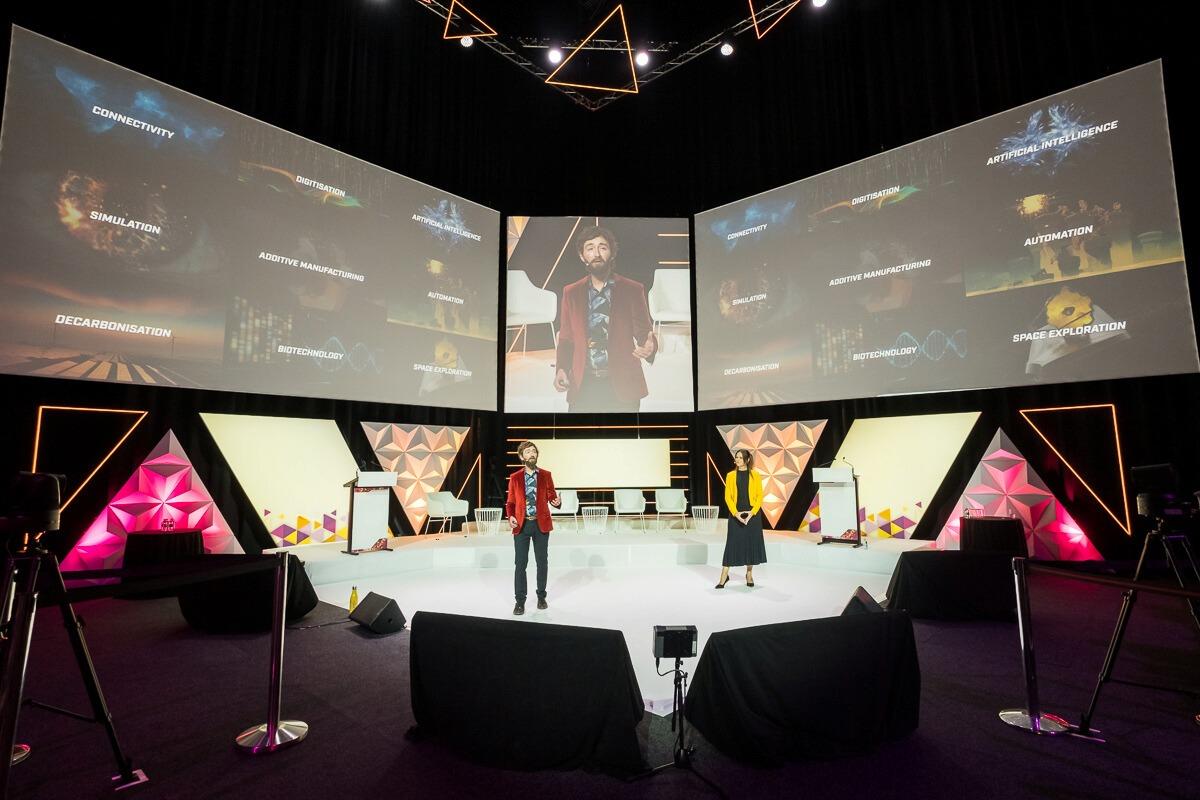
A sales kick-off may move from a leadership presentation to a live demonstration, panel discussion and awards segment. Plan the audio-visual requirements around those changes rather than assuming every session needs one microphone and a slide deck.
Test What the Audience Will See
For a product demonstration, confirm the device, connection, display and account access being used. Prepare an approved backup, such as screenshots or a recording, if the live version cannot run.
Test videos with their sound, captions and presentation controls. For a remote customer or speaker, check the connection and audio from both ends. Set presentation deadlines that leave the production team time to test the final files.
Rehearse the Complicated Handovers
When a solo presenter finishes, a panel may still need chairs, microphones and a different screen layout. Rehearse those transitions with the MC and production team.
Confirm who can approve changes when a demonstration overruns or a remote presenter cannot connect. For a programme with multiple speakers, performers and awards, consider professional stage management to keep stage changes and technical cues on track.
Turn the Sales Kick-Off Into Follow-Up Action
A sales kick-off should finish with a clear sense of what happens next. Before the event, decide who will distribute materials, answer outstanding questions and follow up on actions agreed during workshops or team discussions.
For example, a product session might lead to an updated sales guide or FAQ, while a regional workshop could finish with agreed priorities, named owners and review dates. Capture those actions while they’re fresh rather than relying on attendees to reconstruct them afterwards.
Use the closing session to confirm the next steps, where supporting materials will be available and when managers will revisit the key priorities with their teams. Then review the event against its original objectives: did people understand the direction, get the information they needed and leave knowing what they’re expected to do next?
Sales Kick-Off Planning Mistakes to Avoid
Before you finalise the programme, look at the event as a whole rather than reviewing each department’s session in isolation. That makes it easier to catch duplication, timing problems and gaps between what the team hears and what they’re expected to do next.
Too many presentations saying the same thing. Ask one person to review the full programme for repeated messages, conflicting terminology and sessions that cover the same ground.
Recognition details changing too late. Set a firm deadline for award results and recipient approvals before scripts, presentation slides and walk-up cues are finalised.
External guests seeing internal information. If customers or channel partners are attending, confirm exactly which sessions they’ll join and which presentation files or discussions are for internal audiences only.
Not enough time between the daytime programme and the evening function. Allow enough time for people to check into accommodation, change and take a break. If the same venue space is being reset, confirm the production and catering teams can complete the changeover before guests return.
Find the Right MC and Speakers for Your Sales Kick-Off
Use your sales kick-off event to explain the priorities, answer the team’s questions and recognise their achievements.
At Onstage Entertainment, we help you choose professional MCs, keynote speakers and motivational speakers for your programme. We recommend people we work with based on your audience, objectives, preferred style and budget.
We can also coordinate entertainment for your evening function and stage management where the programme needs it.
Call 07 3355 1300 to discuss your sales kick-off. Share your proposed date, location, team size and budget, along with the topics or challenges you’d like the speakers to address. You don’t need a finished agenda or a speaker shortlist before getting in touch.
Sales Kick-Off Event FAQs
How Far Ahead Should You Plan a Sales Kick-Off?
Start once the likely date, audience and business purpose are known. Work backwards from venue availability, travel arrangements, speaker bookings and production preparation. A national multi-day gathering needs a different timetable from a small local meeting, so avoid applying one deadline to every event.
How Long Should a Sales Kick-Off Last?
There’s no standard length. A focused local kick-off may fit into one day, while a national event with workshops, speakers, recognition and an evening function may need two or more. Let the objectives and amount of useful content determine the duration, rather than filling extra time because the venue is booked.
When Is the Best Time to Hold a Sales Kick-Off?
Hold it early enough in the sales period for the team to act on what they learn, but only once the strategy, targets and product information are ready to share. Some businesses plan around the calendar year or financial year, while others align the event with their own sales cycle or major product launches.
What Can a Keynote Speaker Add to a Sales Kick-Off?
A keynote speaker can bring a fresh perspective to the event, reinforce a central theme and give the team a memorable session outside the usual internal presentations. The strongest choice is someone whose experience connects directly with your sales priorities, whether that’s customer experience, communication, leadership, resilience or adapting to change.
For a sales kick-off, the keynote can also create a natural point of discussion afterwards, helping the team relate the speaker’s ideas back to their own customers, targets and challenges.
What Should Attendees Prepare Before a Sales Kick-Off?
Send essential background material in advance so the event doesn’t begin with information people could have read beforehand. Depending on the programme, attendees might prepare customer questions, regional priorities, workshop inputs or examples they want to discuss with product and leadership teams.
What Is the Difference Between a Sales Kick-Off and a Sales Conference?
A sales kick-off focuses on preparing the team for a new sales period. “Sales conference” is a broader label, and businesses may use it for a similar gathering. Describe the purpose, audience and programme in your brief rather than relying on the name alone.