
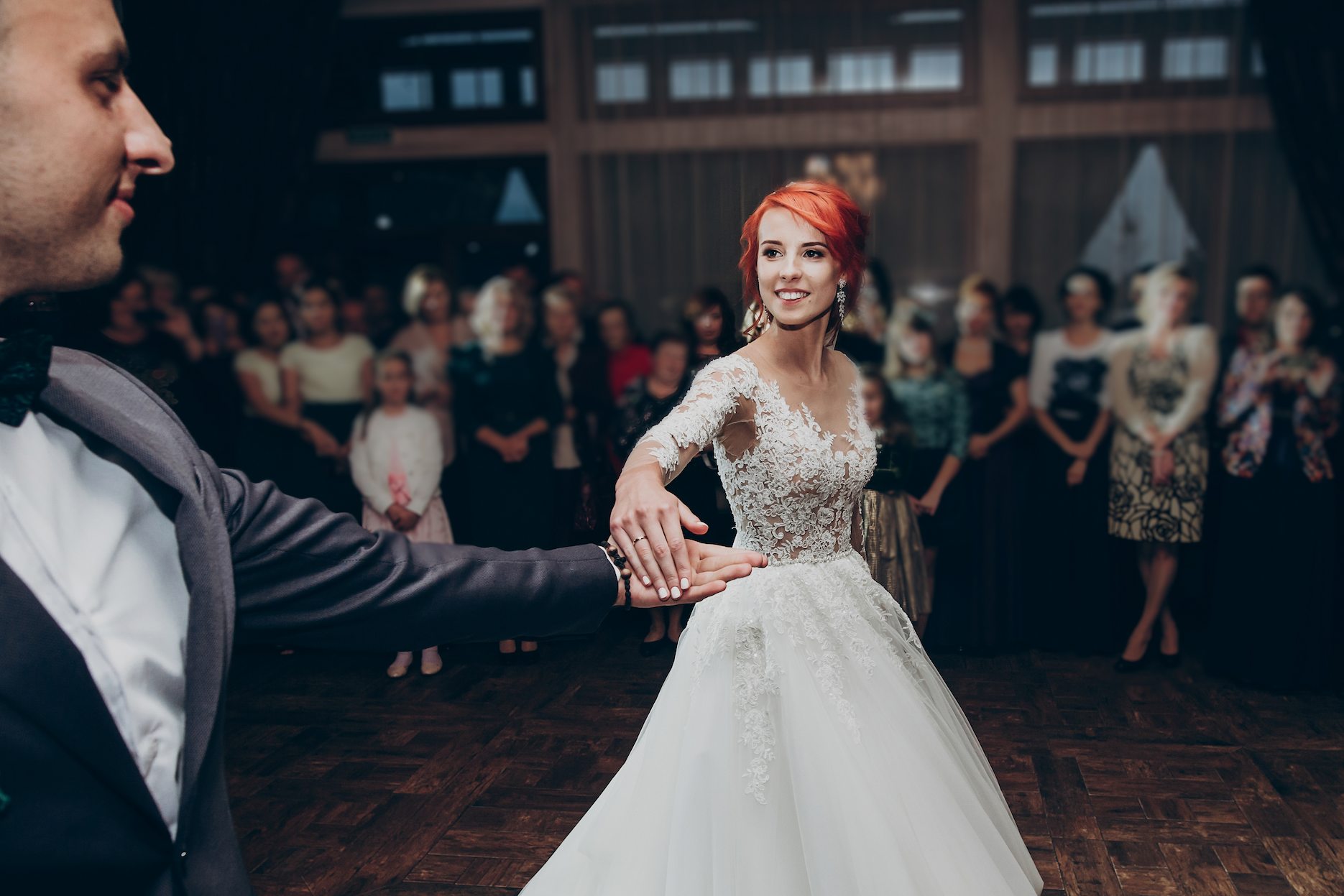
The wedding band vs DJ decision comes down to whether you want live performance, musical flexibility or a combination of both at your reception.
- Choose a wedding band when live music should be one of the reception’s main features, and your venue and budget can support it.
- Choose a wedding DJ when original recordings, broad song choice, easy requests and continuous music matter most.
- Choose both when you want the impact of live musicians without giving up the flexibility of a DJ.
Now picture the moment after your first dance. Do you want a singer to count the band into a song that fills the room with live vocals, drums and guitar? Or do you want a DJ to mix directly into the original track your guests recognise from its opening beat?
That choice affects more than the soundtrack. It can shape the atmosphere, dance floor, venue layout, production requirements and budget.
At Onstage Entertainment, we represent wedding bands, DJs and hybrid acts. That allows us to recommend the format that fits your guests, venue, music preferences and budget, rather than steering every couple towards the same answer.
Wedding Band vs DJ: The Main Differences
A wedding band turns the music into a visible performance. A DJ provides greater access to different artists, eras and original recordings.
Here is how the two options compare in practice.
| Factor | Live Wedding Band | Wedding DJ |
|---|---|---|
| Atmosphere | Strong live-performance and visual presence | Atmosphere shaped through song choice, mixing and pacing |
| Music Variety | Limited to the band’s prepared repertoire | Much broader recorded library |
| Original Recordings | Live interpretations | Exact recorded versions |
| Requests | Best discussed in advance, with spontaneous choices depending on the repertoire | Generally easier to accommodate during the reception |
| First Dance | Can create a personalised live version | Can play the exact recording or a prepared edit |
| Genre Changes | Depends on the repertoire, line-up and vocalists | Can usually change genres and eras quickly |
| Space Required | Usually needs more room for musicians and equipment | Usually has a smaller footprint |
| Production Needs | More instruments, microphones, monitoring and soundcheck requirements | Generally simpler, although professional sound remains essential |
| Set Breaks | Usually performs in several sets | Does not require equivalent performance breaks |
| Continuous Music | Recorded music or a DJ is needed between sets | Can provide continuous recorded playback |
| Guest Interaction | Visible interaction from singers and musicians | Varies from discreet mixing to active hosting |
| Relative Cost | Usually higher for a multi-piece band | Usually lower than a comparable full band |
| Best Suited To | Weddings where live performance is a major feature | Weddings prioritising range, original tracks and flexibility |
These are broad patterns, not guarantees. A skilled DJ can create enormous energy, while a compact band may work beautifully in a small venue. The quality, repertoire and personality of the individual entertainer matter just as much as the format.
The Real Choice: Live Performance or Musical Flexibility?
Before comparing quotes, decide what role music should play in your reception.
Do you want the entertainers to become one of the main things guests watch and remember? Or should the music move smoothly through dinner, speeches, formalities and dancing without drawing attention to every transition?
What a Live Band Brings to the Room
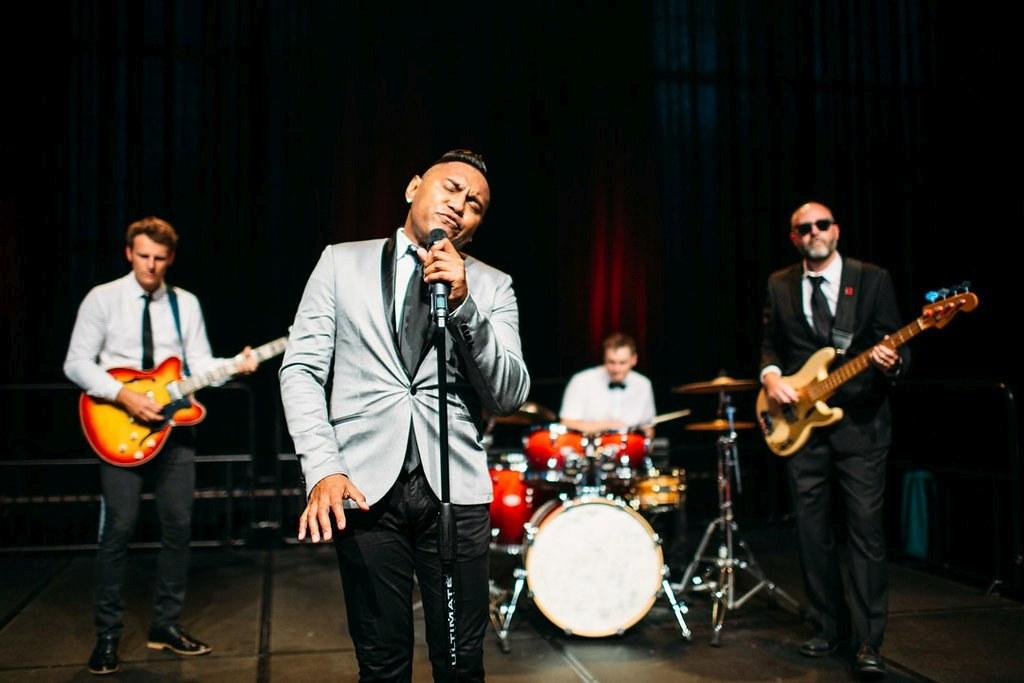
A live performance happens once, in that room, with your guests. The musicians respond to one another, the singer reacts to the dance floor and familiar songs can take on a new shape. A chorus might be extended while guests sing along, or the band might hold the final note as everyone gathers around the couple.
That visible performance gives guests something to watch, even before the dance floor fills. Musicians and instruments also become part of the room’s look and energy.
What an Experienced Wedding DJ Does Differently
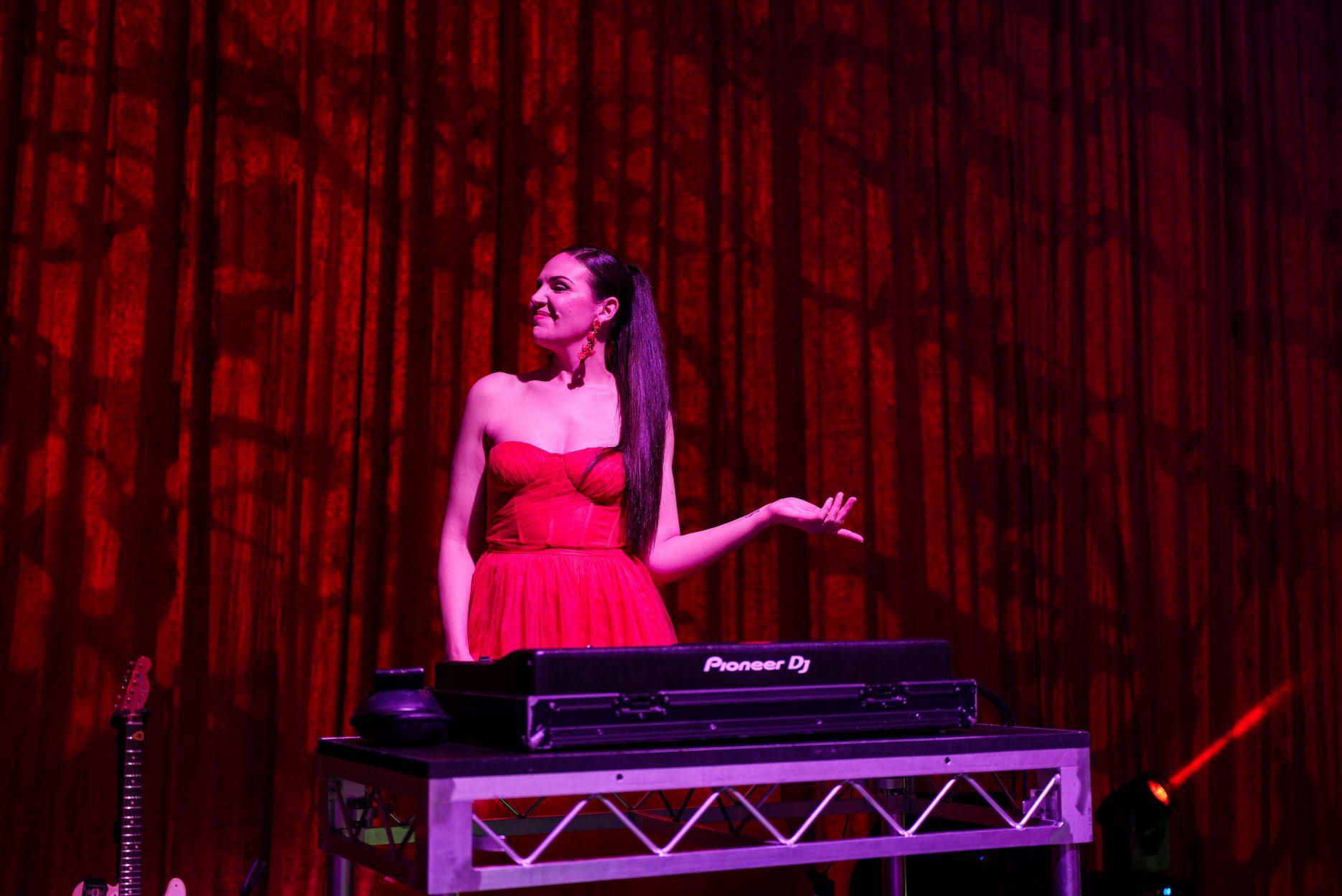
A wedding DJ can work across a much larger recorded catalogue. They can move from soul to pop, disco to rock and R&B to Australian classics, then change direction when the room responds. That range is useful when grandparents, parents, school friends and workmates arrive with different musical tastes.
A good DJ also manages timing. If dinner runs late, a speech goes longer than expected or the photographer needs another few minutes before the first dance, the DJ can adjust without making the delay feel awkward.
Their value lies in music judgement, mixing, preparation and the ability to read the room, not simply owning the equipment needed to play songs.
When Is a Live Wedding Band the Better Choice?
A band is usually the stronger option when live music is central to the experience you want to create. The size or formality of the wedding does not decide the answer on its own. The band still needs to suit the room, your music taste and the role you want entertainment to play.
Live Music Is Part of the Experience You Want
Think about the nights you have enjoyed most together. Do you regularly see live acts? Do you remember the vocalist, instrumental solo or atmosphere from a gig more clearly than the exact set list?
A band may suit you when you want guests to feel they are sharing a performance, not simply listening to a soundtrack. Live vocals and instruments can make familiar songs feel fresh, while the performers can extend a chorus or react to the room in ways a recording cannot.
Entertainment Is One of the Night’s Main Features
A full band deserves a meaningful place in the reception. That includes enough room to perform safely, suitable production and enough time in the run sheet for proper live sets. The band should not be squeezed into a corner and expected to deliver a major show around lengthy formalities.
A band can be particularly effective at a premium or formal reception, but formality alone is not a reason to book one. An experienced DJ with polished production can suit an elegant venue just as well.
Your Venue Can Support the Line-Up and Production
The venue needs enough safe performance space for the band’s specific line-up and production requirements.
What matters is whether the venue can accommodate the specific line-up, instruments, microphones, monitors, speakers, lighting and cables without reducing the dance floor or blocking service paths.
The band will also need suitable access and enough time to unload, set up and soundcheck. Stairs, narrow lifts, distant loading areas and tight venue access windows can affect both logistics and cost.
Ask the band for its technical requirements and have the venue approve the proposed setup before you book.
You Prefer Live Interpretations
A band can give an important song a personal character. Your first dance might begin with a stripped-back vocal before the other instruments join. The final song could be extended so guests can gather around you for another chorus.
The arrangement may also differ from the recording. A band might change the key for the singer, adjust the tempo, shorten the introduction or simplify production-heavy elements. Discuss those details early, especially when you have rehearsed to a particular version.
Explore our Brisbane wedding bands when a live performance feels like the right fit.
When Is a Wedding DJ the Better Choice?
A DJ should not be treated as the option couples choose only because it may cost less than a full band. A skilled wedding DJ provides range, responsiveness, original recordings and the ability to shape several hours of music around a changing room.
Your Guests Have Broad or Mixed Music Tastes
Most wedding guest lists are not one simple demographic. Your friends may want current dance music, your parents may be waiting for soul and disco, and your cousins may request 1990s hits. A DJ can move between these groups without being restricted to one band’s vocal style or prepared repertoire.
This flexibility can also help at multicultural weddings where music needs to shift between several languages, traditions and generations.
Age is not a reliable shortcut. Younger guests do not automatically prefer DJs, and older guests do not automatically prefer bands. Ask how the entertainer has handled a guest list like yours before.
Exact Recordings and Fast Changes Matter
Some songs are inseparable from the original vocalist or production. You may want the exact version used during your proposal, a particular remix your friends know or the recording you have practised your first dance to for months.
A DJ can play that version precisely, including an edited start or finish where required. They can also change direction quickly when one genre is not connecting with the room.
You Want Continuous Music and Flexible Timing
A DJ can maintain recorded music throughout the reception. The music can sit quietly under dinner, lift for an entrance, stop cleanly for speeches, return for the first dance and then build into the main party.
Continuous music does not mean playing at dance-floor volume all night. A good DJ understands when guests need space to talk and when the room is ready for more energy. This flexibility also helps when the run sheet changes during the evening.
You Have Less Space or Prefer Simpler Production
A DJ booth, speakers and lighting usually occupy less room than a multi-piece band. That can preserve valuable floor space in an intimate venue and make it easier to position the entertainment near the dance floor.
DJ production is often simpler because there are fewer performers, instruments and audio inputs. It still needs proper planning, including suitable speakers, safe cables, reliable power and enough access time for setup.
Explore our Brisbane wedding DJs when song range, original recordings and flexibility are your priorities.
Wedding Band vs DJ Cost in Australia
A professional wedding DJ will usually cost less than a comparable full live band because the band quote covers several performers and often requires more production.
There is no single reliable Australian price that applies to every band or DJ. An acoustic trio, five-piece party band, solo DJ and premium DJ with live musicians are different services.
What Changes a Wedding Band Quote?
The number of performers affects the cost, but it is only one factor. A band quote can also change according to the total booking period, actual live-performance time, number of sets, ceremony coverage and whether musicians perform during canapés or dinner.
Production matters too. Confirm whether the fee includes PA, stage lighting, dance-floor lighting, monitoring and a sound engineer.
Travel, accommodation, early setup, overtime and the preparation of special songs may all affect the final price. A larger line-up may also require more equipment and a longer soundcheck.
What Changes a Wedding DJ Quote?
A DJ quote may vary according to experience, demand and the number of hours required. Ceremony audio, wireless microphones, additional speakers, dance-floor lighting, early setup and MC services can change the package. Adding a saxophonist, vocalist or percussionist will also increase the scope.
Ask whether the person you speak with will be the DJ who appears at your wedding. Some businesses use one named performer, while others allocate DJs from a larger team.
How to Compare Two Quotes Fairly
A common comparison mistake we see is treating a five-hour band booking as five hours of live music. Ask for the total live minutes, set structure and break coverage in writing.
Compare the complete scope rather than the total alone.
| Quote Item | What to Confirm |
|---|---|
| Exact Performer | The named DJ, band and number of musicians |
| Coverage | When music begins and ends |
| Live Performance Time | The number and length of band sets |
| Break Music | Playlist, band-managed playback or dedicated DJ |
| Production | PA, microphones, speakers, lighting, monitoring and engineer |
| MC Services | Basic announcements or complete MC duties |
| Special Songs | Learning, arrangement and rehearsal costs |
| Access | Early setup, soundcheck and loading requirements |
| Travel | Parking, mileage, accommodation and regional costs |
| Overtime | Hourly rate and latest possible finish |
| GST | Whether the quoted total includes GST |
| Contingency Plan | Replacement performers and backup equipment |
Two quotes can appear similar while covering different services. One band fee may include PA, lighting, an engineer and several live sets, while another covers the musicians only.
Music Variety, Requests and Your First Dance
Music selection is one of the clearest practical differences between a band and DJ.
A DJ works from a broad catalogue of recordings. A band performs a prepared repertoire that suits its vocalists, instruments and style.
A Band’s Repertoire vs a DJ’s Music Library
A professional wedding band may know songs from several decades and genres, but it cannot perform every request. Each song must suit the available instruments, vocalists and preparation time. Production-heavy tracks may also need substantial rearrangement before they can be performed live.
A DJ can generally access far more music and move between artists and genres quickly. No DJ should promise literally every recording, but spontaneous requests are normally easier to accommodate.
Ask both types of entertainer for examples of their repertoire and experience. Broad labels such as “pop, rock and classics” reveal little about how the set will actually feel.
Original Recording or Live Interpretation?
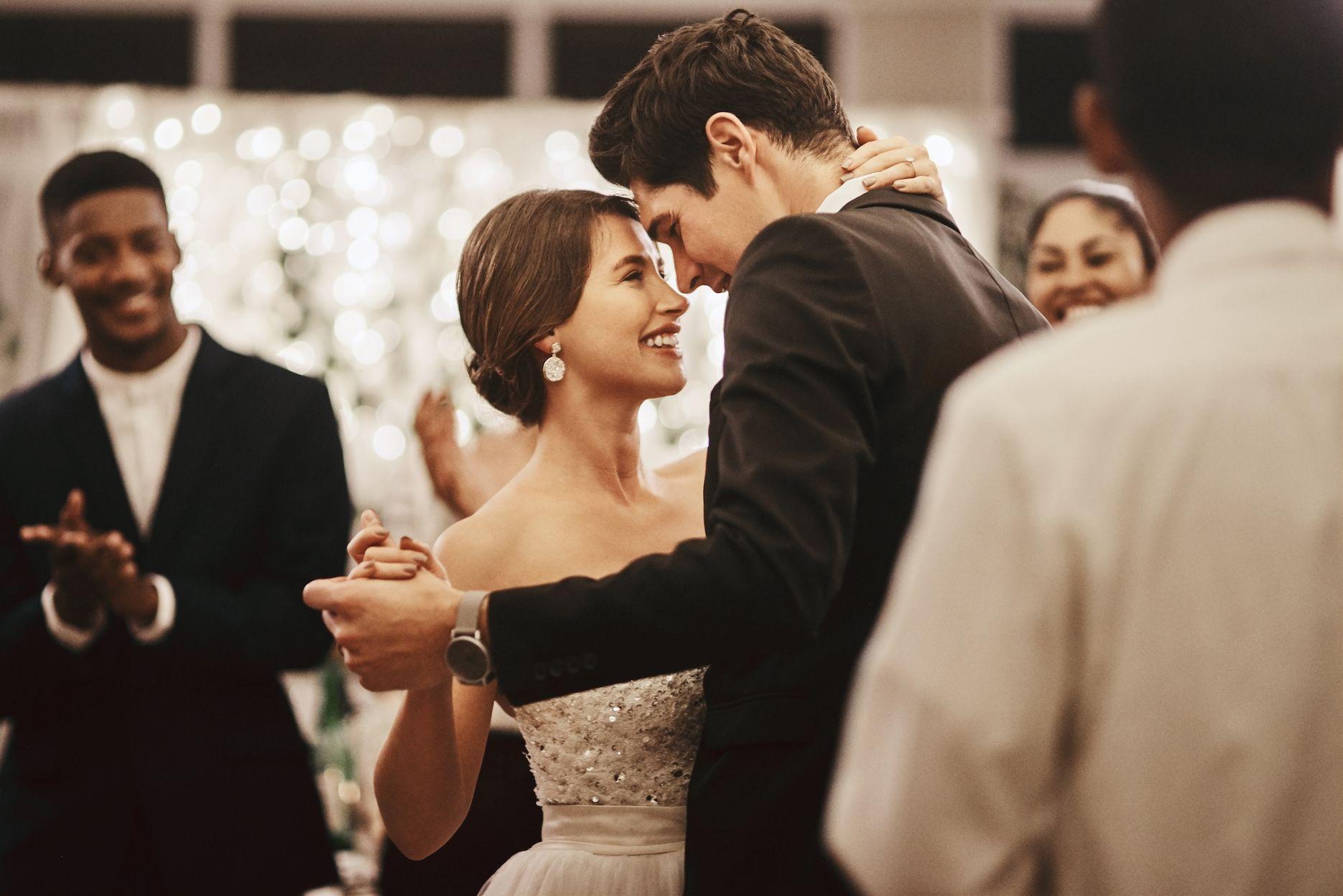
Your first dance brings this choice into sharp focus. Choose the original recording when the vocalist, timing and arrangement matter. This is often the safer option when you have practised choreography to a specific version.
Choose a live interpretation when you want the moment to feel unique to the room. A singer performing directly to you while guests gather around can be incredibly personal.
Before confirming a live version, ask whether the band will change the tempo, key, introduction or ending. Make sure the final arrangement still suits the dance you have planned.
Build a Clear Music Brief
Give your entertainer enough direction to understand your tastes without programming every minute. Your brief should identify must-play songs, do-not-play songs and the music attached to formal moments. Include the exact artist and version where possible.
Confirm the songs for your reception entrance, first dance, parent dances, cake cutting, dance-floor opening and final song.
Discuss guest requests too. A DJ can normally respond to more requests on the night, while a band will need important song choices earlier.
What Happens During a Wedding Band’s Breaks?
Wedding bands normally perform in several sets rather than continuously. The number and length of those sets vary by act and package.
Recorded music usually plays while the musicians rest and prepare for the next set. Ask who controls that music, how much live-performance time is included and what the quote provides during each break.
Playlist Music Between Sets
The simplest option is a prepared playlist played through the band’s sound system. This can work well when the break coincides with dinner, speeches or another planned part of the evening. The room retains some atmosphere without requiring a second performer.
Ask who prepares the playlist and who controls playback. It may be supplied by the couple, chosen by the band or run from a prearranged device. A musician pressing play is not necessarily providing a professional DJ service.
A Dedicated DJ Between Sets
A dedicated DJ can actively manage the room while the band rests. They can mix music, take approved requests and adjust the energy according to what is happening on the dance floor. Some couples also keep the DJ performing after the band’s final set, creating a natural transition into a broader late-night set.
When a package promises “DJ music between sets”, confirm whether a DJ will be present or recorded tracks will simply be played.
Use the Run Sheet to Protect Momentum
Band breaks work best when they align with the reception schedule. One break might fall during main-course service. Another may coincide with speeches or dessert. The final live sets can then begin once the formalities are complete.
The venue, MC, band and DJ should share the same run sheet. Each transition needs a clear cue, including who fades the music, who introduces the next moment and when the band returns.
Space, Sound and Setup at the Venue
Your preferred entertainment format must work within the room. Both bands and DJs need suitable space, power, access and sound conditions. The difference is usually the size and complexity of the setup.
Does a Wedding Band Need a Stage?
Not every wedding band needs a raised stage. A smaller line-up may perform safely from a clear, flat section of the floor. A larger act may require staging because of its instruments, sightlines, cable layout or production requirements.
Avoid relying on generic stage dimensions from an online guide. Ask the specific act for the clear width, depth and overhead space it requires, including speakers, monitors and lighting stands.
Position the Entertainment Near the Dance Floor
The entertainers should feel connected to the guests. A beautiful stage at the far end of a divided room may create too much distance. A DJ hidden behind a pillar may struggle to see and respond to the dance floor.
Plot the complete setup on the floor plan, including musicians, instruments, DJ booth, speakers, subwoofers, lighting and cables. The layout must also protect guest movement, waitstaff access and emergency paths.
Confirm PA, Lighting, Power and Soundcheck Requirements
“Sound and lighting included” can mean different things.
One package might include speakers and basic lighting for the performers. Another may include subwoofers, dance-floor lighting, wireless microphones and a sound engineer.
Confirm who provides the PA, whether the venue’s installed system will be used and whether microphones for speeches are included. The act should also provide its power and soundcheck requirements.
Before paying a deposit, send the entertainer’s technical requirements to the venue. Confirmation that live music is allowed does not necessarily mean the room can accommodate that particular line-up and production setup.
Check Load-In, Early Setup and Pack-Down
Equipment still has to reach the room. Ask where suppliers can park, how far they must carry equipment and whether stairs, lifts or venue security procedures will affect access.
An early setup may be required if the venue wants all equipment in place before styling begins or guests arrive. That extra call time can change the quote.
Pack-down needs planning too. Confirm how late suppliers can remain on site and whether loading access changes after the reception.
Sound Limits, Curfews and Outdoor Weddings in Queensland
Venue restrictions can influence whether a band, DJ or hybrid setup will work comfortably at your reception.
Queensland does not have one wedding sound limit that applies everywhere. Licensed venues can have their own entertainment-noise conditions, so ask for the venue’s actual requirements before booking your entertainment.
Ask for the Venue’s Actual Sound Conditions
Check whether the venue uses a sound limiter, restricts bass or places conditions on drums, brass, subwoofers or outdoor speakers.
You should also confirm the entertainment curfew. The music may need to finish before the reception itself ends.
Speaker placement can matter too, particularly where neighbouring properties are close. Queensland venue requirements may include measures such as positioning speakers away from neighbours and managing bass levels.
A band is not automatically too loud, and a DJ is not automatically easier to approve. Get the venue’s requirements first, then make sure the entertainer can work within them.
Plan Outdoor Entertainment Around the Weather
Bands and DJs both need a covered, stable and safe setup area outdoors. Protect electrical equipment from rain, wind and direct sun, and make sure cables are secured away from guest and staff pathways.
Your wet-weather plan should also identify where the entertainment will move if conditions change. Check that the backup space can actually fit the act and equipment, rather than simply assuming everything can move indoors.
Can You Have Both a Wedding Band and DJ?
Yes. A band and DJ can work together in several ways.
A hybrid format can provide the visual and emotional impact of live performance without giving up the DJ’s broader music library and ability to respond quickly.
Book a Band for the Main Reception and a DJ Afterwards
The band can perform the major live sets once formalities finish, then the DJ can take over later.
This suits couples who want a headline live performance and a longer dance-floor period with broader requests or more contemporary music.
Plan the handover in advance. Decide whether the DJ will be set up from the beginning, whether the performers will share equipment and what cue marks the change.
Use a DJ During the Band’s Breaks
A DJ can provide an actively managed music service between live sets, then continue after the band finishes if required.
For a combined package, focus on the shared production plan. Confirm who supplies and operates the sound system, whether both acts can use it safely and how the handovers will be cued.
Combine a DJ With Live Musicians
A DJ can also perform with individual musicians.
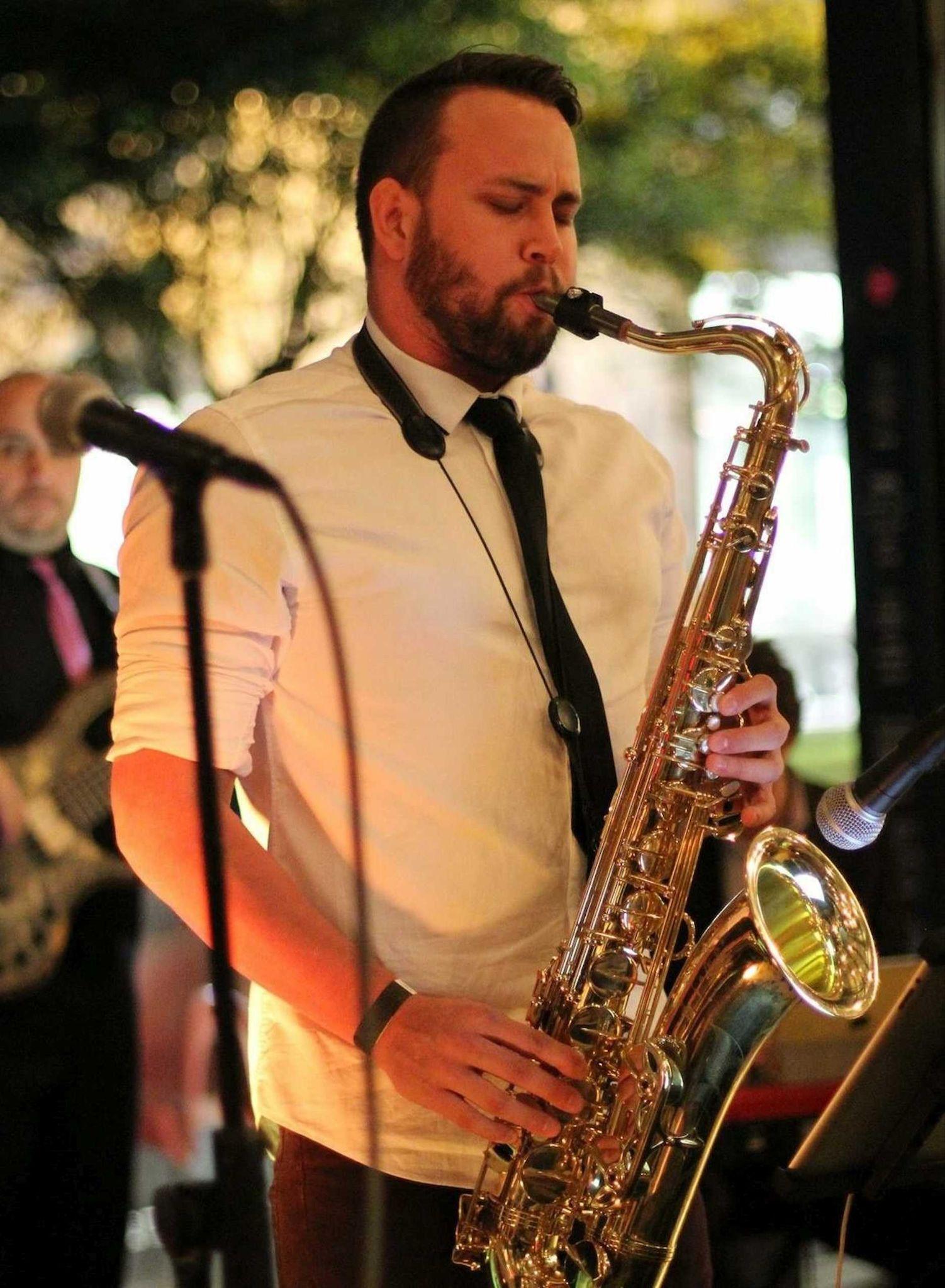
A saxophonist may move through the dance floor over selected tracks. A vocalist can add a live element to key songs, while percussion can bring visual and rhythmic energy to a dance set.
This format can suit couples who want original recordings and DJ flexibility while still having visible performers in the room.
We can recommend DJ and live musician combinations, including saxophone, vocals or percussion, where the venue and music brief suit the format.
Coordinate the Production as One Entertainment Plan
A hybrid should not feel like two suppliers competing for space and attention.
Confirm who supplies the PA, where each performer will set up and whether equipment can be shared safely. Establish who handles soundchecks, changeovers, MC duties and overtime.
Every performer should receive the same final run sheet.
Questions to Ask Before Booking a Wedding Band or DJ
The answers to these questions will reveal more than a polished showreel.
1. Is the exact performer or line-up available for our date?
Confirm the named DJ, band and number of musicians.
2. What does the quote include?
Check GST, travel, parking, accommodation, sound, lighting, setup and overtime.
3. How much actual performance time is included?
For a band, ask for the number and length of live sets.
4. What happens during the band’s breaks?
Establish whether you are receiving a playlist, band-managed playback or a dedicated DJ.
5. How will our important songs be handled?
Discuss the first dance, entrances, parent dances, final song, must-plays and do-not-plays.
6. Can the band learn our first-dance song?
Confirm whether the song suits the line-up and whether an arrangement fee applies.
7. What does the venue need to provide?
Ask about performance space, power, access, staging, soundcheck time and installed production.
8. Are MC services included?
Basic announcements and full MC duties are different services.
9. What is the contingency plan?
Ask about substitute performers, backup playback and spare equipment.
10. What happens if the reception runs late?
Confirm overtime rates, the latest finish time and how delays affect performance time.
Record important answers in the quote, booking agreement or contract.
How Far Ahead Should You Book Your Wedding Entertainment?
Enquire once your venue and date are confirmed, especially if you have a particular band, DJ or Saturday in mind.
There is no fixed booking deadline, but popular performers can fill well ahead. A specific band can be harder to secure because every musician in the agreed line-up needs to be available, while sought-after DJs can also book out on popular dates.
If you are planning at shorter notice, flexibility can help. A different band configuration, DJ or hybrid option may still give you the atmosphere you want even when your first choice is unavailable.
Wedding Band, DJ or Both: Choose the Experience That Fits Your Wedding
The best reception does not come from choosing whichever option looks most impressive in a brochure. It comes from booking entertainers who understand your guests, work comfortably within the venue and know how to deliver the right music as the room changes.
Choose a band when you want live music to become a performance your guests can watch, feel and share. Choose a DJ when you value broad musical range, exact recordings, quick changes and continuous music. Choose both when you want the impact of live performers without giving up the flexibility of a DJ.
The wedding band vs DJ decision is ultimately about one moment: what do you want the room to feel like when the formalities finish and the celebration properly begins?
Tell our team your wedding date, venue, guest numbers, music preferences and the atmosphere you want to create. We’ll recommend a band, DJ or hybrid from our Brisbane wedding entertainment options that genuinely fits your reception.
Frequently Asked Questions About Wedding Bands and DJs
Can a Wedding DJ Also Act as the MC?
Some wedding DJs offer MC services, but the scope varies. One DJ may make basic announcements, while another can introduce speeches, manage formalities and coordinate with the venue. Ask what the package includes and whether the DJ has experience acting as a wedding MC.
Can a Wedding Band Take Guest Requests on the Night?
A band may be able to perform requests already included in its repertoire. Completely new songs normally require preparation and may not suit the line-up. Discuss important requests before the wedding, then ask how the band handles spontaneous suggestions from guests.
What Happens If the DJ or a Band Member Becomes Unavailable?
The supplier should have a written contingency plan. A band may use an approved substitute musician, while an agency may provide another DJ. Confirm whether replacements have comparable experience and when you would be notified of a line-up change.
Can a Band and DJ Share the Same Sound System?
Sometimes, but only when the equipment suits both performers and responsibility is clear. The technical requirements should be reviewed before the wedding. Confirm who supplies, operates and insures the system, and whether both acts need separate soundchecks.
Can a Wedding Band Play in a Small Venue?
Yes, provided the line-up, volume and equipment suit the room. A duo or compact band may work where a larger act cannot. Ask the venue about sound conditions and send the band’s space and production requirements before confirming the booking.
Who Provides Music During Dinner and Speeches?
A DJ can normally manage music throughout the reception. A band may provide recorded background music between live sets, while some venues operate their installed system during dinner. Assign responsibility in the run sheet so there are no silent gaps or duplicated cues.