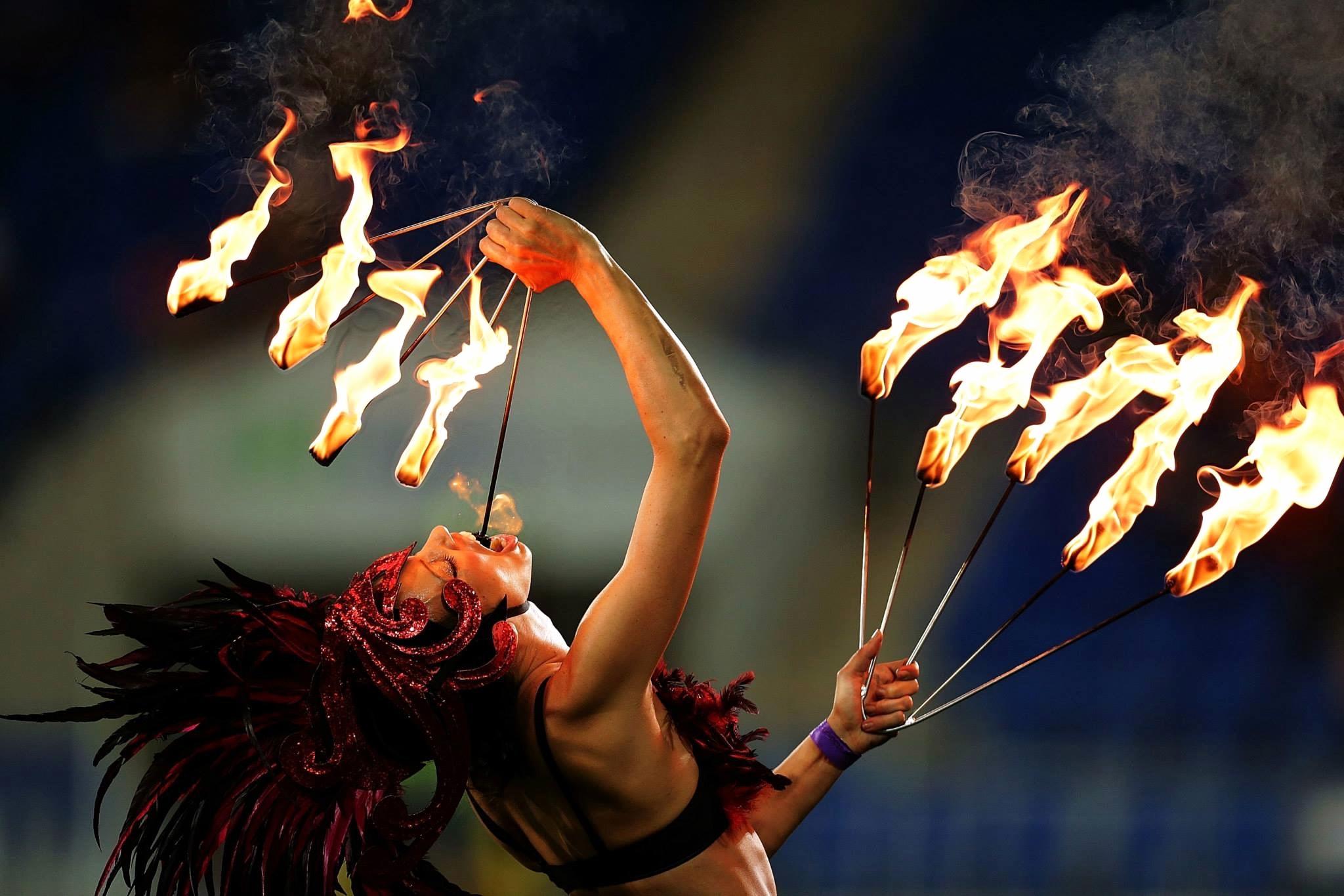
A fire dancer is one of the fastest ways to turn an event into something guests stop, watch and remember.
The music builds. The lights dim. Flames start cutting through the night air. Suddenly, every conversation pauses and phones come out. It’s dramatic, visual and full of energy, which is exactly why fire dancers are such a popular choice for weddings, corporate events, festivals, private parties and brand launches.
But hiring a fire dancer isn’t just about choosing the biggest flames. You need the right performance style, a suitable venue, enough space, clear safety planning and a performer who suits your audience.
At Onstage Entertainment, we help match entertainment to the event itself, not just the idea on paper. So, if you’re thinking about booking fire dancers, fire twirlers or fire performers, here’s what you need to know before locking anything in.
What Is a Fire Dancer?
A fire dancer is a trained performer who combines movement, dance and fire manipulation using lit props such as poi, staffs, fans, hoops, torches or other specialised fire equipment.
Some fire dancers create graceful, flowing routines with slow circles of flame. Others bring a sharper circus-style energy, with fast spins, dramatic poses and high-impact choreography. Depending on the performer, the act may be a short feature show, a roving outdoor performance, a duo routine, a group show or part of a larger themed production.
You’ll also hear similar terms like fire performer, fire twirler, fire spinner and fire artist. They’re often used interchangeably, but there are slight differences.
A fire dancer usually focuses on rhythm, choreography and visual performance. A fire twirler often refers to someone spinning props such as poi or staffs. A fire performer is the broader term and may include fire dancers, fire jugglers, fire eaters, fire breathers, roving performers and circus-style acts.
For most event organisers, the label matters less than the outcome.
The better question is: what kind of moment do you want to create?
Do you want guests welcomed by roving fire performers as they arrive? A romantic fire show after dinner? A short, dramatic reveal for a product launch? Or a high-energy group performance to open a gala?
Once you know the feeling you want, it’s much easier to choose the right act.
Why Hire a Fire Dancer for Your Event?
A fire dancer works because fire has a natural pull. It’s movement, warmth, light and risk all wrapped into one performance.
Unlike some entertainment that fades into the background, fire performance creates a clear focal point. Guests instinctively turn towards it. That makes it especially useful when you want a short, high-impact moment in the run sheet.
Fire dancers are ideal when you want atmosphere, spectacle and a performance guests will actually talk about afterwards.
They can be used in several ways:
- As a guest arrival feature
- As a short outdoor show after dinner
- As a dramatic opening act
- As a brand reveal or launch moment
- As roving entertainment at festivals or outdoor events
- As a finale before fireworks, speeches or dancing
- As part of a larger theme, such as circus, tropical, Fire and Ice or festival-style entertainment
Fire also photographs beautifully. The contrast of flame against evening light gives guests an instant visual moment, and for brands or corporate events, it can create strong social media content without feeling forced.
If you’re planning a wider entertainment program, fire performers can also sit naturally alongside feature acts, dancers, aerial performers, live musicians, LED acts and roving entertainment.
The key is making the act feel like part of the event, not something dropped in randomly because it looks impressive.
Best Events for Fire Dancers
Fire dancers are best suited to events where you want a strong visual moment, especially outdoors after sunset. They work beautifully when there’s space for guests to gather, the lighting is low enough for the flames to shine, and the performance can be timed around a natural peak in the event.
For corporate events and gala dinners, a fire dancer can create a polished moment between formalities. Think outdoor arrivals, awards night openers, conference after-party entertainment or a short performance before a major reveal. The act should feel sharp and well-timed, with strong costuming, clean choreography and a clear place in the run sheet.
For weddings and private celebrations, fire dancers can add romance, drama and surprise. A solo or duo fire show after speeches, before the dance floor opens or as an outdoor finale can give the night a genuine “wow” moment. If you’re planning the whole celebration, fire performers can also sit naturally alongside broader wedding entertainment in Brisbane, from ceremony music through to reception entertainment.
For festivals and outdoor events, fire performers are a natural fit because they’re visible, atmospheric and easy for crowds to gather around. Roving fire performers can help build energy across a large site, while scheduled fire shows can draw attention at key points in the evening. For public events, planning needs to be especially clear around crowd flow, boundaries, emergency access, weather and any venue or council requirements.
For brand launches and themed events, fire can be used as a visual storytelling tool. A product reveal might use fire performers to build anticipation. A circus theme could combine fire twirlers with stilt walkers and acrobats. A Fire and Ice event might use flames outdoors, cool-toned lighting inside and LED performers later in the night.
Fire is already powerful, so it doesn’t need to be overcomplicated. Often, one well-placed performance is stronger than trying to use flames throughout the entire event.
Types of Fire Dancer Performances
Before booking a fire dancer, it helps to understand the main performance styles.
Roving Fire Performers
Roving fire performers move through or around an outdoor event space, usually in a controlled area. This style works well for arrivals, cocktail-style events, festivals and themed outdoor spaces.
It’s less like a formal show and more like moving atmosphere. Guests can pause, watch, take photos and keep mingling.
Roving performers are a good fit when you don’t want to stop the entire event, but still want visual energy in the space.
Choreographed Fire Shows
A choreographed fire show is more structured. It usually has music, a clear start and finish, planned routines and a performance area where guests gather to watch.
This is the better choice for weddings, gala dinners, awards nights, private events and brand launches where you want a feature moment.
If you want everyone to stop and look in the same direction, book a choreographed show rather than a purely roving act.
Solo, Duo and Group Fire Dancers
A solo fire dancer can work beautifully for smaller events or intimate outdoor spaces. The focus stays on one performer, which can feel elegant and controlled.
A duo gives you more symmetry, more movement and more variety. Two performers can mirror each other, frame an entrance or create a stronger finale.
Group fire shows are better for larger events where scale matters. They create a bigger visual picture and can feel more like a full production.
LED and Glow Performers
LED performers are worth considering, especially if your venue has restrictions around live flame.
LED poi, hoops, staffs and costumes can still create colour, movement and light, but without the same live-fire considerations. They can be a strong option for indoor venues, family-friendly events, longer roving sets or situations where live flame may not be suitable.
Onstage can help explore fire dancers, fire performers, roving acts, choreographed feature shows and LED-style alternatives depending on your event brief, venue and practical requirements.
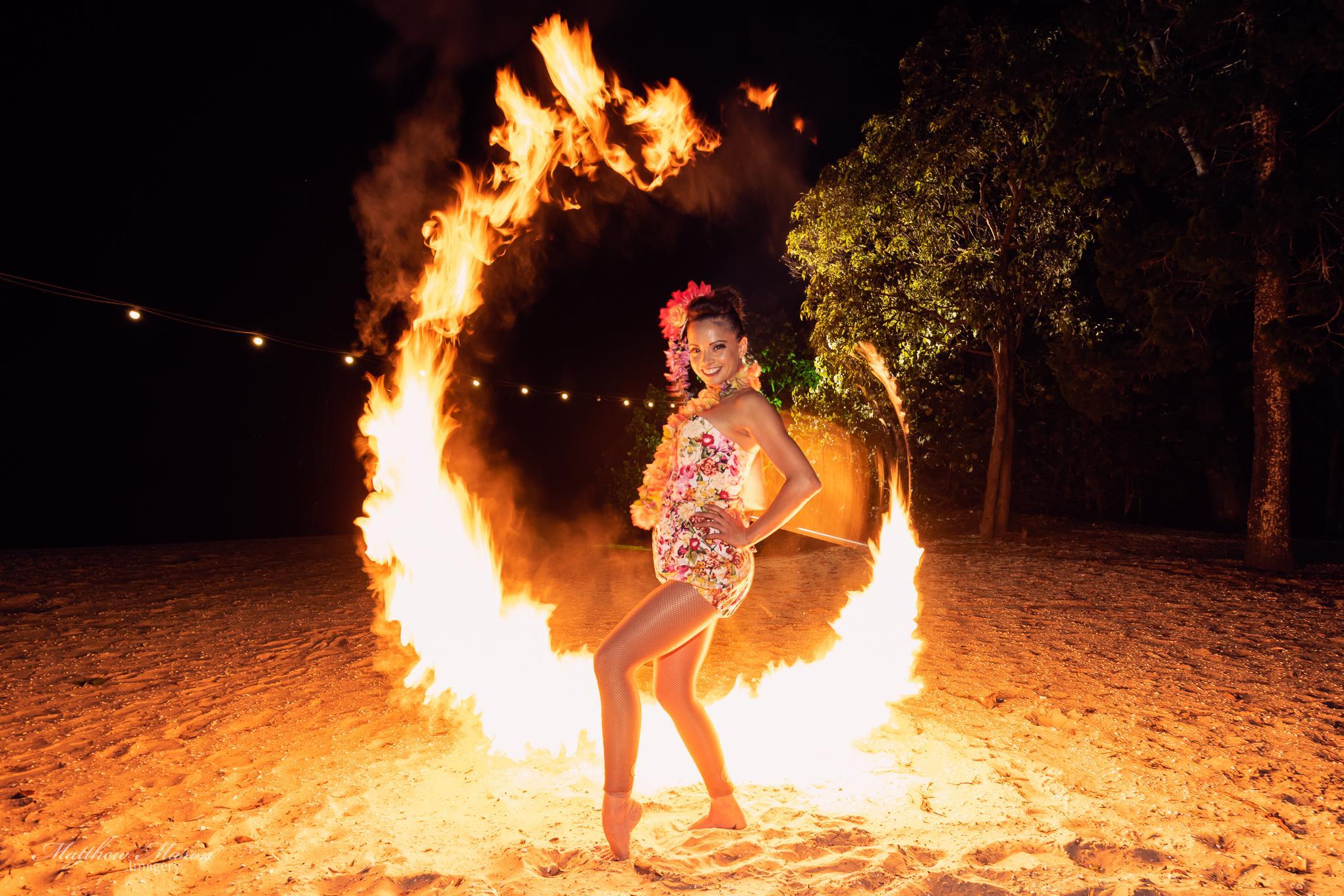
Are Fire Dancers Safe?
Professional fire dancers can be safe for events, but fire performance should always be planned properly.
This isn’t the same as booking a singer, DJ or magician. A fire dancer is working with live flame, moving props, fuel, audience proximity and venue conditions. That means the act needs to be assessed against the actual event space, not booked as a generic entertainment item.
Before booking, ask about:
- Public liability insurance
- Performer experience
- Safety equipment
- Suitable performance space
- Distance from guests
- Venue approval
- Fuel handling and storage
- Surface type
- Wind, rain and weather policy
- Fire ban policy
- Whether any safety documentation is required
- Whether any venue, council or fire authority approvals may apply
WorkSafe Queensland recommends a risk management process that includes identifying hazards, assessing risks, controlling risks and reviewing controls. That same practical approach is useful when planning any event activity involving live flame.
For Brisbane events, some public events and festivals may also involve permit requirements. Brisbane City Council notes that event permit applications can require supporting documents such as a site plan, an Emergency Response and Evacuation Plan, and a Certificate of Currency for public liability insurance.
For Queensland events, it’s also important to check current fire restrictions. Queensland Fire Department says fire use can be restricted by a Local Fire Ban or State of Fire Emergency, and that all open fires are prohibited when fire bans are in place, subject to any special conditions or exemptions.
That doesn’t mean every fire dancer booking will need the same process. Requirements can vary depending on the location, event type, venue and performance format.
The safest approach is to discuss venue suitability, approvals, insurance and weather conditions before you book, not on the day of the event.
Can Fire Dancers Perform Indoors?
Sometimes, but indoor fire performance should never be assumed.
Fire dancers are usually best suited to outdoor evening spaces. Outdoors, the flames are easier to see, there is often more room to create a safe performance area, and there are fewer indoor venue systems to consider.
Indoor fire performance may be possible in some venues, but it depends on factors such as:
- Ceiling height
- Ventilation
- Smoke alarms
- Sprinkler systems
- Floor surface
- Nearby styling, draping or décor
- Guest proximity
- Venue rules
- Required approvals
- Performer requirements
Some venues simply won’t allow live flame indoors, and that’s completely normal.
In those cases, LED performers can be a smart alternative. You still get light, movement, colour and impact, but without live flame.
If your event is indoors, ask about venue suitability before falling in love with a specific fire act.
How Much Does It Cost to Hire a Fire Dancer?
The cost to hire a fire dancer depends on the brief.
A short solo outdoor performance will usually be a very different quote from a choreographed group show with multiple performers, custom music, themed costumes, travel and production requirements.
The main cost factors include:
| Cost factor | Why it affects the quote |
|---|---|
| Number of performers | Solo, duo and group acts require different budgets |
| Performance style | Roving, feature shows and custom routines are priced differently |
| Event location | Travel can affect availability and cost |
| Performance length | Short feature moments differ from longer roving sets |
| Customisation | Costumes, music, choreography and branding may add complexity |
| Venue requirements | Site conditions, access and approvals can affect planning |
| Date and demand | Peak event periods may affect availability |
It’s tempting to look for a simple “from” price, but fire performance is rarely one-size-fits-all.
The best approach is to share your event date, venue, guest numbers, preferred performance style and any known restrictions. That way, you can get options that actually match your event instead of a rough number that may not apply.
What to Ask Before Booking a Fire Dancer
Before requesting a quote, gather the details that help determine whether a fire dancer is suitable for your event.
Here’s a practical checklist.
| Detail to provide | Why it matters |
|---|---|
| Event date | Confirms performer availability |
| Venue name and suburb | Helps assess travel and venue suitability |
| Indoor or outdoor location | Affects act options and safety planning |
| Guest numbers | Helps choose solo, duo, group or roving performers |
| Event type | Weddings, galas, festivals and launches need different styles |
| Preferred performance time | Fire usually has strongest impact after dark |
| Performance purpose | Arrival, opener, finale, roving or surprise moment |
| Available space | Determines suitable props and performer numbers |
| Surface type | Grass, concrete, stage, pavers and sand all behave differently |
| Nearby structures or décor | Drapes, trees, marquees and low ceilings may affect suitability |
| Theme or dress code | Helps match costumes and performance style |
| Wet weather plan | Important for outdoor performances |
| Fire ban policy | Should be discussed before booking |
| Budget range | Helps narrow realistic options |
You don’t need to have every answer before enquiring. But the more detail you can provide, the better the recommendation will be.
Onstage can help you compare different entertainment styles, including fire performers, professional event dancers, LED acts, roving performers and larger feature entertainment.
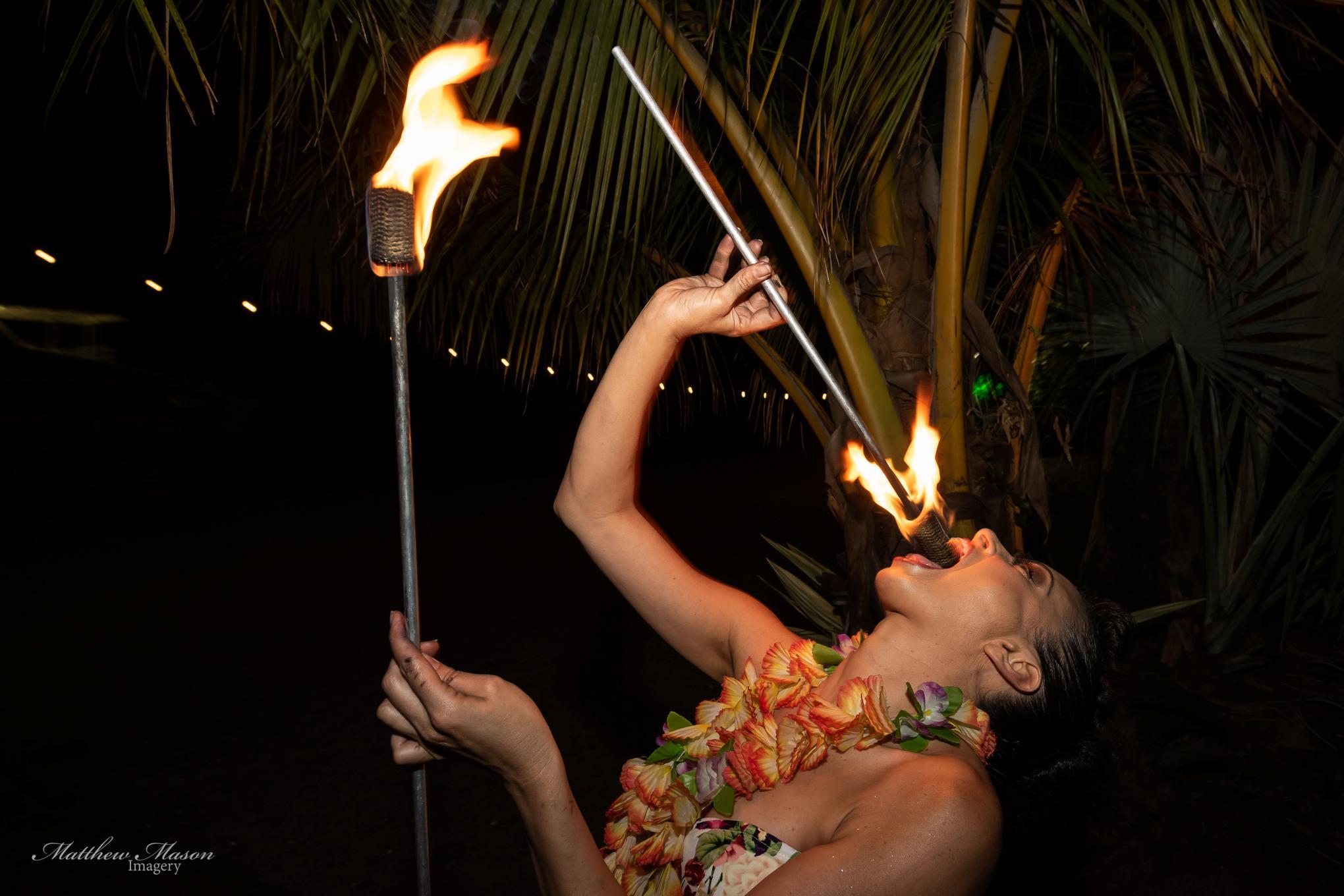
Ready to Book a Fire Dancer for Your Event?
A fire dancer is a brilliant choice when you want a short, memorable entertainment moment with atmosphere, movement and real visual impact.
It’s not right for every venue, and it does need proper planning. But when the space, timing, performer and event brief all line up, fire performance can lift the whole night.
Whether you’re planning a corporate gala, wedding, festival, brand launch or private celebration, Onstage Entertainment can help you explore fire dancers and performers, roving acts, feature shows and LED-style alternatives that suit your audience and venue.
Bring the spark to your next event. Get in touch with us at Onstage Entertainment to discuss the right entertainment options for your event.
Fire Dancer FAQs
What Does a Fire Dancer Do?
A fire dancer performs with lit props such as poi, staffs, fans, hoops or torches. The act may include dance, spinning, object manipulation, choreography, roving entertainment or a staged fire show.
What is the Difference Between a Fire Dancer and a Fire Twirler?
A fire dancer usually focuses on movement, music and choreography. A fire twirler often refers to someone spinning props such as poi or staffs. A fire performer is the broader term and can include several styles of fire-based entertainment.
Are Fire Dancers Safe for Events?
Professional fire dancers can be safe when the performance is properly planned. You should ask about insurance, venue suitability, performance space, safety equipment, weather conditions and any required approvals or documentation.
Can Fire Dancers Perform Indoors?
Sometimes, but it depends on the venue. Indoor fire performance may require suitable ceiling height, ventilation, alarm management, clear space and venue approval. If live flame isn’t suitable, LED performers may be a better option.
How Much Space Does a Fire Dancer Need?
It depends on the act, props, performer numbers and venue layout. A solo fire dancer using smaller props may need less space than a group show with staffs, poi or larger movement. Always confirm space requirements before booking.
How Long Does a Fire Dancer Performance Go For?
Performance lengths vary by act and event format. Some events suit a short feature show, while others suit roving or ambient entertainment across a longer period. The right length depends on your venue, audience and run sheet.
Can I Book Fire Dancers for a Wedding?
Yes, fire dancers can work beautifully for outdoor weddings, especially garden receptions, private properties and evening celebrations. They’re often best used as a surprise feature after dinner, before dancing or as a dramatic outdoor finale.
What Happens If There’s Bad Weather or a Fire Ban?
Wind, rain and fire restrictions can affect whether live flame is possible. Ask about the performer’s weather and fire ban policy before booking. Depending on the event and act, LED or glow performers may be a suitable alternative.